

Buying one of today’s entry-priced mountain bikes can feel like stepping into a maze of buzzwords: “hydroformed,” “long travel,” “trail geometry,” “hydraulic,” “1x,” “29er,” “27.5,” and a dozen more. Then you see the price tags. Under $600? For a real mountain bike?
Here’s the honest truth after two decades of building, tuning, and riding bikes: $600 is enough to get a legitimately fun, capable mountain bike—if you understand where the money goes and choose the right compromises. It’s also enough to buy the wrong bike if you expect $2,000 performance from $300 parts.
In this guide, we’ll do a practical mountain bike price comparison focused on what matters long-term: frames, forks, drivetrains, brakes, wheels, and how each choice affects durability, maintenance, and upgrade potential. We’ll use a few clear examples from our lineup at BikesDirect—then give you a framework you can apply to any bike in this price range.
Bikes we’ll reference and compare:
- Browse our full selection here: BikesDirect Mountain Bikes
- Entry hardtail: Gravity BaseCamp V 7spd
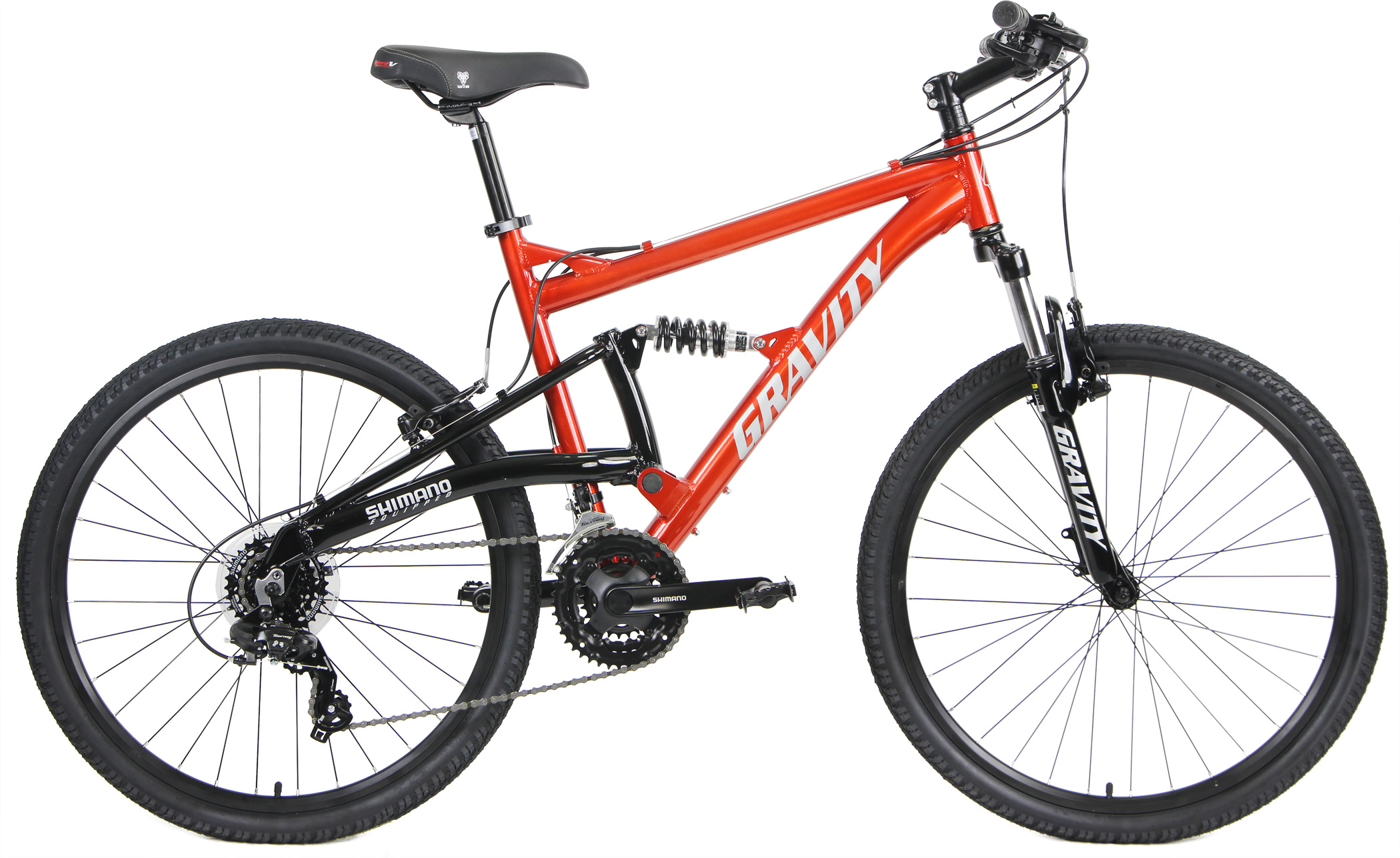
- Budget full suspension: Gravity FSX V
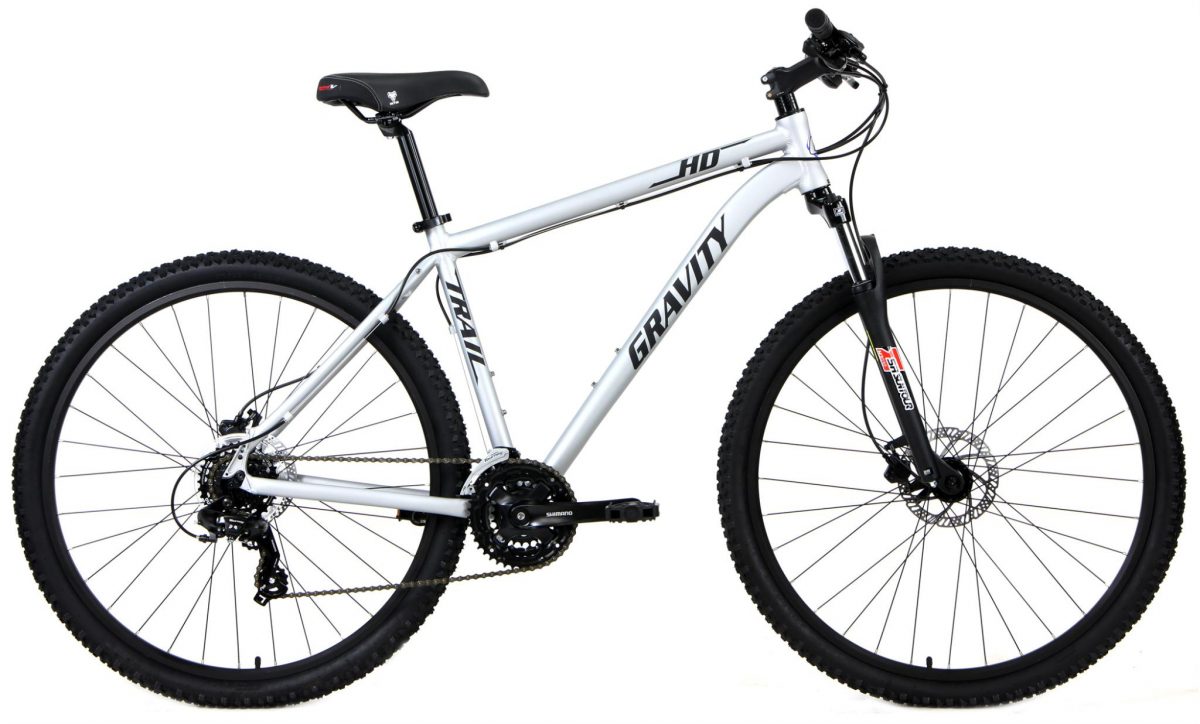
- Hydraulic-disc hardtail: Gravity HD275 Trail
- Need help picking the right size or model? Contact our support team
The $600 reality check: where your money actually goes
At this price point, you’re not paying for carbon layups, air forks, or 12-speed wide-range drivetrains. You’re paying for five core areas that define how the bike rides and how long it stays enjoyable:
- Frame design & durability (materials, weld quality, replaceable derailleur hanger, bottle mounts, geometry)
- Suspension (fork quality; and if full suspension, the rear shock + pivots)
- Brakes (V-brakes vs mechanical discs vs hydraulic discs)
- Drivetrain (how it shifts under load, gear range, replacement cost)
- Wheels/tires (rim strength, hub quality, tire size and traction)
Here’s the key tradeoff under $600:
- If you spend more on suspension (especially rear suspension), you usually spend less on brakes, drivetrain, and wheels.
- If you spend more on brakes (hydraulic discs), you often keep the drivetrain more basic (commonly 3×7/21-speed).
- If you want the best long-term value, prioritize frame, brakes, and wheels first, then suspension.
That’s why a smart budget hardtail can outlive (and out-perform) a bargain full-suspension bike on many trails.
The three tiers of under-$600 mountain bikes (and what to expect)
Tier 1: $200–$300 — “Real bike, real trails… with realistic expectations”
This is the category where bikes stop being toy-store throwaways and start being legitimate bicycles you can tune, maintain, and ride for years. But you’re making compromises: heavier components, simpler drivetrains, and basic brakes.
A solid example is the Gravity BaseCamp V 7spd, which comes in at $229.95 and focuses on fundamentals: an aluminum frame, front suspension, Shimano 7-speed shifting, and V-brakes.
What your money really gets here:
- A true 6061 aluminum frame (not “mystery metal”)
- Entry-level suspension fork to take the edge off bumps
- Simple, inexpensive-to-maintain shifting
- Strong value if your riding is parks, dirt paths, mellow singletrack, and neighborhood adventures
What you’re not getting:
- High-end braking power
- Modern wide-range gearing
- Lightweight wheels/hubs
- Suspension that feels smooth on fast, rough trails
This tier is best when you want maximum value and minimal complexity.
Tier 2: $300–$450 — “Full suspension or better components… pick one”
Here’s the fork in the road (pun intended). Under $450, bikes typically go one of two directions:
- Full suspension with basic parts
- Hardtail with notably better brakes and trail readiness
Option A: Full suspension comfort on a budget
The Gravity FSX V is a classic example: a full-suspension aluminum bike priced at $299. It pairs a 6061 aluminum frame and rear coil-over shock with Shimano 21-speed and V-brakes.
If you’re newer to trails, full suspension can feel like magic—especially on roots, rocks, and choppy surfaces. But the “money math” matters: a rear shock, linkage, pivots, and extra frame structure cost real dollars, so other components tend to be more entry-level.
You get comfort and forgiveness. You give up some braking power, some precision, and typically add weight.
Option B: Hardtail performance upgrades that matter more
In this same general price zone, a hardtail with strong brakes often gives you a better mountain-bike experience—particularly if your trails are steep or your rides include long descents where heat and control matter.
Tier 3: $350–$600 — “Best long-term value lives here”
This is where bikes start to feel trail-serious for most riders because the component choices move from “works” to “works confidently.”
The standout upgrade at this level is usually hydraulic disc brakes—and that’s a big deal.
A strong example is the Gravity HD275 Trail at $359, built around an aluminum frame, a 27.5″ wheel platform, and Tektro M285 hydraulic disc brakes with 160mm rotors.
For many riders, hydraulic discs are the single biggest “this feels like a real mountain bike” jump you can make—because they improve control, reduce hand fatigue, and keep working in wet or dusty conditions.
Quick comparison: BaseCamp V vs FSX V vs HD275 Trail
Here’s how these three options stack up in the ways that actually change your ride.
| Model | Best for | Suspension | Brakes | Wheels/Tires | Drivetrain vibe | Why it matters |
| BaseCamp V 7spd | Simple fun, casual trails | Front suspension | V-brakes | 26″ wheels, 2.1″ tires | Simple 7-speed | Lowest cost, lowest complexity |
| FSX V | Comfort-first trail riding | Full suspension (coil rear) | V-brakes | 26″ wheels, 2.1″ tires | 21-speed (3×7) | Plush ride; more maintenance points |
| HD275 Trail | Best value trail hardtail | Front suspension | Hydraulic discs | 27.5″ wheels | 21-speed (3×7) | Strong control + lighter feel on trail |
If you forced me to summarize it in one sentence:
- BaseCamp V: best “starter mountain bike” value
- FSX V: best “comfort per dollar”
- HD275 Trail: best “trail performance per dollar”
Now let’s get into the parts—because that’s what your money really buys.
Frames under $600: the quiet hero of long-term value
At BikesDirect we’re big on frames because they’re the foundation you can’t easily upgrade later.
What to look for in a budget MTB frame
- 6061 aluminum (common, durable, and cost-effective)
- Replaceable derailleur hanger (when—not if—you hit something)
- Bottle mount points (small detail, huge quality-of-life improvement)
- Reasonable geometry for stability (not twitchy, not stretched)
The BaseCamp V frame is explicitly 6061 aluminum with an integrated head tube design, and it includes a replaceable rear derailleur hanger.
The HD275 Trail frame is also 6061 aluminum and calls out a reinforced/hydroformed downtube design, plus replaceable hanger and bottle mounts.
The FSX V uses a 6061 aluminum front triangle and rear triangle, also with a replaceable hanger—important on a full suspension bike where alignment matters even more.
The truth about “full suspension frames” at entry prices
Full suspension adds:
- Pivots/bearings (or bushings)
- Hardware that needs torque checks
- More places for creaks to develop if neglected
That doesn’t mean “don’t buy full suspension.” It means buy it with eyes open: you’re trading simplicity for comfort.
Suspension under $600: what “front suspension” actually means here
Coil forks: sturdy, affordable, not fancy
In this price bracket, forks are typically coil-sprung with basic adjustability. They do the job—especially for newer riders—but they’re heavier and less sensitive than an air fork.
- BaseCamp V: listed as an MTB long travel suspension fork.
- FSX V: 26″ suspension fork with preload adjustment.
- HD275 Trail: 27.5″ suspension fork with preload adjustment.
Rear shocks at budget pricing: coil-over comfort with limits
On the FSX V, the rear is a coil-over shock.
Coil shocks at this level are great for smoothing chatter and increasing confidence—but you won’t get the damping control of higher-end shocks. Think: comfortable, forgiving, and fun… but not precision race equipment.
Pro tip from the workshop:
If you’re buying budget full suspension, set expectations and then protect your investment:
- Keep pivot bolts snug (check occasionally)
- Keep it clean
- Listen for new noises early (small fixes stay small)
Drivetrains under $600: why “more speeds” isn’t always better
You’ll see a lot of 7-speed and 21-speed setups here, and that’s not a bad thing. They’re inexpensive to service and forgiving.
BaseCamp V: simple Shimano 7-speed
The BaseCamp V uses a Shimano 7-speed drivetrain (including Shimano rear derailleur, shifter, and 7-speed freewheel). This is a great “get on and ride” setup. Replacement parts are cheap. Adjustments are straightforward.
FSX V & HD275 Trail: 21-speed (3×7) for broader range
Both the FSX V and HD275 Trail use a 3×7/21-speed approach, giving you more climbing and cruising options.
What you gain:
- More gear range for mixed terrain
- Easier climbs for newer riders
What you give up:
- More shifting complexity (front derailleur setup matters)
- Slightly more maintenance
If you’re riding hilly areas or carrying gear, the wider range is a genuine benefit.
Brakes under $600: the most important difference you’ll feel on trail
If there’s one area where budget bikes can feel wildly different, it’s braking.
V-brakes: simple, effective, weather-dependent
Both BaseCamp V and FSX V use V-brakes.
Properly adjusted V-brakes can work well on dry trails and paths. They’re easy to maintain and cheap to replace.
But they’re more affected by:
- Wet rims
- Mud/grit on the braking surface
- Rim wear over time
Hydraulic disc brakes: the “this feels legit” upgrade
The HD275 Trail’s Tektro M285 hydraulic discs are a major step up in control and consistency, and it’s one reason this bike punches way above its price.
Hydraulic discs bring:
- Better modulation (control between “off” and “locked”)
- Stronger stopping power
- Less hand fatigue on long descents
- More consistent performance in wet conditions
If your local rides include real descents, or you’re a heavier rider, or you ride in mixed weather, hydraulic discs are often the best “value per dollar” feature you can buy.
Wheels and tires: why 27.5” often feels like the sweet spot here
Wheel size affects how a bike rolls over obstacles, how it accelerates, and how it corners.
- BaseCamp V uses 26″ rims and 26×2.1 tires.
- FSX V runs 26×2.1 tires as well.
- HD275 Trail runs a 27.5″ wheel platform, and lists tire clearance up to roughly 27.5×2.3.
What does that mean on real trails
- 26″: quick acceleration, nimble handling, lots of tire availability, great for smaller riders and tighter paths
- 27.5″: a little more rollover confidence without feeling sluggish, great all-around trail size for many riders
If you’re shopping under $600 and want a modern-feeling trail ride without needing a 29er-specific build, 27.5″ is a strong balance point.
Long-term value: what holds up, what wears out, and what’s worth upgrading
Let’s talk about the part most buyers skip: what happens after the honeymoon. Entry-priced bikes can be outstanding long-term buys—if you maintain them smartly and upgrade selectively.
What typically lasts a long time under $600
- The frame (if it’s a solid aluminum frame with a replaceable hanger)
- Basic cranksets and bottom brackets (especially if kept clean and properly adjusted)
- Double-wall rims (as long as spoke tension stays healthy)
What you should expect to replace eventually
- Brake pads (disc) or pads (V-brake)
- Chains (and eventually freewheel/cassette)
- Tires (sooner than you think if you ride often)
- Cables/housing (shifting gets “mushy” over time)
The best “bang for buck” upgrades (in order)
- Tires
Stock tires are often chosen to hit a price point. The right tire for your terrain can transform cornering and confidence more than almost anything else. - Pedals and grips
Better contact points make the bike feel more controlled and less fatiguing. - Brake setup (pads + adjustment)
Even without changing brake systems, proper setup matters. If you have hydraulics, keeping pads fresh and rotors clean is huge. - A basic tune-up
Cable tension, derailleur alignment, and spoke tension can make an entry bike ride like a much more expensive one.
Model-specific value notes
BaseCamp V: the “simple wins” bike
The BaseCamp V is exactly the kind of bike that stays alive for years because it’s straightforward: fewer gears, fewer complex systems, simple brakes. It’s also priced so affordably that you can put some budget toward a helmet, basic tools, and maybe better tires—stuff that improves every ride.
Best for: casual trails, family rides, beginner singletrack, neighborhood adventures
Not ideal for: long, steep descents or high-speed rocky terrain
FSX V: comfort-first, maintenance-aware
Full suspension at $299 is a ton of comfort for the money, and for many riders that’s the difference between riding often and letting the bike collect dust.
Just remember: you’re responsible for a bit more upkeep.
Best for: rough paths, roots, comfort-seeking riders, “I want it smoother” buyers
Not ideal for: riders who never want to check bolts or do basic maintenance
HD275 Trail: best “ride it hard” value
Hydraulic disc brakes plus a 27.5 platform is a recipe for confidence at a price that’s honestly difficult to beat.
For many buyers, this is the sweet spot: simple drivetrain, strong braking, modern trail feel.
Best for: real trail riding, mixed weather, hilly terrain, confidence-building control
Not ideal for: riders who specifically want rear suspension comfort
Fit and sizing: the cheapest way to get a better ride
I’ll say it plainly: a perfectly sized $350 bike will ride better than a poorly sized $1,500 bike.
Each of the bikes above includes sizing guidance on the product page (standover and height ranges). For example, the BaseCamp V page lists sizing ranges for men’s and women’s frames, and the FSX V provides standover figures by size.
Two practical sizing rules
- If you’re between sizes and you value confidence on trails, size down for more standover and easier handling.
- If you’re between sizes and you value seated pedaling efficiency, size up (but only if standover still works).
If you want a second opinion, reach out—our team is set up for exactly this: Contact BikesDirect Support.
“Should I buy a mountain bike… or would gravel bikes make more sense?”
This comes up constantly, so let’s address it directly and honestly.
If most of your riding is:
- pavement
- packed dirt roads
- rail trails
- fast mixed-surface commuting
…then gravel bikes can be a better tool. They’re generally lighter, roll faster on smooth surfaces, and feel efficient when you’re pedaling for distance.
But if you plan to ride:
- roots, rocks, real singletrack
- trails with sharp turns and steep descents
- loose or chunky surfaces where traction matters
…mountain bikes are the right choice. Bigger tires, more stable handling, and (on the right model) stronger braking make trail riding safer and more fun—especially for newer riders.
A lot of riders actually end up with both eventually: gravel for miles, MTB for trails. Under $600, the key is picking the bike that matches how you’ll really ride, not the bike you imagine yourself riding twice a year.
So… what does $600 really get you?
A smart under-$600 purchase can absolutely be a long-term win. Here’s the simple breakdown:
- Under ~$300: expect a solid frame and functional parts—great for casual trails and building skills
- Around ~$300–$400: you can choose either full suspension comfort (with simpler parts) or hardtail performance upgrades
- $350–$600: you start getting the features that make trail riding feel confident—especially hydraulic disc brakes
If you want to browse what’s currently available across these tiers, start here: BikesDirect Mountain Bikes.
And if you want help choosing the best match for your height, terrain, and riding goals, reach out to us here: Contact BikesDirect.