Hybrid Bikes vs Road Bikes: Which One Should You Choose for Daily Commuting?

Bikesdirect Official Blog and Bicycle Industry Insider News
Get Official Bikesdirect and Bicycle Industry Insider News

hybrid bikes are an ideal solution for commuters, recreational riders, and fitness enthusiasts alike.
City commuting has evolved beyond crowded buses, expensive rideshares, and traffic congestion. More people are turning to cycling as a practical, cost-effective, and healthy way to navigate urban environments. But not all bikes are created equal when it comes to daily commuting. Choosing the right bike can significantly impact your comfort, efficiency, and overall riding experience.
This is where a hybrid bike for commuting stands out as the ideal solution. Designed to combine the best features of multiple bike types, hybrid bikes offer a unique balance of speed, comfort, and durability, perfect for city streets, bike lanes, and even light trails.
Whether you’re riding to work, running errands, or simply exploring your city, a hybrid bike provides the versatility needed for everyday use. In this guide, we’ll explore why hybrid bikes have become the go-to choice for urban commuters, what features make them so effective, and how they compare to other options like a road bike, mountain bike, or even a gravel bike.
A hybrid bike is designed to blend the speed of a road bike with the comfort and durability of a mountain bike. This combination makes it particularly well-suited for urban commuting, where riders encounter a mix of smooth pavement, uneven roads, and occasional obstacles.
Unlike specialized bikes that focus on one type of terrain, hybrid bikes adapt easily to changing conditions. Their flat handlebars provide better control in traffic, while their moderate tire width ensures both efficiency and stability.
For city riders who need reliability and flexibility, a hybrid bike delivers consistent performance without compromising comfort.
One of the biggest advantages of using a hybrid bike for commuting is comfort. Daily commuting requires a bike that supports your body over extended periods, especially if you’re riding to and from work.
Hybrid bikes feature an upright riding position, which reduces strain on your back, neck, and shoulders. This is a major improvement over the aggressive posture required on a road bike, which can become uncomfortable during longer or more frequent rides.
Continue reading “Why Hybrid Bikes Are the Best Choice for Urban Commuters”Choosing the right bicycle can make a huge difference in how enjoyable and efficient your daily commute becomes. Whether you’re riding to work, running errands, or simply replacing short car trips with a healthier alternative, the type of bike you ride plays a major role in comfort, speed, and overall convenience.
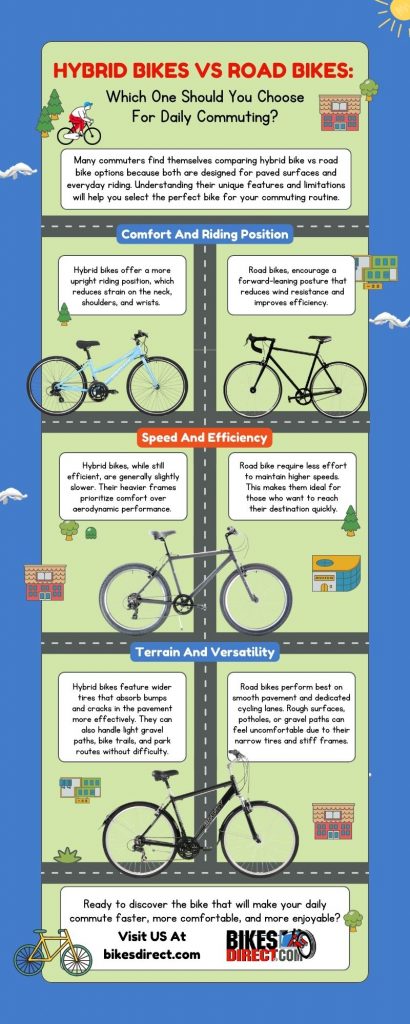
Many commuters find themselves comparing hybrid bike vs road bike options because both are designed for paved surfaces and everyday riding. However, they serve slightly different purposes and rider preferences. Understanding their unique features, advantages, and limitations will help you select the perfect bike for your commuting routine.
In this guide, we’ll break down the differences between a hybrid bike vs road bike, including riding position, comfort level, terrain compatibility, and practical commuting features, so you can confidently decide which one suits your needs.
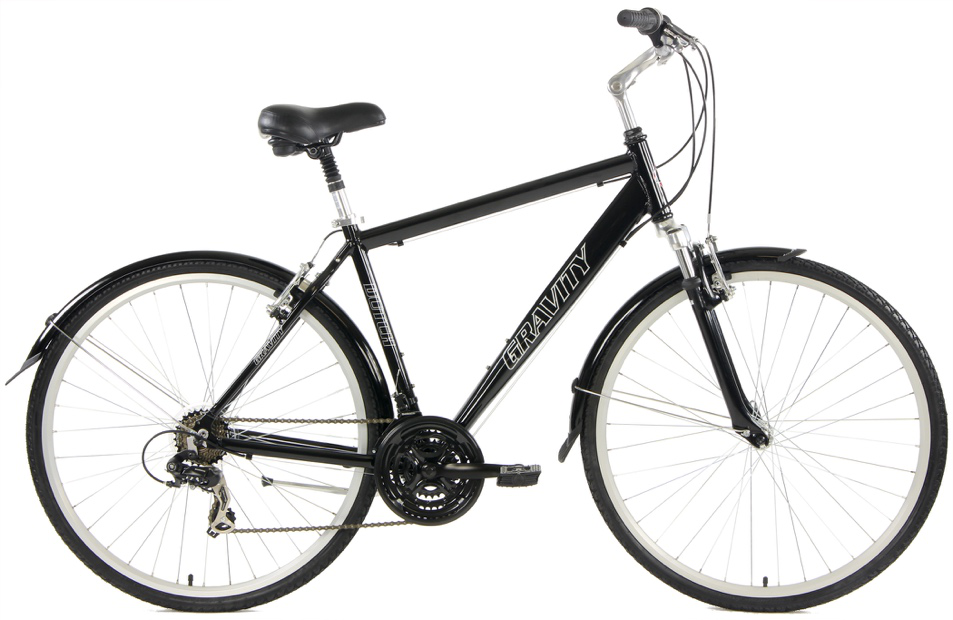
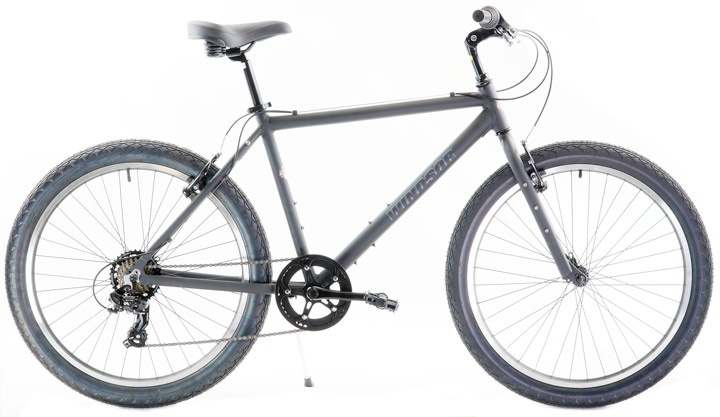
A hybrid bike blends features from road bikes, mountain bikes, and comfort bikes. The goal is to create a versatile bicycle that performs well in a variety of environments, making it ideal for commuting and casual rides.
Most hybrid models feature:
Because of their balanced design, hybrid bikes are especially popular among commuters who ride through mixed environments like city streets, bike paths, and occasional gravel paths.
Another advantage is their practicality. Many hybrid bikes include mounts for racks, fenders, and water bottles, which makes them excellent for carrying bags or groceries during daily travel.
For riders who prioritize comfort and versatility over pure speed, a hybrid bike is often one of the most practical choices available.
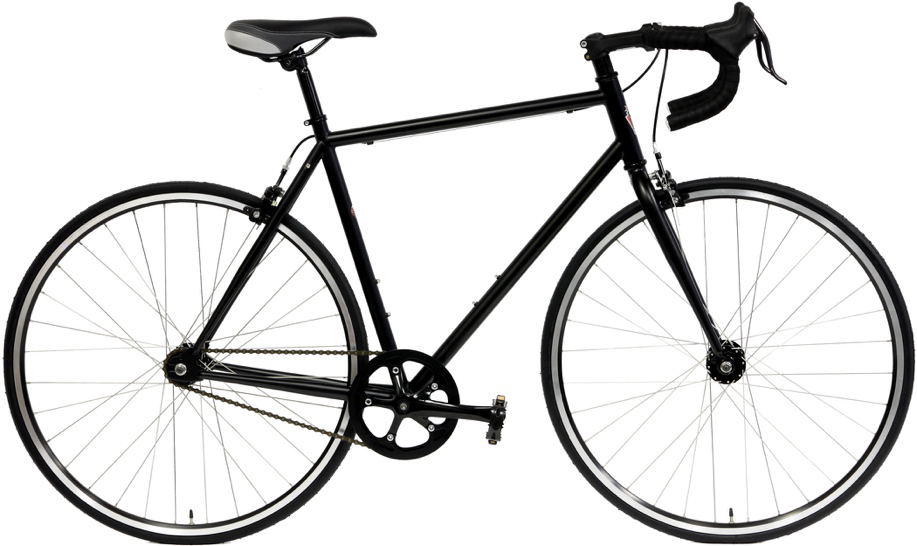
A road bike is designed primarily for speed and efficiency on smooth pavement. These bikes are built with lightweight frames, narrow tires, and aerodynamic geometry that help riders travel longer distances faster.
Typical road bike features include:
Because of their design, road bikes are often used for fitness cycling, racing, and long-distance rides on paved roads. Commuters who have longer travel distances or prioritize speed often gravitate toward road bikes.
However, their aggressive riding position and narrow tires may not always provide the same comfort level as hybrids, especially on rough city streets or uneven pavement.
Comfort is often one of the biggest factors when choosing between a hybrid bike and a road bike for commuting.
Hybrid bikes offer a more upright riding position, which reduces strain on the neck, shoulders, and wrists. This position also gives riders better visibility in traffic, which can be a major benefit when navigating busy urban streets.
Road bikes, on the other hand, encourage a forward-leaning posture that reduces wind resistance and improves efficiency. While this position helps with speed, it may feel less comfortable for beginners or riders who prefer a relaxed riding experience.
For shorter city commutes or casual riding, many people prefer the comfort-oriented design of hybrid bikes. Riders focused on performance and speed may feel more comfortable adapting to the aerodynamic position of a road bike.
Speed is where the road bike truly shines.
Because road bikes are built with lightweight frames and narrow tires, they require less effort to maintain higher speeds. This makes them ideal for commuters with longer routes or those who want to reach their destination quickly.
Hybrid bikes, while still efficient, are generally slightly slower because their wider tires create more rolling resistance. Their heavier frames and upright riding position also prioritize comfort over aerodynamic performance.
However, for many urban commuters, the speed difference is minimal compared to the added stability and comfort a hybrid bike provides.
City streets aren’t always perfectly smooth, and this is where hybrids often have an advantage.
Hybrid bikes feature wider tires that absorb bumps and cracks in the pavement more effectively. They can also handle light gravel paths, bike trails, and park routes without difficulty.
Road bikes perform best on smooth pavement and dedicated cycling lanes. Rough surfaces, potholes, or gravel paths can feel uncomfortable due to their narrow tires and stiff frames.
For commuters who encounter mixed surfaces during their ride, a hybrid bike offers greater versatility and confidence.
If your commute involves trails or rougher terrain, some riders also explore options like a gravel bike or mountain bike, which are built to handle off-road environments more easily.
When it comes to commuting convenience, hybrid bikes tend to offer more built-in practicality.
Many hybrid models include mounts for:
Road bikes typically focus on lightweight performance rather than utility. While racks and accessories can sometimes be added, they are not always the primary design focus.
For riders who need to carry work bags, groceries, or other items during their commute, a hybrid bike often provides more flexibility.
While the comparison often centers on hybrid bike vs road bike, there are other bike styles that serve specific riding environments.
For example, a fat bike is designed with extra-wide tires for riding on sand, snow, or loose terrain. These bikes offer incredible stability but are generally not the fastest option for commuting.
A beach cruiser is another comfort-oriented bicycle designed for relaxed rides along boardwalks and flat paths. While extremely comfortable, cruisers are usually better suited for leisure riding than daily commuting.
Meanwhile, riders who frequently tackle dirt trails or rugged terrain may prefer a mountain bike, which is built with suspension and aggressive tires to handle off-road conditions.
Understanding these alternatives can help riders choose a bike that perfectly matches their lifestyle and terrain.
When deciding between a hybrid and a road bike, it helps to consider a few key questions:
Short urban commutes with uneven roads often favor hybrid bikes. Longer distances on smooth pavement may make road bikes the better option.
Ultimately, the best bike is the one that matches your comfort level and riding environment.
Whether you’re searching for a comfortable commuter or a fast performance bike, choosing a high-quality bicycle makes all the difference.
At BikesDirect, riders can explore a wide selection of bikes designed for every riding style and budget. From versatile hybrid bike options to performance-focused road bike models, there are choices available for beginners and experienced cyclists alike.
With competitive pricing, trusted service, and a long-standing reputation in the cycling community, BikesDirect has helped over a million riders find the perfect bike since 1997.
Browse the full lineup today and discover the bike that will make your daily commute faster, more comfortable, and more enjoyable.
Cycling has become one of the most popular ways to stay active. People everywhere are turning to bikes for daily exercise, stress relief, and outdoor adventure. Whether someone is commuting to work, riding around the neighborhood, or training for better endurance, cycling provides a low-impact workout that improves cardiovascular health, muscle strength, and overall fitness.
One reason for this growing popularity is the versatility of modern bicycles. Riders today can choose from many different bike styles depending on their goals and terrain. Some people prefer the speed of a road bike, while others enjoy rugged off-road adventures on a mountain bike. Still others explore unpaved roads using a gravel bike.
However, for many riders looking to stay active without committing to a highly specialized bike, a hybrid bike offers the perfect balance. Designed to combine comfort, efficiency, and practicality, hybrid bikes are becoming one of the best options for everyday fitness riders.
If you’re searching for a hybrid bike for fitness, you’ll find that these bikes provide an excellent mix of comfort, performance, and adaptability, making them ideal for daily workouts, commuting, and recreational riding.
In this guide, we’ll explore why hybrid bikes are so effective for fitness training, how they compare to other types of bikes, and how to choose the right model for your riding goals.
A hybrid bike is designed to combine the best qualities of several bicycle styles into one versatile ride. As the name suggests, it blends elements from both a road bike and a mountain bike, creating a bike that performs well across a variety of everyday riding conditions. While road bikes focus primarily on speed and mountain bikes are built for rugged terrain, hybrid bikes strike a balance between comfort, efficiency, and control.
This balanced design makes hybrid bikes a popular choice for riders who want a dependable bicycle for commuting, fitness rides, and recreational cycling without needing multiple specialized bikes. Instead of being limited to one specific environment, a hybrid bike adapts easily to different surfaces and riding situations.
Several design features define what makes a hybrid bike unique and practical for everyday riders. These include:
Together, these features create a bike that is comfortable for beginners while still capable enough for more experienced riders.
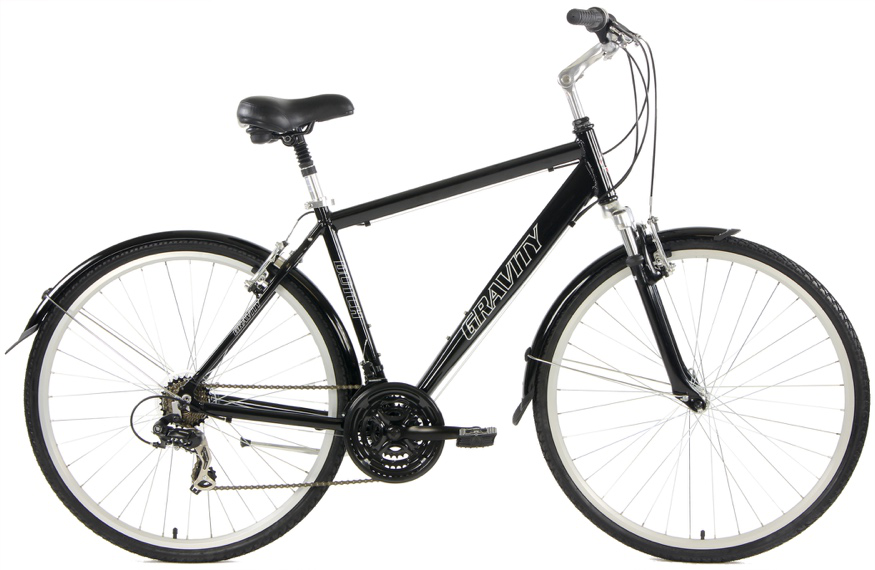
One of the biggest advantages of a hybrid bikes is its adaptability. These bikes perform well in many common riding environments, including city streets, bike paths, park trails, and even light gravel routes. Compared to a road bike, which prioritizes speed on smooth pavement, hybrid bikes provide greater stability and comfort. At the same time, they are lighter and more efficient than a mountain bike, which is typically designed for rough off-road terrain.
This combination of comfort and efficiency is exactly why hybrid bikes are such a strong choice for riders focused on fitness and everyday training.
One of the most important factors in maintaining a regular exercise routine is comfort. If a bike causes discomfort or strain, riders are far less likely to use it consistently. This is where a hybrid bike for fitness truly stands out. Hybrid bikes are designed with an upright riding position that reduces pressure on the lower back, neck, and shoulders. Instead of leaning far forward like riders often do on a road bike, cyclists sit in a more natural position that feels relaxed and stable.
This comfortable geometry allows riders to stay on the bike longer without experiencing unnecessary fatigue. For beginners who are just starting a fitness routine, this makes a significant difference. A bike that feels approachable and easy to ride encourages people to get outside more often and gradually build endurance. Over time, these consistent rides become the foundation for improved fitness and overall health.
Comfort also means riders can focus more on the experience of cycling rather than constantly adjusting their position or dealing with soreness. That’s why many people find that a hybrid bike makes it easier to stay committed to their workout goals.
While comfort is important, a fitness bike must also deliver reliable performance. A hybrid bike for fitness offers a balanced combination of efficiency and stability. Its lightweight frame and practical gearing allow riders to maintain steady speeds during workouts, while medium-width tires provide enough grip and cushioning to handle slightly uneven surfaces.
This balance gives hybrid bikes a smooth ride quality that works well for daily training. Riders can pedal efficiently on paved roads or bike paths without feeling slowed down by overly heavy components. At the same time, the bike remains stable and easy to control, even for those who are relatively new to cycling.
Compared to a road bike, hybrid bikes may not reach the same top speeds, but they compensate with improved comfort and easier handling. For everyday riders focused on regular exercise rather than racing performance, this trade-off is often ideal.
Another reason hybrid bikes are excellent fitness tools is their versatility. These bikes are designed for real-world riding situations, making them perfect for integrating exercise into daily routines. Riders can use a hybrid bike for casual workouts around the neighborhood, quick rides through city streets, or longer trips along local bike paths.
They also work well for commuting, allowing riders to turn everyday travel into a productive workout. Weekend rides become opportunities to explore parks, paved trails, or scenic routes while maintaining an active lifestyle.
Because they are adaptable and comfortable, hybrid bikes make it easier to stay active throughout the week. And when cycling becomes a regular habit, riders begin to experience the many physical and mental health benefits that come with regular exercise.
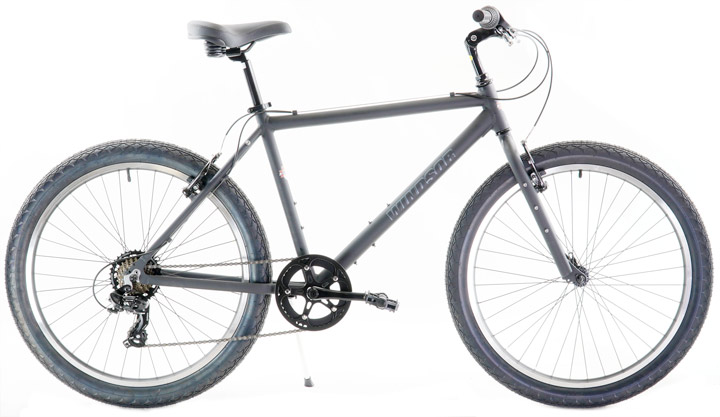
Cycling is widely recognized as one of the most effective cardiovascular exercises, and riding a hybrid bike makes it easy to incorporate this activity into everyday life. When you cycle regularly, your heart works harder to pump oxygen-rich blood throughout the body. Over time, this strengthens the heart muscle and improves overall circulation.
Using a hybrid bike for fitness allows riders to gradually build endurance while enjoying comfortable, sustainable workouts. Unlike extremely intense exercise routines that can feel overwhelming for beginners, cycling offers a steady and manageable way to improve heart health. Riders can adjust their speed, distance, and terrain to match their current fitness level while still benefiting from consistent aerobic activity.
Regular cycling can lead to several long-term health improvements. Riders often notice improved stamina, allowing them to ride longer distances with less fatigue. Cycling also supports effective calorie burning, which can contribute to maintaining a healthy weight. Additionally, steady aerobic exercise helps increase lung capacity, enabling the body to use oxygen more efficiently during physical activity.
Because hybrid bikes are comfortable and versatile, riders are more likely to stay consistent with their workouts. This consistency is key to building lasting cardiovascular health and maintaining an active lifestyle over time.
While cycling is often thought of as a lower-body workout, it actually engages multiple muscle groups throughout the body. When riding a hybrid bike, the primary muscles doing the work are the quadriceps, hamstrings, calves, and glutes. These muscles power each pedal stroke and help generate the force needed to move the bike forward.
At the same time, riders use their core muscles to maintain balance and stability while pedaling. Even though cycling may appear smooth and effortless, the body is constantly working to stay aligned and controlled. Over time, regular cycling helps strengthen these muscle groups and improves overall coordination and endurance.
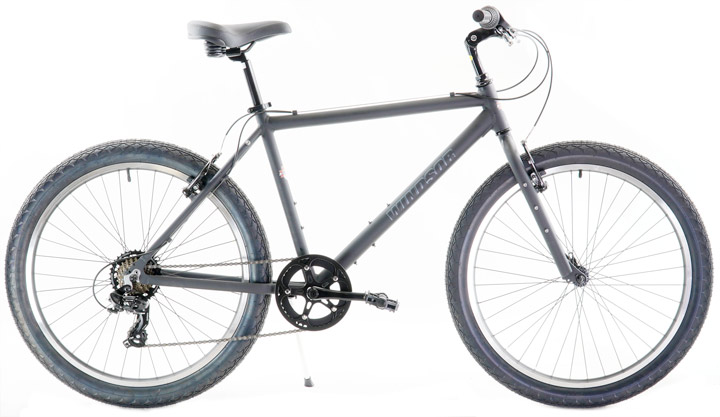
Another major advantage of cycling is that it is a low-impact form of exercise. Unlike activities such as running or jumping, cycling places significantly less stress on the knees, hips, and other joints. This makes it a safer option for people who want to stay active without risking unnecessary strain or injury.
For individuals recovering from injuries or those looking for a sustainable long-term workout routine, a hybrid bike for fitness offers an ideal solution. Riders can enjoy extended workouts while minimizing joint stress, making it easier to maintain a consistent training schedule.
With these health benefits in mind, many riders choose to incorporate cycling into structured routines that help them build endurance, strength, and overall fitness.
One of the biggest advantages of using a hybrid bike for exercise is how easily it fits into a structured fitness routine. Because hybrid bikes are comfortable, versatile, and easy to control, riders can use them for a variety of training styles throughout the week. Whether someone is just beginning their fitness journey or looking to improve endurance, a well-planned cycling schedule can help build strength and stamina gradually.
For beginners, a simple schedule might include three short rides per week lasting around 20 to 30 minutes each. These rides should focus on maintaining a comfortable pace while getting familiar with pedaling rhythm and basic bike handling. As riders become more confident, they can gradually increase both distance and ride time.
A moderate training schedule may include four to five rides per week, combining shorter weekday workouts with longer rides on weekends. This allows riders to improve cardiovascular fitness while keeping workouts manageable and enjoyable.
More experienced riders may choose endurance-focused training, which includes longer rides that last an hour or more. Because a hybrid bike balances comfort with efficiency, it adapts well to different workout intensities, making it suitable for both casual rides and more challenging training sessions.
For riders looking to improve speed and cardiovascular performance, interval training is an excellent addition to a cycling routine. Interval workouts involve alternating between periods of higher intensity and slower recovery riding.
With a hybrid bike, riders can easily incorporate short bursts of faster pedaling followed by relaxed cruising. Speed intervals help increase heart rate and improve overall fitness while keeping workouts engaging.
Hill climbs are another effective training method. Riding uphill increases resistance and forces the leg muscles to work harder, helping build strength and endurance. Riders can also adjust their gears to simulate resistance training, making the workout more challenging even on relatively flat terrain.
Hybrid bikes are also well-suited for longer rides that focus on building stamina. Thanks to their comfortable riding position and efficient pedaling design, riders can maintain a steady pace for extended periods without excessive fatigue.
These endurance rides are perfect for weekend cycling adventures, whether exploring scenic bike paths, riding through parks, or traveling along quiet roads. Over time, longer rides help strengthen the cardiovascular system while improving overall cycling confidence.
With these training options available, hybrid bikes provide a flexible foundation for building a consistent and enjoyable fitness routine. Next, it’s helpful to understand how hybrid bikes compare to other bicycle styles commonly used for exercise.
When choosing a bicycle for regular workouts, it’s helpful to understand how a hybrid bike compares with other common bike types. A road bike is designed primarily for speed and efficiency on paved roads. With drop handlebars and narrow tires, it allows riders to travel quickly over long distances. However, the aggressive riding position may feel uncomfortable for some riders who prefer a more relaxed posture for daily exercise.
A mountain bike, on the other hand, is built for rough terrain and trail riding. It typically includes suspension systems and wider tires that provide traction on uneven surfaces. While this makes mountain bikes ideal for off-road environments, the added weight and tire resistance can make them less efficient for paved fitness rides. A gravel bike sits somewhere between road and mountain bikes, offering versatility on mixed terrain, but many riders still find the flat handlebars and upright position of a hybrid bike easier and more comfortable.
Other bikes serve more specialized purposes. A beach cruiser focuses on comfort and relaxed riding rather than performance, making it better suited for casual rides than fitness training. A fat bike, known for its oversized tires, is designed for sand, snow, and extreme terrain rather than everyday workouts.
When selecting a hybrid bike, riders should consider several important features. Frame material plays a role in both weight and durability. Aluminum frames are common because they are lightweight and affordable, while steel frames offer durability and comfort. Some higher-end bikes may use carbon materials for even lighter performance.
Tire width also affects the riding experience. Medium-width tires provide a balance between grip and speed while absorbing small bumps in the road. In addition, a reliable gearing system helps riders handle hills and maintain consistent pedaling during longer rides. Quality brakes, such as disc brakes or rim brakes, also improve safety and control.
Choosing the right hybrid bike for fitness depends on a rider’s goals and typical riding environment. Riders should consider whether they plan to cycle mainly on city streets, paved trails, or mixed terrain. Distance expectations also matter, since longer rides may require more comfortable geometry and efficient gearing.
Proper bike fit is equally important. Selecting the correct frame size, handlebar height, and saddle design ensures a comfortable riding experience that supports longer workouts.
Consistency is key when using cycling as a fitness routine. Setting realistic goals helps riders build endurance gradually while avoiding burnout. Tracking progress with cycling apps or fitness trackers can also provide motivation and insight into improvements over time.
Cycling can easily become part of everyday life. Using a hybrid bike for commuting, running errands, or weekend rides helps turn regular activities into opportunities for exercise.
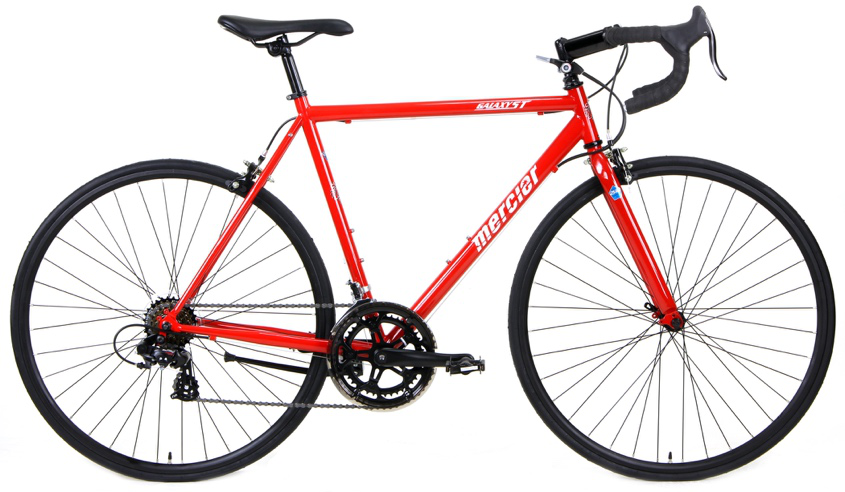
A hybrid bike combines comfort, versatility, and efficiency, making it an excellent choice for riders focused on health and everyday training. Whether commuting, exploring local paths, or enjoying weekend rides, hybrid bikes provide a practical way to stay active while enjoying the outdoors.
If you’re ready to start riding and improve your fitness routine, explore the wide selection of hybrid bike models available at BikesDirect.
Their bikes combine quality components, reliable performance, and exceptional value, making it easier than ever to find the perfect bike for your daily workouts, commuting rides, and weekend adventures.
Browse their collection today and discover the ideal hybrid bike for fitness that matches your goals.
Most riders aren’t deciding between racing downhill through rock gardens or chasing podium finishes. They’re trying to answer a simpler question: which bike will feel good on the streets they actually ride?
When comparing a hybrid vs. mountain bike, the difference shows up in everyday moments. Rolling over cracked pavement. Climbing a short hill on the way to work. Coasting along a paved trail. Taking a spontaneous turn onto light gravel.
A hybrid bike is built for mixed surfaces and practical comfort. A mountain bike is designed for traction, control, and impact absorption on rough terrain. Both can handle real-world riding, but they feel very different once you start logging miles.
This guide breaks down what changes between the two in terms of speed, comfort, tire width, suspension, maintenance, and overall ride experience. The goal is simple: help you choose the bike you’ll actually want to ride more often.
A hybrid bike blends the upright comfort of a city bike with the efficiency of a road bike. It typically features:
Hybrids are built for versatility. They’re comfortable on pavement, stable on bike paths, and capable on light gravel or crushed stone. They prioritize efficiency without forcing an aggressive riding position. For most everyday riders, that balance matters more than extreme capability.
A mountain bike is engineered for control on unpredictable terrain. Standard features include:
Mountain bikes shine on dirt trails, loose gravel, rocks, roots, and steep descents. The design favors traction and durability over rolling speed. On smooth pavement, though, those same features can feel slower and heavier than necessary.
For most riders, pavement makes up the majority of miles. This is where the hybrid vs mountain bike comparison becomes obvious. Hybrid bikes roll faster on smooth surfaces. Their tires are narrower and less aggressive, which reduces rolling resistance. That means less effort per mile and a smoother, quieter ride.
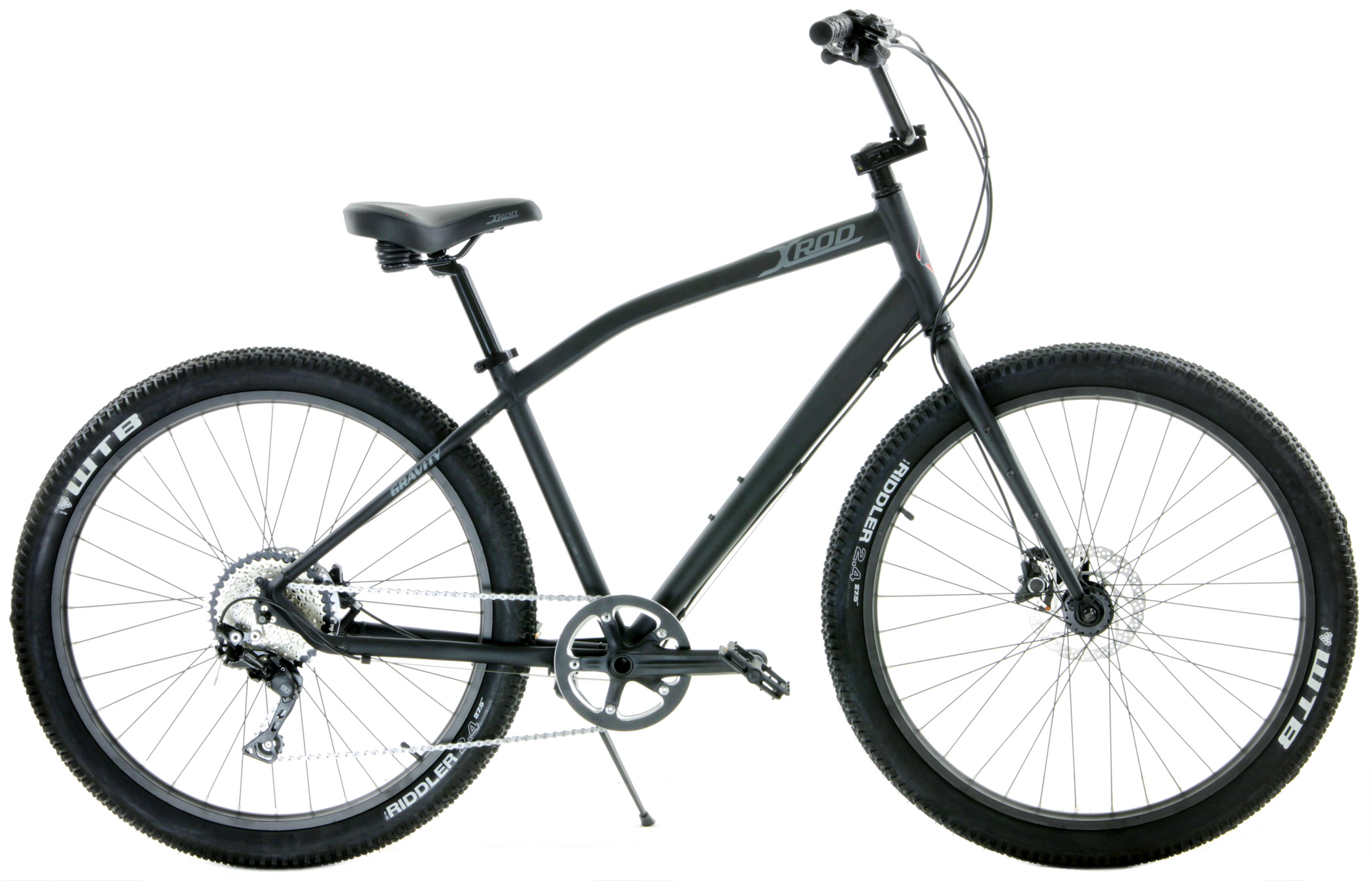
Mountain bikes, with their knobby tires and suspension systems, absorb more energy. You feel stable, but you work harder to maintain the same speed. The difference may not matter on short errands, but over 10 to 15 miles, it adds up. If your rides are primarily city streets, paved paths, or suburban roads, a hybrid often feels lighter and more responsive. The Gravity X-Rod 10 leans slightly sportier within the hybrid category. With multi-speed gearing and a lighter frame feel, it maintains strong rolling efficiency on pavement while remaining stable on park paths and light gravel. Riders who want fitness-focused performance without the forward-leaning posture of a road bike often find this style appealing. It shows how hybrids can feel quick and responsive without becoming specialized or demanding.
Not all pavement is smooth. Many riders deal with cracked asphalt, potholes, expansion joints, and uneven surfaces.
Here, mountain bikes feel planted. The wide tires and suspension soak up bumps. The bike tracks straight even when the surface is unpredictable.
Hybrid bikes still perform well on rough roads, especially models with slightly wider tires. Many riders find that proper tire pressure and good saddle choice make more difference than suspension for typical city riding.
For moderate bumps and debris, hybrids are usually comfortable enough without the added weight and maintenance of full suspension.
Crushed limestone paths and light gravel trails are common weekend routes. This terrain is often where riders start wondering about capability.
Hybrid bikes handle light gravel confidently. Their tires offer enough grip for stable cornering while maintaining good rolling speed.
Mountain bikes feel extremely secure on gravel. If your routes regularly include loose surfaces, deeper stones, or uneven trail sections, that added traction may matter.
Some riders also consider a gravel bike for this category. Gravel bikes lean closer to road geometry but with wider tires and drop bars. However, if you prefer flat handlebars and upright comfort, hybrids remain a practical choice.
For casual gravel paths rather than technical trails, hybrids usually feel sufficient and more efficient.
True off-road trails with roots, rocks, tight turns, and elevation changes are mountain bike territory. The geometry, suspension, and braking systems of a mountain bike provide control that hybrids cannot match on technical terrain.
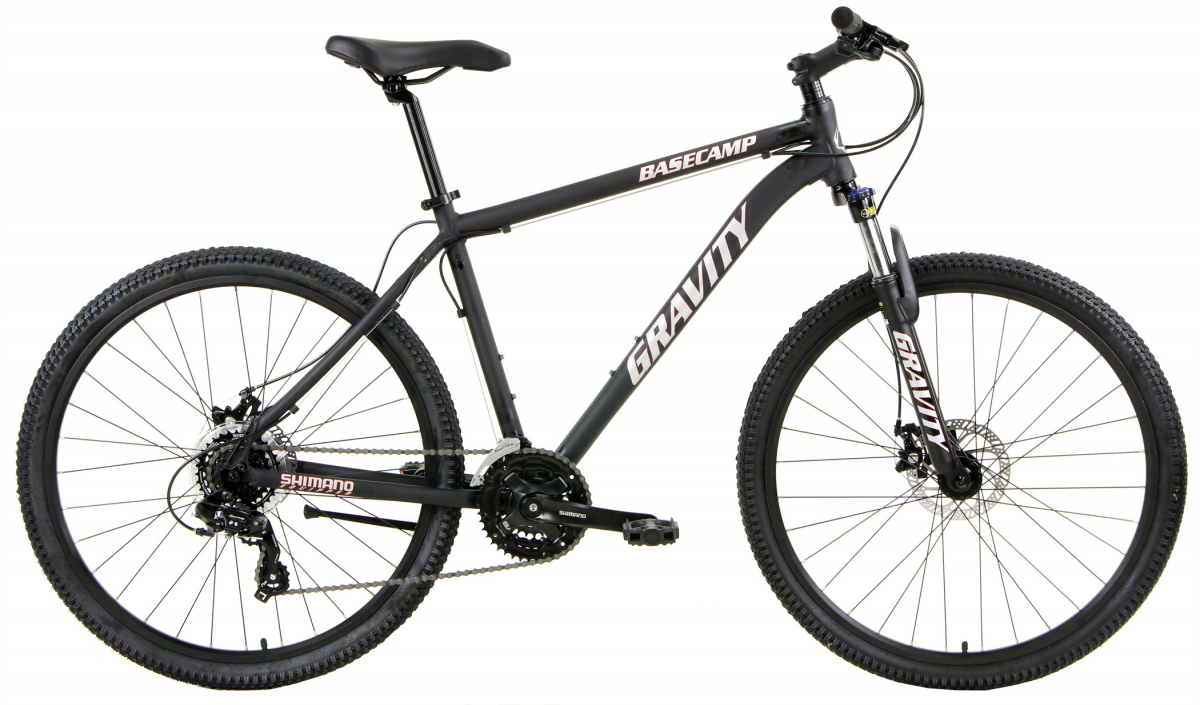
If your plan includes regular singletrack riding or challenging dirt trails, the mountain bike’s design advantages become essential rather than optional. But for riders whose “trails” mean park paths and packed dirt, a hybrid often covers the need. For riders who want a capable trail machine without stepping into overly aggressive territory, the Gravity Basecamp LTD27 represents what modern hardtail mountain bikes do well. Built around a durable aluminum frame with 27.5-inch wheels, it balances maneuverability and stability on tight turns and rolling singletrack. The suspension fork absorbs roots and rocky chatter, while wide tires maintain grip when terrain becomes unpredictable. It’s a strong example of how a mountain bike prioritizes control and confidence when pavement ends and real trail riding begins.
Sand and snow require specialized traction. In these conditions, even mountain bikes can struggle. A fat bike is built specifically for soft surfaces, using extra-wide tires to distribute weight and maintain grip. Neither a standard hybrid nor a standard mountain bike matches that performance in deep sand or snow. If these surfaces are rare in your riding routine, they shouldn’t dictate your primary bike choice.
Some riders prioritize comfort above all. Short neighborhood loops, boardwalk paths, or slow weekend spins. A beach cruiser is built specifically for that relaxed experience, with wide saddles and simple gearing. Hybrids can deliver a similar upright feel while offering more versatility and gearing options. Mountain bikes feel more aggressive in this setting. Their suspension and knobby tires are often unnecessary for casual cruising.
Tire width significantly affects ride feel. Hybrid tires typically range from 32mm to 45mm. They strike a balance between efficiency and comfort. Mountain bike tires often start around 2.2 inches wide and go up from there. The increased air volume improves shock absorption and traction but increases rolling resistance.
For pavement and light mixed use, moderate-width hybrid tires provide enough comfort without slowing you down.
Suspension improves comfort on rough terrain. But it also adds weight, complexity, and maintenance. Front suspension on a mountain bike absorbs impacts and increases control on trails. On smooth pavement, though, that movement can feel inefficient.
Many hybrid bikes use rigid forks. Some include short-travel suspension for added comfort. For everyday city riding, rigid setups often feel simpler and more responsive. If your rides rarely involve technical off-road terrain, full suspension can become unnecessary complexity.
Mountain bikes generally require more maintenance due to:
Hybrid bikes tend to be simpler and easier to maintain, especially when used primarily on pavement.
For riders who value low upkeep and straightforward ownership, this difference matters over time.
If your goal is fitness, rolling efficiency makes a difference. Hybrid bikes allow steady, comfortable miles without excessive effort from tire drag. They encourage longer rides on mixed surfaces. Mountain bikes build strength through added resistance, but many riders find themselves working harder than necessary on pavement. If your fitness plan includes paved routes and bike paths, hybrids often feel more sustainable.
The Motobecane Fantom 2.5 EAGLE shows how far modern hardtail performance has evolved. Equipped with a wide-range 1x drivetrain, it simplifies shifting while giving riders the gearing needed for steep climbs and fast descents. The 27.5-inch platform keeps handling responsive, especially on technical terrain where quick direction changes matter. For riders who regularly push into dirt, rock gardens, and elevation shifts, this kind of build demonstrates when a mountain bike becomes more than practical, it becomes necessary.
Commuters need reliability, comfort, and efficiency. Hybrids typically include mounting points for racks and fenders, making them practical daily transport.Mountain bikes can commute, but their heavier build and tire drag may feel excessive unless your route includes rough trails. For urban travel, hybrids often feel better suited.
The WFB SuperCommute is a practical example of how a hybrid bike supports everyday riding. Its flat-bar design keeps posture upright and comfortable, while disc brakes provide reliable stopping power in varied weather. The steel frame adds durability without sacrificing ride quality, making it well suited for daily commuting, errands, or fitness miles on mixed pavement. It reflects what hybrids do best: combine efficiency with comfort in a way that encourages consistent riding.
Weekend rides with family or friends usually involve mixed surfaces and moderate speeds.
Hybrid bikes fit this category well. They’re stable, comfortable, and efficient.
Mountain bikes excel if recreation includes real trail exploration rather than paved park paths.
If adventure means exploring forest roads, rocky climbs, and uneven terrain, mountain bikes offer clear advantages. If adventure means mixing pavement with light gravel detours, hybrids often provide enough capability without sacrificing speed.
For pure speed on pavement, a road bike remains unmatched. Neither hybrids nor mountain bikes are designed for competitive road performance. But between the two, hybrids generally maintain higher average speeds on smooth surfaces. Mountain bikes are performance machines in the dirt, not on the street.
When deciding in the hybrid vs mountain bike debate, ask:
If most of your miles are pavement, paths, and light gravel, hybrids often feel more enjoyable long term.
If technical dirt trails are a regular part of your routine, mountain bikes justify their design.
A bike that feels easy to ride gets used more often. That consistency builds fitness, confidence, and enjoyment. Choosing based on realistic riding patterns, rather than extreme scenarios, leads to better long-term satisfaction.
Hybrid bikes simplify daily miles. Mountain bikes expand off-road capability. Neither is universally better. The right choice depends on your terrain, goals, and maintenance preferences. In the end, the better bike is the one that matches your actual roads, not the toughest route you might ride once. Explore the category that fits your real-world riding style and choose the bike that makes you want to head out again tomorrow.
The hybrid vs mountain bike decision becomes simple when you focus on your real routes, not extreme scenarios. Think about where your wheels spend most of their time. Smooth pavement, neighborhood streets, park paths, light gravel, or technical dirt trails. The right bike should feel natural on those surfaces and motivate you to ride consistently.
If your miles lean toward pavement, bike paths, commuting, and weekend fitness loops, explore a hybrid bike built for comfort and rolling efficiency. If your riding includes rocky terrain, root-covered trails, and steeper off-road climbs, a dedicated mountain bike delivers the traction and control those environments demand.
For riders mixing pavement with rougher backroads, a versatile gravel bike offers another practical option. If speed on smooth roads is the priority, a purpose-built road bike keeps effort low and momentum high. Planning to ride sand or snow? A wide-tire fat bike provides the flotation and grip those surfaces require. And for relaxed neighborhood cruising or boardwalk rides, a comfortable beach cruiser keeps things simple and enjoyable.
The best bike is the one that fits your terrain, your pace, and your goals. Explore the category that aligns with how you actually ride, and choose the bike that makes you want to head back out tomorrow.
Riding in your 30s and beyond tends to look different from how it did in your teens or early 20s. You’re not trying to prove anything. You’re trying to feel good. You want a bike that supports consistency—something comfortable enough to ride often, efficient enough to feel rewarding, and practical enough to fit into a normal week.
That’s why the smartest choice for many riders over 30 isn’t the most aggressive setup—it’s the one that strikes a balance between ergonomics and value. For many people, it starts with a hybrid bike, as it’s built around comfort, stability, and real-world versatility. Here’s everything you need to know to buy the best bikes for adults.
Over 30, most riders become more sensitive to the friction points that make cycling harder to stick with:
The goal becomes simple: ride more often with less discomfort. The right bike type makes it easier because it removes barriers—both physical and practical.
If you want one bike that works for commuting, casual fitness rides, and everyday routes, hybrids are often the most forgiving option. They’re typically designed with an upright posture, predictable handling, and a setup that feels natural on streets and paths.
A hybrid also makes it easier to ride in normal clothes, carry a small bag, and handle rough pavement without feeling under-biked. That’s why a hybrid bike is so often the category that turns “I ride sometimes” into “I ride every week.”
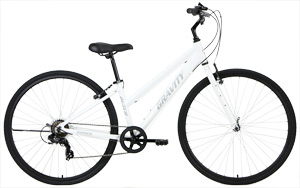
For a comfort-first example, the Gravity Dutch Express Lifestyle Hybrid is a strong fit for riders who value relaxed posture and practical everyday usability. If you want a balanced all-rounder feel that suits both commuting and weekend loops, the Windsor Rover 2 is another sensible option.
Many riders over 30 still crave the efficient, fast feels fun experience, but without the race-first posture. The key is choosing a practical, real-world road bike setup and prioritising fit, tire choice, and sensible gearing rather than chasing the most aggressive geometry.
If your main goal is fitness—steady midweek rides, longer weekend loops, and improving pace over time—a road-style setup can be incredibly motivating.
A good entry point is the Mercier Galaxy ST Express, which suits riders who want efficient miles without buying into race-only upgrades. If you want a more performance-leaning option for building longer fitness rides, the Windsor Wellington 2 XV XTL is another strong pick.
Many riders over 30 don’t want their enjoyment to depend on perfect pavement. If your routes include rough roads, mixed-surface paths, or you simply like the freedom to explore, a gravel bike can be the sweet spot between efficiency and confidence.
Gravel-style setups tend to prioritize comfort through tire volume and stability, while still offering a quick enough feel for fitness riding. If you’re looking for the “one bike, lots of routes” approach, BikesDirect offers several options that make comparison straightforward.
For example, the Gravity Gravel Zilla Elite Disc Carbon fits riders who want lively performance while staying versatile. If you prefer a more comfort-leaning, durable ride feel for long miles, the Motobecane Mulekick 853 Steel is worth a close look.
A mountain bike isn’t only for trails anymore. If your local roads are cracked, pothole-heavy, or you ride a lot of parks and mixed paths, MTB geometry and wider tires can feel more comfortable and confidence-inspiring than a skinnier-tire setup.
For riders who value stability and a tough, real-world ride feel, the Gravity Basecamp V7 is a practical example of a hardtail. If you’re looking for a simple and dependable setup for everyday mixed-surface riding, the Motobecane 300HT is another good option. And if comfort is the top priority on rougher routes, a full-suspension option like the Gravity FSX 2 can make bumpy riding feel far smoother.
If your riding is mostly short trips, neighbourhood cruising, and relaxed errands, a beach cruiser can be the most enjoyable category. Upright posture and easy handling make riding feel casual and accessible—especially if you’re not chasing speed.
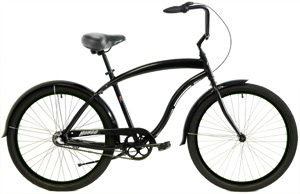
For classic comfort-first riding, the Mango Toucan Cruiser is a great example. If you’re looking for a lighter-feeling option for frequent short trips, the Mango Sand Piper Aluminum Cruiser is worth considering. The Mango Macaw 3 Aluminum Cruisers also fit riders who want that relaxed, everyday cruiser feel.
If you want a simple way to decide, start with your “most common ride,” not your aspirational ride.
The best category is the one that feels good on the rides you’ll actually do weekly.
For riders over 30, the best bike is rarely the most aggressive one. It’s the bike that fits your body, suits your routes, and feels comfortable enough that you’ll ride consistently. For many people, a hybrid bike is the smartest starting point because it balances comfort, stability, and everyday versatility without forcing race-first compromises.
BikesDirect has built its reputation around value-driven options across categories—so riders can choose based on real riding needs, not hype. Whether you want a comfort-focused hybrid, a practical road bike for fitness, or a versatile gravel bike for mixed routes, the key is choosing a setup that keeps you riding.
If you want help choosing the right model and size, contact BikesDirect here.
The question usually starts small. Someone walks into cycling, curious but unsure. They want to ride more, maybe commute a few days a week, explore trails on weekends, or simply get fitter without feeling locked into one style of riding. They look at two bikes that seem similar at first glance and ask the question that has become increasingly common: Should I get a hybrid or a gravel bike?
The hybrid vs gravel bike debate isn’t about which bike is better overall. It’s about which bike fits your life better. Both categories were created to escape the limitations of traditional bikes. Both promise versatility. But they approach that goal in very different ways, and those differences matter more than most riders realize.
This guide breaks down speed, comfort, terrain handling, maintenance, and real-world use so you can make a confident, informed decision.
Cycling has changed. Riders no longer fit neatly into categories like “road cyclist” or “mountain biker.” Today’s riders commute during the week, ride paths after work, and chase dirt roads on the weekend. They want a bike that adapts to life, not the other way around.
That shift is why hybrid and gravel bikes have exploded in popularity. Each offers freedom from specialization, but they serve different types of freedom. Understanding the difference between a hybrid bike and a gravel bike starts with understanding how you actually ride, not how you imagine riding someday.

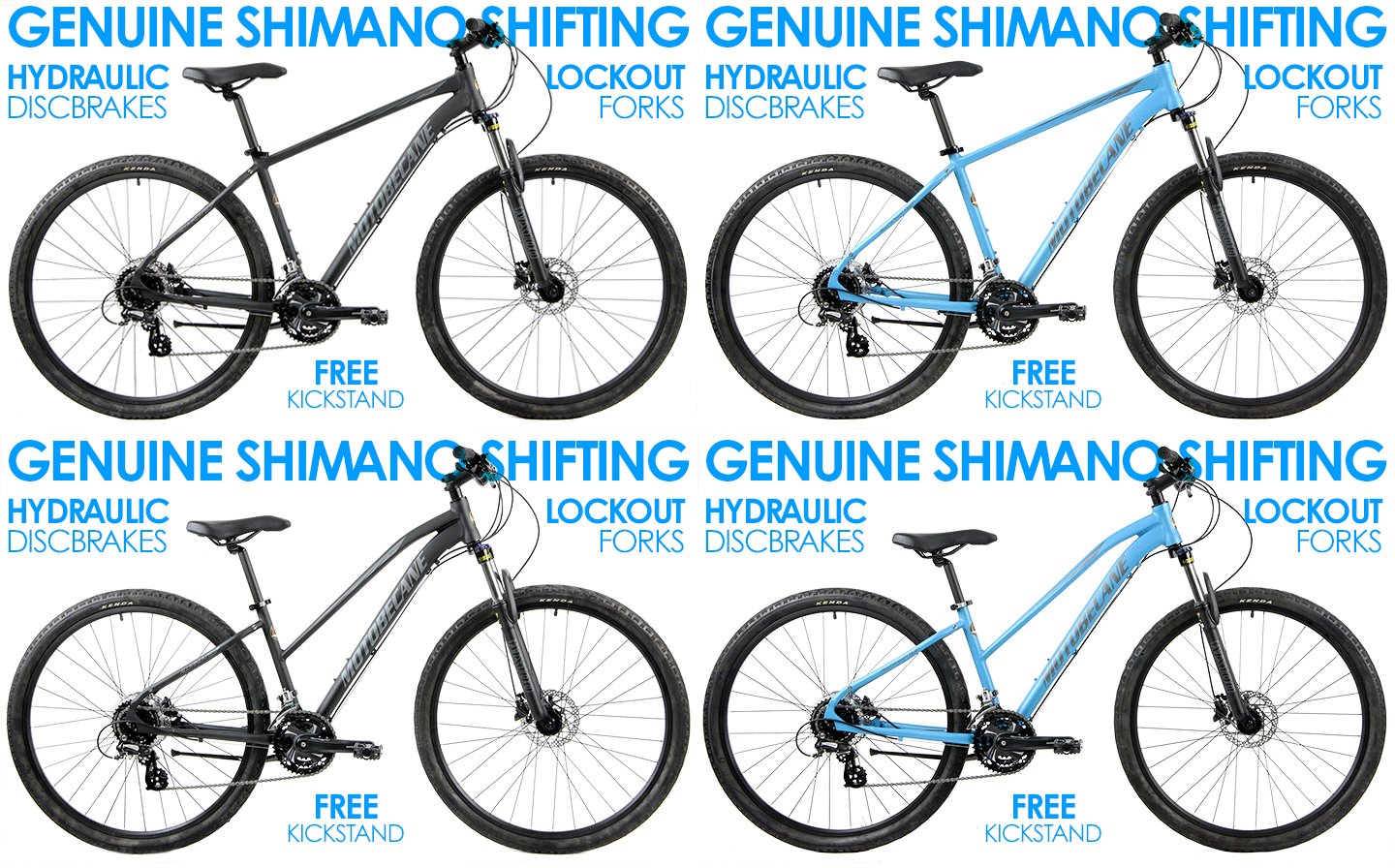
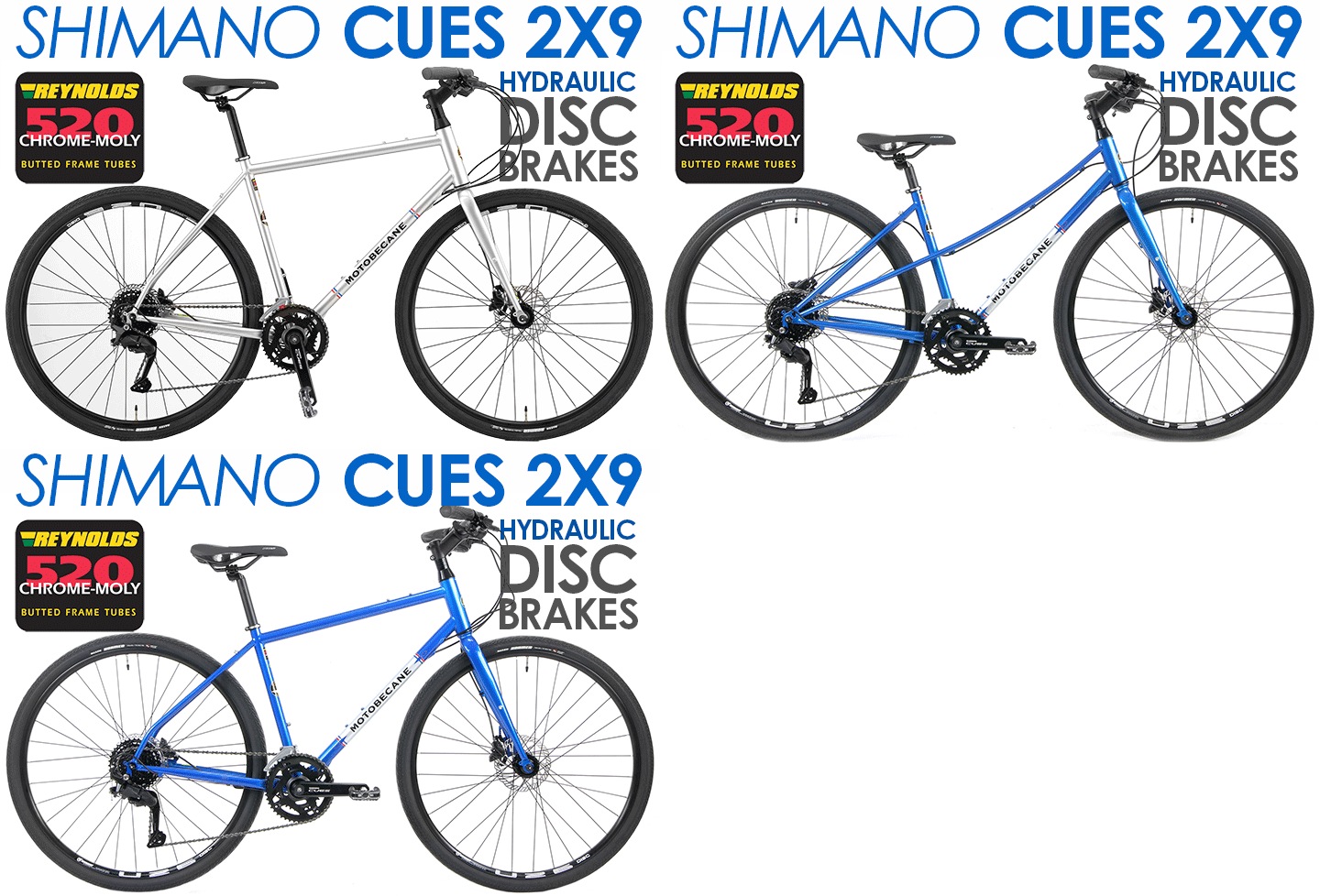
A Bikesdirect hybrid bike is built around approachability. It blends elements of road and mountain bikes but prioritizes comfort, ease of use, and everyday practicality. Upright geometry reduces strain on the back and neck. Flat handlebars offer intuitive control. Tires are wide enough to smooth rough pavement and light trails without slowing you down.
Hybrid bikes are often chosen by riders who value comfort and versatility over outright speed. They excel at commuting, fitness riding, neighborhood cruising, bike paths, and light gravel or dirt. If your riding includes errands, casual rides, or mixed urban terrain, a hybrid feels natural almost immediately.
Many riders transitioning from a beach cruiser or returning to cycling after a long break find hybrids welcoming. They feel stable at low speeds and forgiving when stopping or starting frequently.
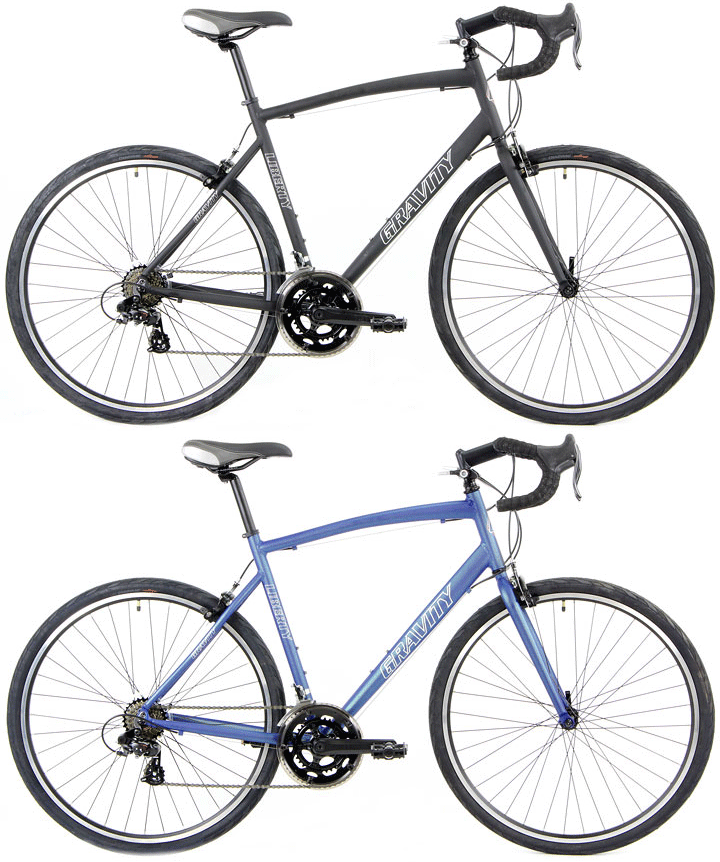
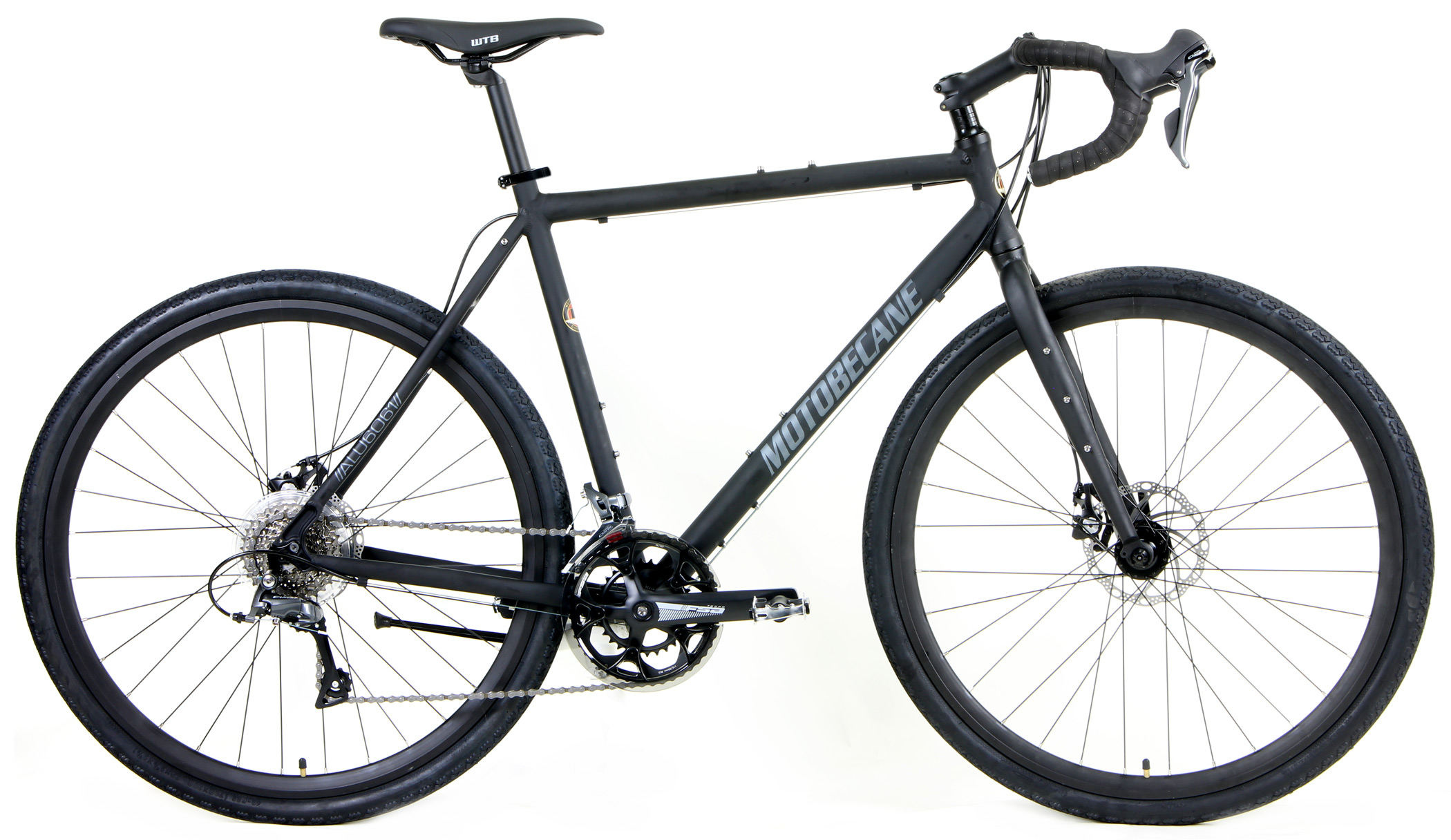
A gravel bike takes a different approach. Instead of prioritizing upright comfort, gravel bikes prioritize efficiency across unpredictable terrain. They borrow speed and geometry cues from the road bike world while adding stability, tire clearance, and durability inspired by off-road riding.
Drop handlebars allow multiple hand positions, which matters on longer rides. Frames are shaped for stability when surfaces change quickly. Tires are wider and often more aggressive than road tires, but narrower and faster than most mountain bike tires.
Gravel bikes are designed for riders who want to cover distance. They shine on long mixed-terrain routes, gravel roads, forest service paths, and endurance-style adventures. If you enjoy riding for hours, exploring unfamiliar routes, or linking pavement with dirt seamlessly, gravel bikes feel purpose-built.
Speed is often misunderstood in the hybrid vs gravel bike discussion. On paper, gravel bikes are faster. Their geometry is more aerodynamic, their wheels roll efficiently, and their drivetrain choices favor sustained momentum. On open pavement or packed gravel, a gravel bike will usually outpace a hybrid ridden at the same effort.
However, speed isn’t just about top-end velocity. It’s also about how easily you can maintain your pace. Hybrids trade raw speed for relaxed efficiency. Their upright posture makes breathing easier for many riders. Acceleration feels less demanding. For short trips, stop-and-go riding, or casual fitness loops, hybrids often feel “fast enough” without feeling demanding.
If you’re coming from a road bike, a hybrid may feel slower but more forgiving. If you’re coming from a mountain bike, a gravel bike will feel dramatically faster while still handling rough surfaces.
Comfort is where the choice becomes personal. Hybrid bikes win immediate comfort. Upright positioning reduces pressure on wrists and lower back. Flat bars feel intuitive. Wider saddles and forgiving frames absorb vibration well.
Gravel bikes approach comfort differently. They distribute weight more evenly between hands, saddle, and pedals. Drop bars allow position changes, which reduces fatigue over long rides. While the posture is more forward, many riders find gravel bikes more comfortable over distance once they adapt.
If your rides are under an hour and include frequent stops, hybrids often feel more relaxed. If your rides stretch into multiple hours, gravel bikes often feel better as fatigue builds.
This is the heart of the hybrid vs gravel bike decision.
Hybrid bikes handle pavement, bike paths, and smooth dirt extremely well. They tolerate gravel, but deep or loose surfaces can feel sketchy at speed. They are not built for aggressive off-road riding, but they don’t need to be.
Gravel bikes are designed for uncertainty. Loose gravel, washboard roads, hard-packed dirt, and mixed pavement transitions are exactly where they excel. Wider tires, longer wheelbases, and stable geometry allow riders to maintain control without slowing dramatically.
For truly rough terrain, roots, rocks, or steep technical trails, a mountain bike or fat bike is still the better tool. Gravel bikes are not mountain bikes. But for everything between smooth pavement and technical trails, gravel bikes dominate.
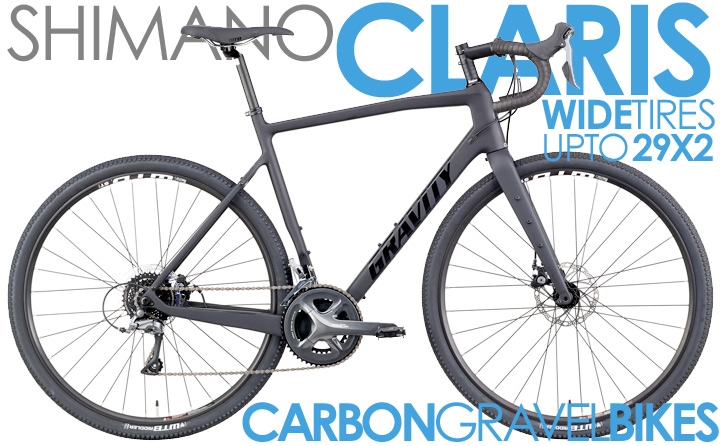
New riders often feel more confident on hybrids initially. The upright stance improves visibility. Flat bars feel familiar. Putting a foot down at stops feels natural.
Gravel bikes require a short learning curve, especially for riders unfamiliar with drop bars. Once that adjustment happens, many riders find gravel bikes incredibly confidence-inspiring at speed, especially on mixed surfaces.
If you prioritize immediate ease and confidence, hybrids have the edge. If you’re willing to learn and grow into your bike, gravel bikes reward you over time.
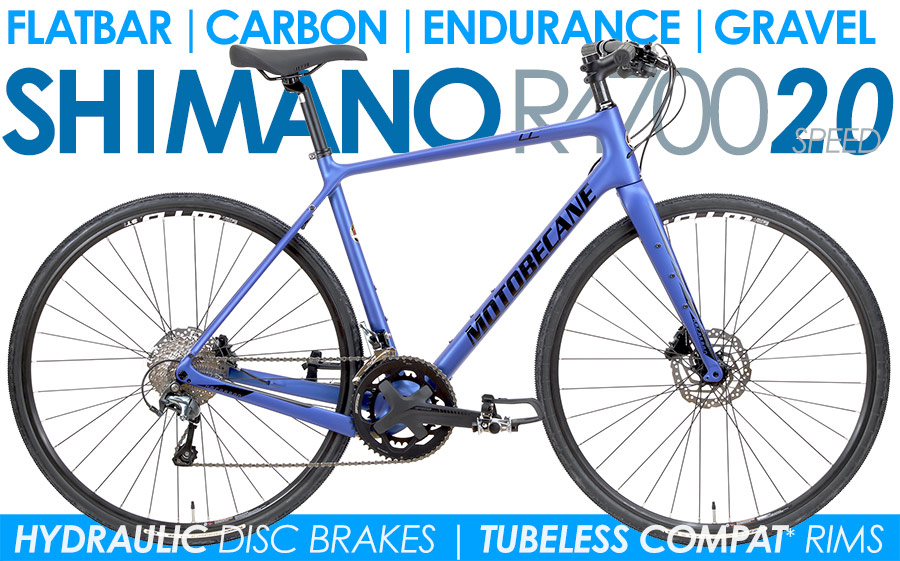
Maintenance is often overlooked, but it matters.
Hybrid bikes are generally simpler. Flat-bar controls are straightforward. Replacement parts are common and affordable. Adjustments are easy for beginners to understand. If you plan to do basic maintenance yourself, hybrids feel less intimidating.
Gravel bikes often use road-style components. While still reliable, they can be slightly more complex to adjust. Drop-bar shifters combine braking and shifting into one unit, which can increase replacement cost.
Neither bike is high-maintenance by nature, but hybrids tend to be slightly easier and cheaper to own long-term, especially for casual riders.
Your goals matter more than marketing.
If fitness means moderate rides, steady effort, and enjoying the process, hybrids align well. They encourage consistency. They don’t punish casual riding.
If fitness means endurance, distance, and progression, gravel bikes often feel more motivating. They encourage exploration and longer routes, which naturally build fitness over time.
Many riders who start on hybrids eventually move to gravel bikes as their confidence and ambition grow. Very few move in the opposite direction unless their priorities change.
When comparing hybrids and gravel bikes to other popular categories, their versatility becomes clearer. Against a traditional road bike, both hybrids and gravel bikes offer a more forgiving ride. Road bikes prioritize speed and efficiency on smooth pavement, but that focus often comes at the cost of comfort and flexibility. Hybrids and gravel bikes soften the ride with wider tires and more relaxed geometry, allowing riders to move confidently beyond perfect asphalt and onto varied surfaces without feeling restricted.
When placed next to a mountain bike, hybrids and gravel bikes stand out for efficiency. Mountain bikes excel on technical trails, roots, and steep descents, but their weight, suspension, and aggressive tires can feel sluggish on pavement and bike paths. Hybrids and gravel bikes roll faster, accelerate more easily, and feel better suited for everyday riding when smooth surfaces make up most of the route.
Compared to a beach cruiser, both bikes dramatically expand how far and how long you can ride. Cruisers shine in relaxed, short-distance scenarios, but they sacrifice efficiency and adaptability. Hybrids and gravel bikes maintain comfort while adding gearing, responsiveness, and terrain flexibility that open the door to longer rides and broader exploration. Between the two, gravel bikes cover a wider performance envelope, while hybrids cover a wider lifestyle envelope, blending cycling into daily routines with minimal friction.
A hybrid bike is a natural fit if your riding includes commuting, errands, fitness loops, bike paths, and casual exploration. Comfort, ease of use, and practicality define the hybrid experience. Riders who prefer upright positioning, frequent stops, and the ability to ride in everyday clothes often find hybrids seamlessly fit into their lives.
A gravel bike suits riders drawn to longer distances, mixed terrain, backroads, and adventure. If speed, efficiency, and exploration motivate you, gravel bikes feel equally at home on pavement and dirt, encouraging curiosity beyond familiar routes. The hybrid vs gravel bike choice is not about right or wrong. It is about alignment with how you want to ride.
Think beyond your first month of riding. Think about where you want to ride six months from now. Think about whether your curiosity leans toward comfort or adventure. Hybrids often become lifelong companions for practical riders. Gravel bikes often become gateways into endurance cycling, bikepacking, and exploration. Both bikes can change how you experience cycling. The best one is the one that makes you want to ride tomorrow.
The beauty of modern cycling is choice. You no longer have to fit into a rigid category. Both hybrid and gravel bikes represent freedom from limitation, just expressed differently. If you understand how you ride, where you ride, and why you ride, the answer becomes clear.
Explore the full range of hybrid and gravel options at Bikesdirect.com and find the bike that matches your goals, terrain, and riding style. Compare features, pricing, and designs all in one place, and get more performance for your investment. Whether you lean toward comfort or adventure, we make it easy to choose confidently and start riding the way you want—today.
Starting to ride again (or for the first time) should feel simple: buy a bike, ride it often, and gradually build confidence. But the internet turns the first bike into a maze of options, specs, and opinions. Road bikes look fast but can feel intimidating. Mountain bikes look tough but can feel sluggish on pavement. And comfort bikes can be great… until you want to go a little farther or a little faster.
That’s why a hybrid bike for beginners is such a smart entry point. It’s the kind of bike that meets you where you are now, then keeps making sense as your riding improves.
Most new riders aren’t training for races or planning all-day trail adventures. They’re doing real-life riding: neighborhood loops, paved paths, light commuting, weekend fitness rides, and the occasional detour down a rougher shortcut. The bike that works best for that kind of riding is the one that feels natural on day one.
The biggest mistake we see is people choosing a bike for a version of themselves that doesn’t exist yet. They buy something overly specialized, then the bike ends up feeling uncomfortable, twitchy, heavy, or simply not fun. When a bike isn’t fun, you don’t ride it. And when you don’t ride it, you don’t improve.
A great first bike should be confidence-building, comfortable enough for longer rides, and versatile enough that you can try different routes without worrying whether you brought the wrong bike. That’s exactly the role hybrids fill.
The first few rides matter more than most people realize. If the bike feels stable, comfortable, and predictable, you’ll ride more often. If it feels awkward or hard to control, you’ll find reasons not to ride.
Hybrids typically lean toward:
This is why hybrids are often the confidence multiplier. You can look around, relax your shoulders, and focus on riding instead of surviving. And when you’re ready to ride farther, you’re not fighting the bike’s posture or balance.
Hybrids also tend to be beginner-friendly in the way they fit into life. You can add a bottle cage, throw on a set of lights, and take the same bike to a park path on Saturday and a quick grocery run on Tuesday.
When you’re starting out, the best value isn’t the cheapest bike; it’s the bike you’ll actually ride consistently. That’s where hybrids shine: they give you a wide range of use cases without requiring you to pay for highly specific performance features you may not need yet.
A hybrid bike is built for the middle ground, where most riding actually happens. It’s not pretending to be a race machine or a trail weapon. Instead, it’s designed to feel good on typical routes: pavement, bike paths, and the kind of slightly rough roads most people deal with every day.
For new riders, that middle ground is powerful because it keeps your options open:
This is how you get momentum. And momentum is what turns “I should ride more” into “I’m riding three times a week.”
You don’t need to memorize every spec to choose well. Focus on what affects comfort, confidence, and day-to-day usability.
A bike that fits properly is easier to control, more comfortable, and less likely to cause aches that make you stop riding. When you test your setup, the goal is simple: you should feel balanced, not stretched out, and not cramped.
If you have hills, headwinds, or you’re carrying a bag sometimes, you’ll appreciate a gear range that helps you keep pedaling smoothly without grinding. For newer riders, the right gearing is whatever makes it easy to keep a steady cadence.
Braking performance matters more than fancy branding. The key is that the brakes feel predictable and easy to control, especially if you’ll ride in traffic, on wet paths, or on stop-and-go routes.
Super-skinny tires can feel harsh on broken pavement. Super-knobby tires can feel slow and noisy on roads. A balanced tire setup keeps rides comfortable and reduces the feeling that every crack in the road is a problem.
Most importantly: don’t overbuy. Your first hybrid bike should help you ride more, not make you feel like you need to grow into it before it becomes enjoyable.
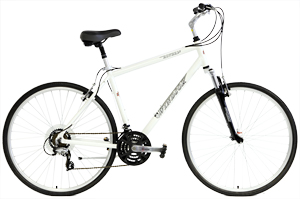
At BikesDirect, we focus on bikes that make sense for real riders; people who want comfort, practicality, and solid value. Here are four hybrids we recommend often because they’re approachable, versatile, and easy to live with.
The Gravity Dutch Express Lifestyle Hybrid is ideal if your priority is feeling comfortable and stable from the first ride. It’s the kind of bike that encourages casual rides that quietly turn into longer rides, because it doesn’t punish you with an aggressive posture. If you’re planning relaxed commuting, neighborhood cruising, or getting back into cycling after a break, this is a strong starting option.
The Windsor Rover 2 is a great fit for riders who want one bike that can do a bit of everything. If you’re the type who might ride for fitness one day, then run errands the next, this kind of balanced hybrid approach tends to be the sweet spot. It’s a practical choice for building consistency, because it feels at home on everyday roads and paths.
If you want a first bike that leans a bit more toward going farther and trying more routes, the Windsor Dover 1 Xi is a strong option to consider. It’s built for riders who don’t want to feel limited to only smooth pavement. For commuters, weekend riders, and people who like to explore new neighborhoods and paths, having that extra sense of capability can make riding feel more open-ended and fun.
Some riders want a bike that feels straightforward and easy to maintain; something you can hop on without thinking about it. The Gravity X-Rod 7-Speed Super Hybrid fits that mindset well. A simpler drivetrain can be a great choice if you’re riding mostly flatter routes, using the bike for short commutes, or just want a clean, uncomplicated setup that’s easy to live with.
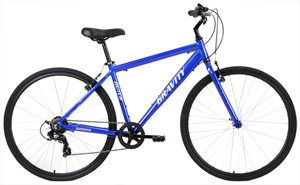
The best first bike isn’t the one with the flashiest marketing; it’s the one that makes you want to ride again tomorrow. A hybrid bike earns its place because it removes barriers: it feels comfortable, it handles predictably, and it adapts to the kind of riding most people actually do.
If you’re new to cycling, coming back after a long break, or shopping for a practical do-it-all ride, a hybrid bike is often the fastest path to consistency. And once you’ve built up your fitness and figured out what kind of riding you enjoy most, you can always specialize later, because you’ll be making that decision from experience, not guesswork.
If you’d like help choosing the right model and size, please contact us.
On a sunny Saturday morning not too long ago, I walked past a row of shiny bicycles outside a big box retailer. A bright tag on a simple, entry-level model read $649.99. The bike looked decent from a distance, but the closer I got, the more corners I could see had been cut. Basic rim brakes, heavy steel frame, and a drivetrain better suited for a garage sale than daily riding.
Right next to it, a customer was asking a store associate if they could help choose a size. After a long pause, the reply was:
“I’m not really sure. I just work with electronics.”
For many riders, that’s the experience when shopping in traditional stores. What looks affordable at first often comes with compromises on durability, performance, and long-term value.
That’s exactly where the hybrid bike price comparison story begins.
When buying a hybrid bike, most shoppers want the same thing: something comfortable, reliable, and versatile enough for fitness rides, commuting, and weekend adventures.
The challenge is that brick-and-mortar retail stores add layers of markup long before the bike hits the sales floor. Those extra costs aren’t about performance — they’re about overhead.
Bikesdirect removes that overhead by selling directly to riders. The result is a surprising contrast:
A $550 hybrid from a big box store might include low-end parts and heavy frames, while a Bikesdirect hybrid at the same price point often includes:
Riders get more value per dollar because the budget goes into performance, not display lighting or floor space.
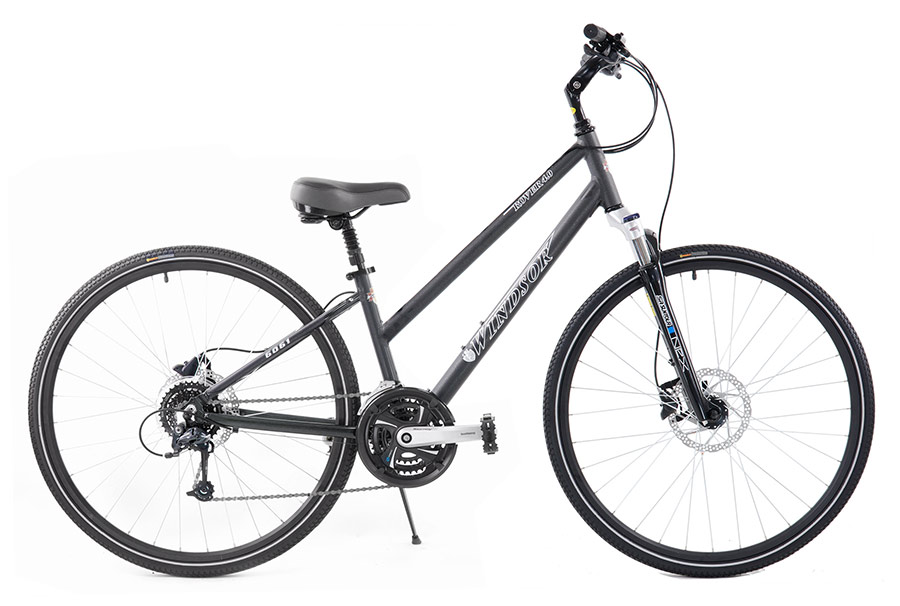
To understand the real differences, look at the bikes themselves.
A model like the Motobecane Mirage sells in big box retail at an entry-level price, but a performance upgrade from Bikesdirect with disc brakes is often available for less.
Take the Swift Flatbar series, a popular commuter favorite with tuned geometry and quality drivetrain. On shelves elsewhere, bikes with similar parts regularly retail at $700–$900.
But the Swift DLX comes in under $600 and includes features most big box hybrids never touch.
The difference shows up during the first mile: smooth shifting, better power transfer, more confidence downhill.
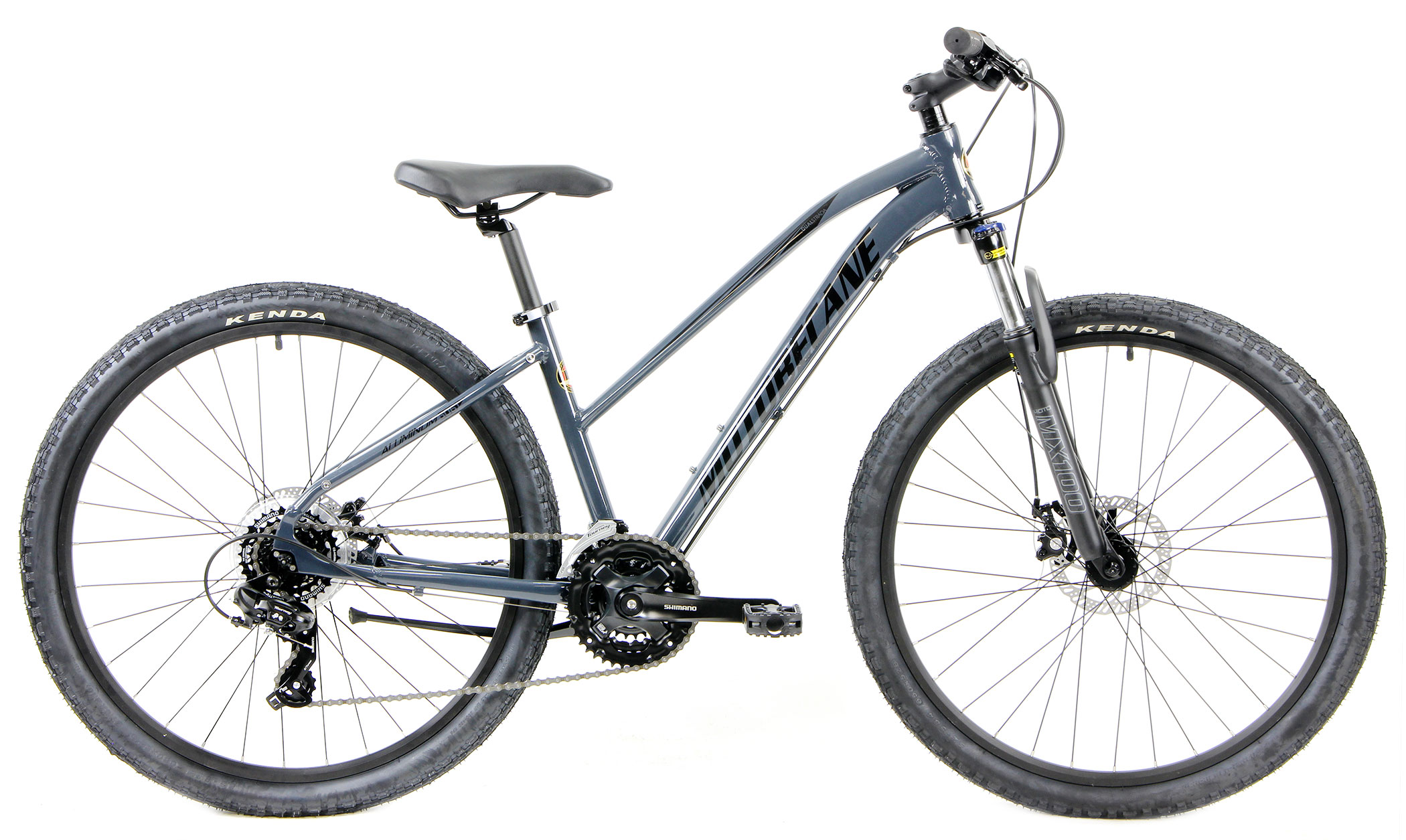
A hybrid can look basic at first glance, but the frame tells the truth.
Cheaper retail-store bikes often rely on heavy hi-ten steel. It may be affordable, but riders notice the weight quickly, especially if they climb hills or lift the bike onto a rack.
Bikesdirect hybrid models usually use lighter aluminum, including high-end tubesets found on performance platforms. The Windsor Rover, for example, brings comfort-first geometry with modern brake upgrades.
Every one of these models reflects the concept behind a hybrid bike: efficiency on pavement, comfort on paths, and room for accessories.
The Dual Strada ST proves that a step-through frame doesn’t mean compromised performance — it simply makes riding more inviting.
The heart of this hybrid bike price comparison is component longevity.
Once riders start using their bikes regularly, cheap parts wear quickly. Brake levers get sticky, cables stretch, and gears click under load. Upgrades become expensive.
Many Bikesdirect hybrids come with:
A model like the Dual Strada Comp even offers hydraulic disc brakes — something you almost never find under $600 at physical retail.
Hydraulic performance transforms daily riding: effortless stopping in rain, smooth modulation on descents, and minimal hand fatigue.
Hybrid riders don’t want a specialist bike. They want one machine that handles fitness, errands, commuting, and exploration.
That’s why so many riders compare hybrids to other platforms:
A gravel bike gives confidence on dirt roads.
A road bike offers speed and long-distance efficiency.
A fat bike rules snow and sand.
A beach cruiser keeps coastal riding fun and relaxed.
A mountain bike tackles wilderness trails.
Hybrids blend parts of all these categories. They keep tires fast enough for pavement, add comfort positioning, and allow upright riding that feels natural for new riders.
The Elite Adventure 29er handles mixed terrain thanks to bigger wheels and surprisingly confident handling. At under $600, it’s a platform that carries riders past pavement and into something new.
The conversation isn’t about cutting corners — it’s about eliminating unnecessary ones.
No membership fees, no sales floor, no showroom. Just bikes.
When the budget isn’t spent on retail overhead, it goes into:
Riders get more for less because the business model puts performance first.
Many beginners worry that an affordable hybrid means compromise.
In practice, the opposite is true. Bikesdirect hybrids give riders confidence from day one because the bike simply works. It shifts cleanly, holds lines, and stops when needed.
That confidence leads to more miles, more fitness, more fun — and fewer regrets.
A customer can buy a bike today without wondering if the brake levers will need upgrading next season. That reliability is worth more than the price tag.
The easiest way to see the difference is to ride one. Bikesdirect has hundreds of hybrid models ready to ship, including step-through frames, disc brake options, and versatile 29er builds. It only takes a few minutes to compare features and pricing online, and many bicycles that would cost $700–$900 elsewhere fall under $600 here. Riders who want more value from their next purchase will find it when they start with Bikesdirect.com.
v
On a sunny Saturday morning, before the neighborhood wakes up, you see them everywhere — riders cruising along quiet streets, rolling onto wooded paths, looping around lakes, and pedaling toward weekend coffee spots. Some wear athletic gear, others ride in jeans, and a few have kids in tow. Despite their different styles, they often share the same type of ride: a hybrid bike. That variety of settings tells a clear story. In 2025, the hybrid has become the suburban cyclist’s most trusted companion, blending comfort, versatility, and everyday practicality into one bike built for nearly anything.
As more people look for ways to stay active, reduce driving, and explore their local communities, the appeal of hybrid bikes continues to grow. And with so many hybrid bike benefits, suburban riders now find fewer reasons to own multiple bikes for different uses. One ride can do it all — from weekday commutes to weekend adventures.
Suburban life creates a unique blend of needs for cyclists. Riders may travel smooth pavement one moment, then hit gravel shortcuts, park trails, or uneven sidewalks the next. A traditional road bike handles pavement brilliantly but struggles with rough surfaces. A mountain bike is great for dirt paths but feels sluggish on long stretches of asphalt. And while a relaxed beach cruiser offers comfort, it is not built for varied terrain or quick acceleration.
A hybrid bike sits perfectly in the middle, which is exactly why it thrives in suburban neighborhoods. Riders experience an upright, comfortable posture that supports relaxed daily movement, but they also enjoy efficient rolling, predictable steering, and stability across mixed surfaces. This balance makes hybrids ideal for everyday errands, casual exercise, family rides, and even occasional commuting.
The bike adapts seamlessly to the rider’s lifestyle, not the other way around. That flexibility is one of the most powerful hybrid bike benefits in 2025.
One of the biggest reasons suburban cyclists love hybrids is comfort. Riders want to enjoy the journey, not just arrive at the destination. The upright positioning of a quality hybrid reduces strain on the neck, wrists, and lower back. Meanwhile, slightly wider tires create a smooth and forgiving ride, even when navigating bumps, cracks, or gravel transition zones.
Compared to the aerodynamic posture of a road bike, hybrids feel approachable. They invite new riders into the sport and allow experienced cyclists to enjoy longer outings without fatigue. For anyone combining fitness with relaxation, the hybrid checks all the right boxes.
Comfort also supports consistency. When a bike feels good, riders naturally reach for it more often — whether for a morning loop or an after-dinner cruise around the subdivision.
Most cyclists do not stick to one type of terrain. Suburban environments include everything from paved roads and neighborhood sidewalks to greenway connectors, school paths, and lightly wooded trails. A hybrid’s blend of efficient wheels and stable geometry makes it one of the few bikes capable of handling all these surfaces confidently.
A gravel bike offers exceptional performance on dirt and loose surfaces, but its drop-bar design may feel technical for beginners. A mountain bike adds tackling power for rougher terrain, but it sacrifices speed on pavement. The hybrid delivers a sweet spot — fast enough for suburban streets, stable enough for park trails.
This versatility is especially helpful for families who share bikes or groups of friends with mixed riding preferences. Everyone can enjoy the same routes without worrying about terrain limitations.
Many suburban riders choose hybrids not only for recreation but also for transportation. With traffic congestion rising and parking becoming more limited in suburban town centers, cycling has become a practical replacement for short car trips.
A hybrid bike provides predictable handling for stop-and-go riding, easy mounting and dismounting, and enough gearing range to handle hills and longer distances. Riders can comfortably carry backpacks, groceries, or work essentials with the right rack or basket setup.
For environments where dedicated bike lanes are still developing, the balanced ride of a hybrid offers confidence. Riders can maneuver around parked cars, navigate neighborhood intersections, and transition onto multi-use paths with ease.
In 2025, more cities and suburbs are building cycling infrastructure to support active transportation. Hybrids fit perfectly into this evolving landscape.
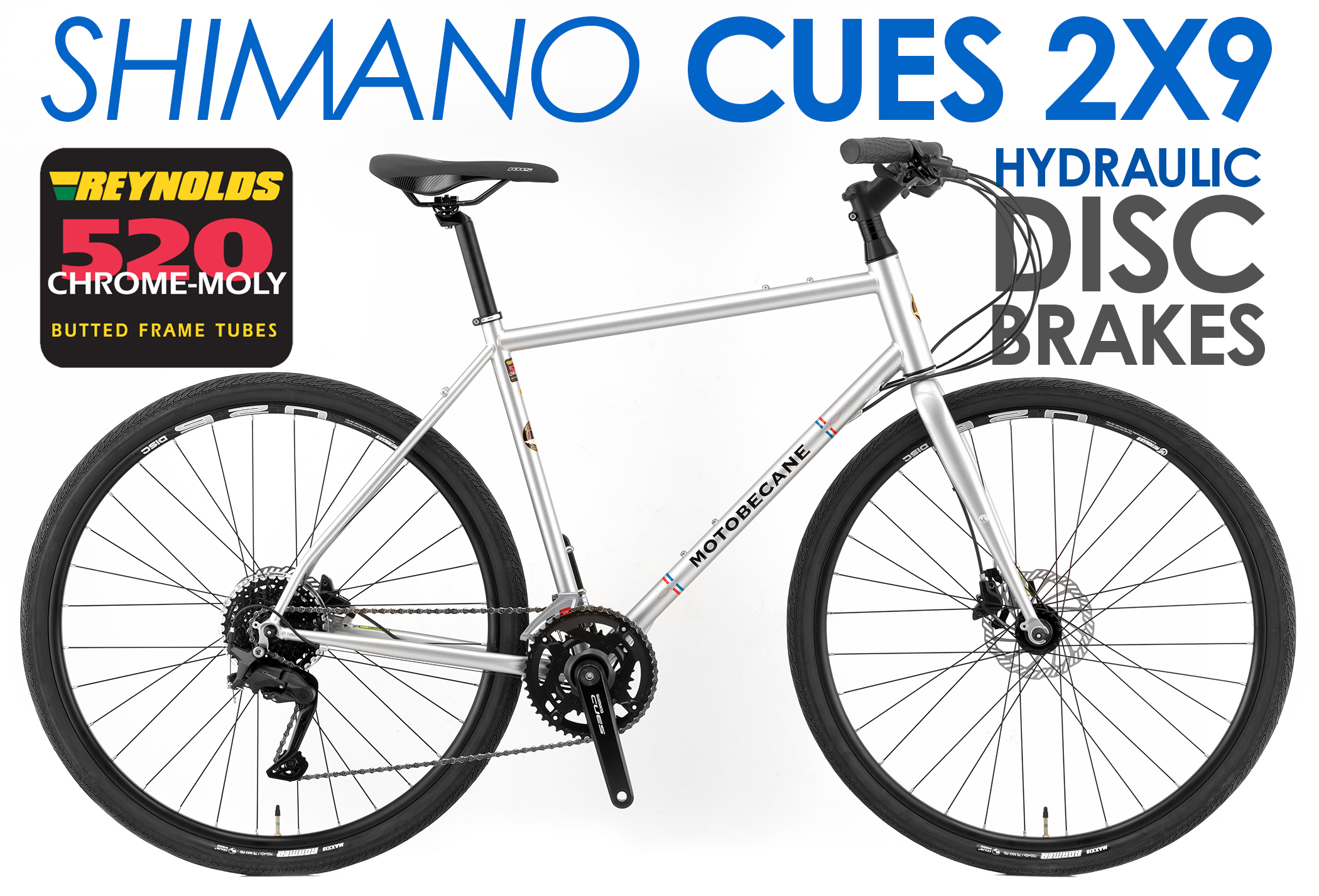
Understanding how hybrids stack up against other categories helps riders make confident decisions.
These comparisons show just how many hybrid bike benefits extend beyond versatility: they simplify decision-making for riders who want one reliable bike for nearly any scenario.
Suburban riders frequently use hybrid bikes for fitness and recreation. The upright posture engages the body in a natural, sustainable way, making cycling a gentle but effective workout. Riders often report improved cardiovascular endurance, stronger leg muscles, and lower stress levels thanks to consistent riding.
Hybrids are also incredibly family-friendly. Parents can tow child trailers or ride alongside kids learning to balance. Weekend loop rides become shared memories instead of solitary training sessions.
For social riders, hybrids create an equal playing field. Friends with different fitness levels or experience can all enjoy the same pace without pressure.
This ease of use builds confidence, which in turn builds community.
Many adults who have not ridden in years — or since childhood — choose hybrids as their reentry into cycling. The familiar upright stance, simple controls, and intuitive handling help riders feel comfortable immediately.
At the same time, experienced riders who want a break from aggressive training or who need a second bike for errands often select a hybrid as their go-to option.
When a bike feels inviting, riders find more opportunities to use it, unlocking both physical and mental benefits. Hybrid bikes create that invitation effortlessly.
Suburban cycling is growing quickly, and manufacturers are improving hybrids with better frame materials, upgraded drivetrains, and enhanced comfort features. Riders now enjoy lighter frames, better brakes, smoother gear shifts, and modern styling that competes with higher-tier categories.
In 2025, a hybrid is not just a compromise between categories — it is a deliberate choice for riders who want practicality, comfort, and value without sacrificing performance.
If you want a bike that adapts to your lifestyle, matches your environment, and makes every ride enjoyable, a hybrid might be your perfect fit. Explore the selection at Bikesdirect.com and discover the versatility, comfort, and all-purpose freedom a hybrid brings to suburban life.
Your next great ride starts the moment you choose versatility.