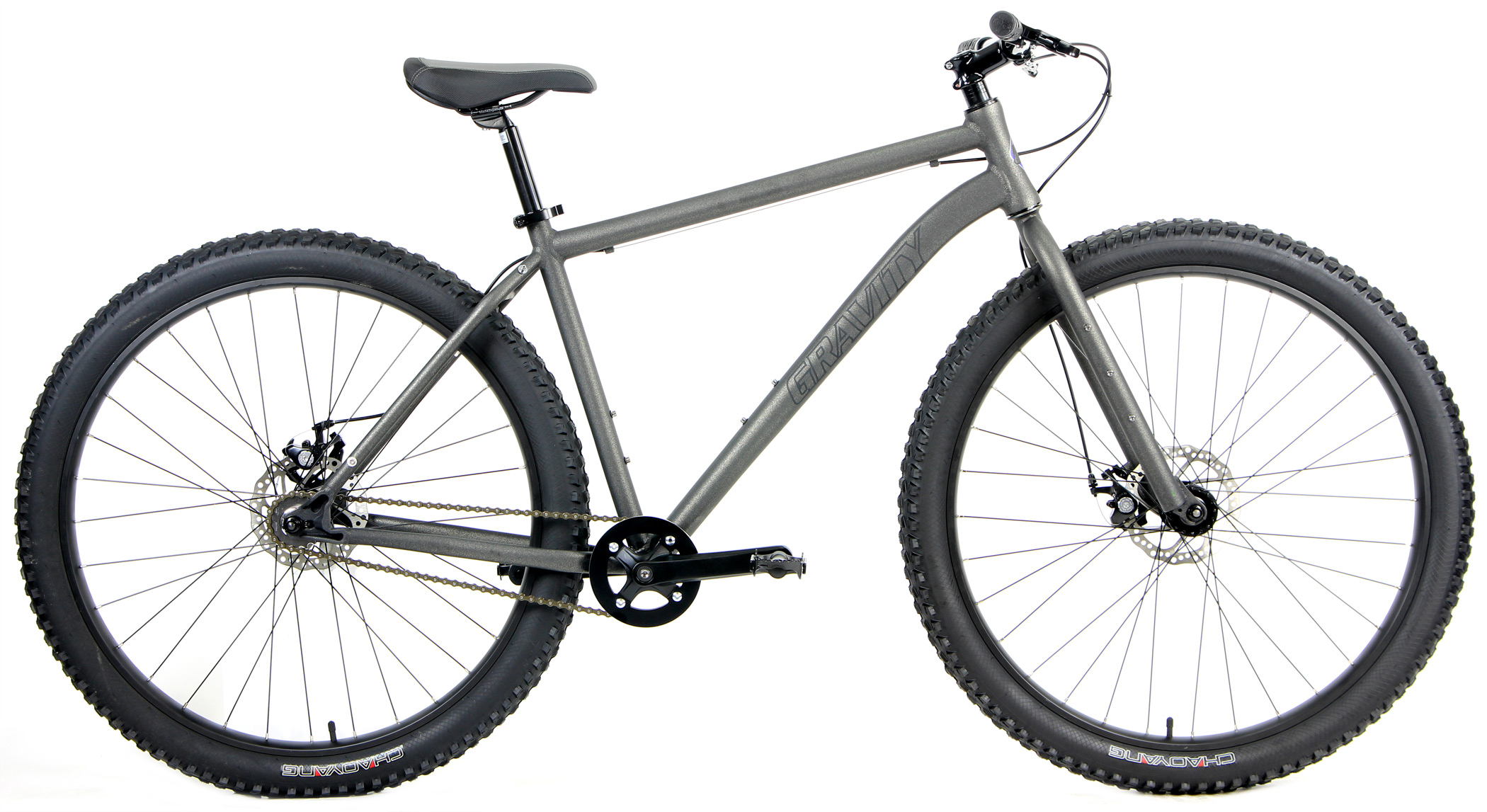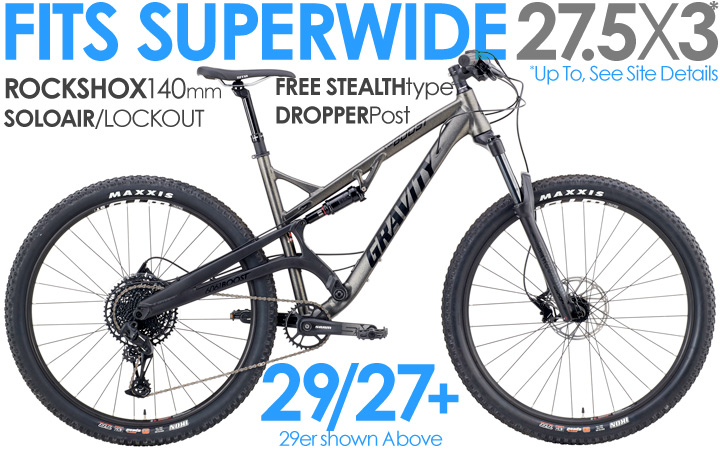

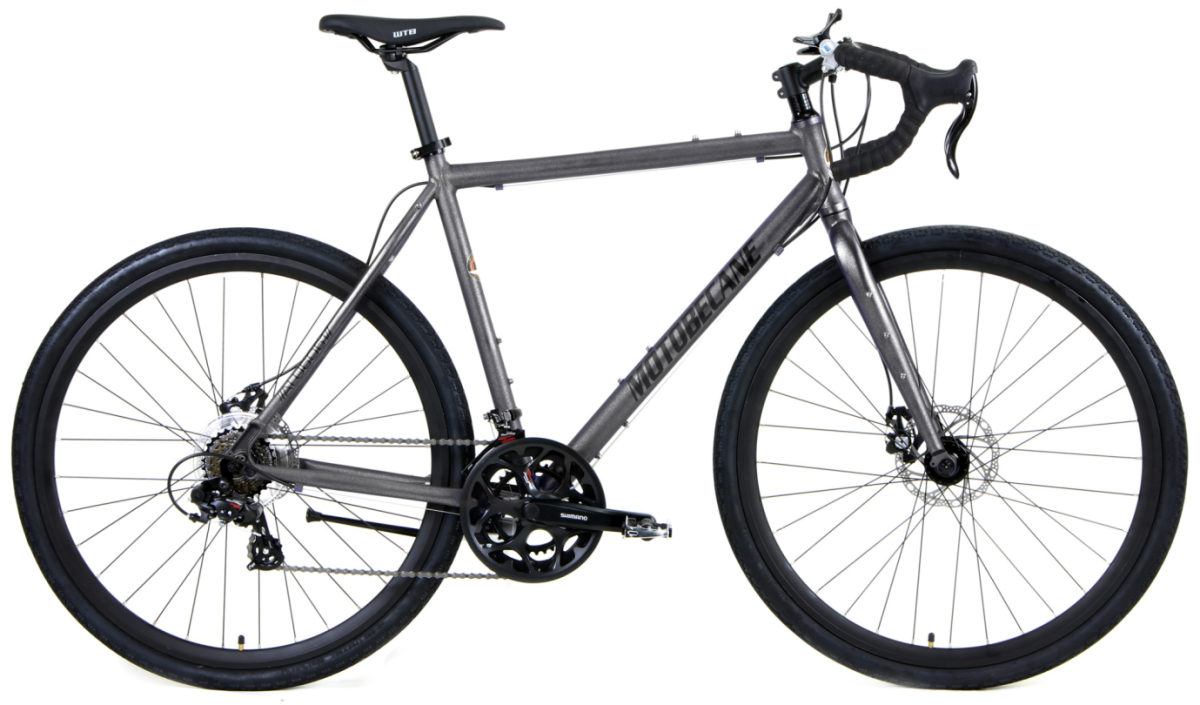
Hybrid Bikes vs. Mountain Bikes: Which One Feels Better for Real-Life Riding (Streets, Paths, and Weekend Detours)

Most riders aren’t deciding between racing downhill through rock gardens or chasing podium finishes. They’re trying to answer a simpler question: which bike will feel good on the streets they actually ride?

When comparing a hybrid vs. mountain bike, the difference shows up in everyday moments. Rolling over cracked pavement. Climbing a short hill on the way to work. Coasting along a paved trail. Taking a spontaneous turn onto light gravel.

A hybrid bike is built for mixed surfaces and practical comfort. A mountain bike is designed for traction, control, and impact absorption on rough terrain. Both can handle real-world riding, but they feel very different once you start logging miles.

This guide breaks down what changes between the two in terms of speed, comfort, tire width, suspension, maintenance, and overall ride experience. The goal is simple: help you choose the bike you’ll actually want to ride more often.

What a Hybrid Bike Is Designed to Do

A hybrid bike blends the upright comfort of a city bike with the efficiency of a road bike. It typically features:

  • Medium-width tires with moderate tread
  • A lightweight frame
  • Flat handlebars for upright posture
  • Rigid forks or short-travel suspension
  • Gearing suited for pavement and light hills

Hybrids are built for versatility. They’re comfortable on pavement, stable on bike paths, and capable on light gravel or crushed stone. They prioritize efficiency without forcing an aggressive riding position. For most everyday riders, that balance matters more than extreme capability.

What a Mountain Bike Is Designed to Do

A mountain bike is engineered for control on unpredictable terrain. Standard features include:

  • Wide, knobby tires
  • Suspension forks, often with longer travel
  • Stronger frames
  • Powerful disc brakes
  • Lower gearing for steep climbs

Mountain bikes shine on dirt trails, loose gravel, rocks, roots, and steep descents. The design favors traction and durability over rolling speed. On smooth pavement, though, those same features can feel slower and heavier than necessary.

Pavement Performance: Rolling Speed and Effort

For most riders, pavement makes up the majority of miles. This is where the hybrid vs mountain bike comparison becomes obvious. Hybrid bikes roll faster on smooth surfaces. Their tires are narrower and less aggressive, which reduces rolling resistance. That means less effort per mile and a smoother, quieter ride.

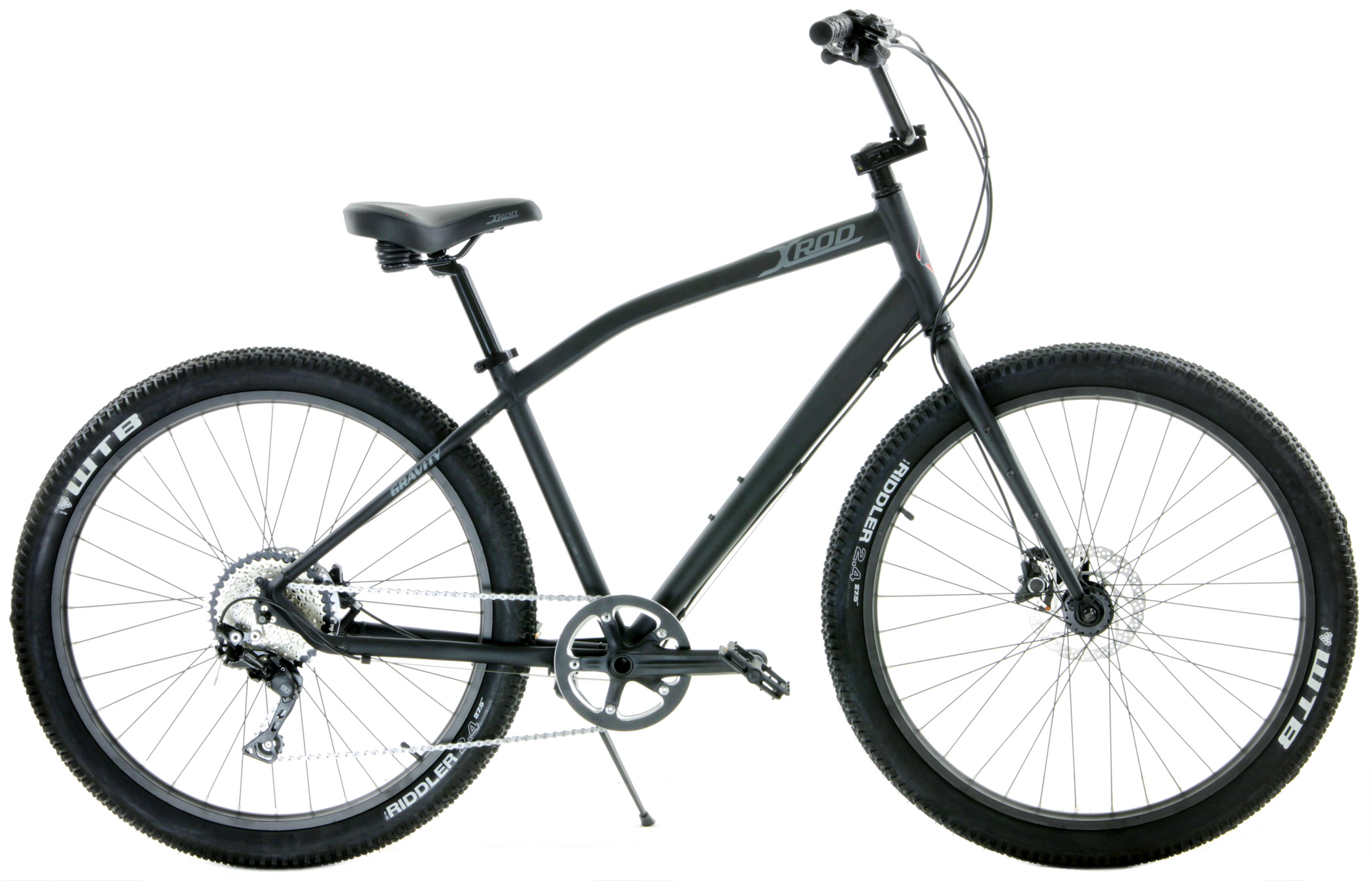
Mountain bikes, with their knobby tires and suspension systems, absorb more energy. You feel stable, but you work harder to maintain the same speed. The difference may not matter on short errands, but over 10 to 15 miles, it adds up. If your rides are primarily city streets, paved paths, or suburban roads, a hybrid often feels lighter and more responsive. The Gravity X-Rod 10 leans slightly sportier within the hybrid category. With multi-speed gearing and a lighter frame feel, it maintains strong rolling efficiency on pavement while remaining stable on park paths and light gravel. Riders who want fitness-focused performance without the forward-leaning posture of a road bike often find this style appealing. It shows how hybrids can feel quick and responsive without becoming specialized or demanding.

Gravity X-Rod 10 hybrid bike with flat handlebars and disc brakes

Rough City Roads: Comfort and Control

Not all pavement is smooth. Many riders deal with cracked asphalt, potholes, expansion joints, and uneven surfaces.

Here, mountain bikes feel planted. The wide tires and suspension soak up bumps. The bike tracks straight even when the surface is unpredictable.

Hybrid bikes still perform well on rough roads, especially models with slightly wider tires. Many riders find that proper tire pressure and good saddle choice make more difference than suspension for typical city riding.

For moderate bumps and debris, hybrids are usually comfortable enough without the added weight and maintenance of full suspension.

Bike Paths and Light Gravel

Crushed limestone paths and light gravel trails are common weekend routes. This terrain is often where riders start wondering about capability.

Hybrid bikes handle light gravel confidently. Their tires offer enough grip for stable cornering while maintaining good rolling speed.

Mountain bikes feel extremely secure on gravel. If your routes regularly include loose surfaces, deeper stones, or uneven trail sections, that added traction may matter.

Some riders also consider a gravel bike for this category. Gravel bikes lean closer to road geometry but with wider tires and drop bars. However, if you prefer flat handlebars and upright comfort, hybrids remain a practical choice.

For casual gravel paths rather than technical trails, hybrids usually feel sufficient and more efficient.

Trails: Where Mountain Bikes Pull Ahead

True off-road trails with roots, rocks, tight turns, and elevation changes are mountain bike territory. The geometry, suspension, and braking systems of a mountain bike provide control that hybrids cannot match on technical terrain.

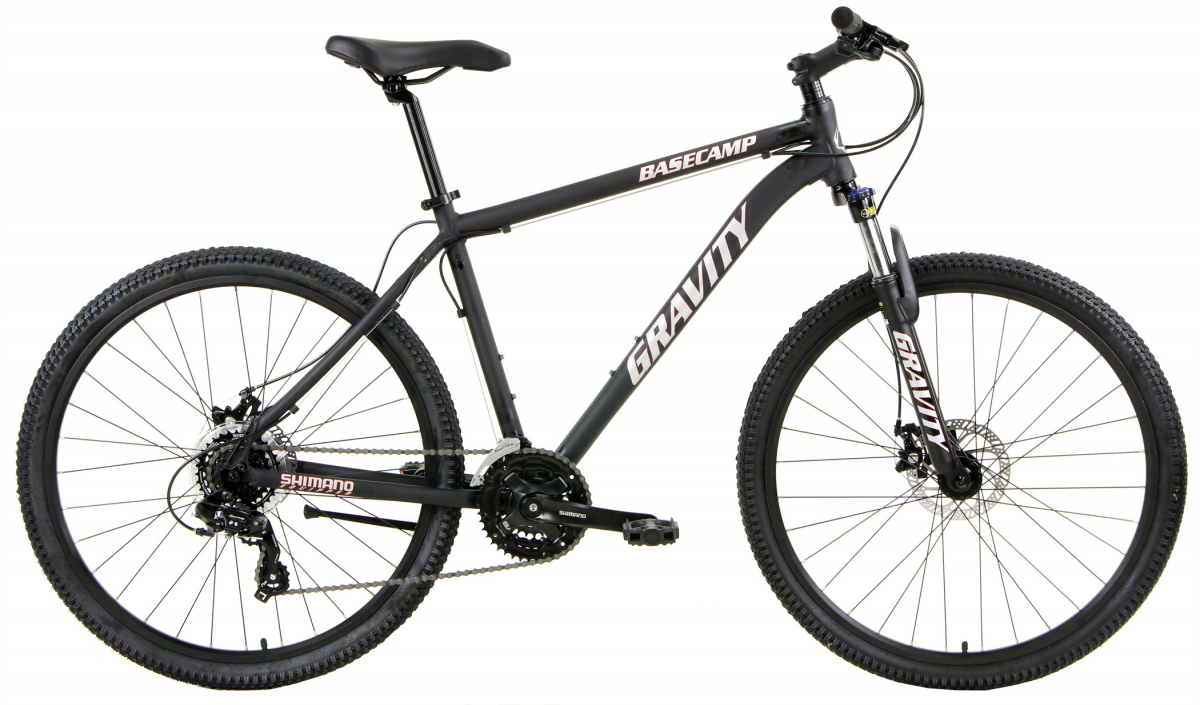
If your plan includes regular singletrack riding or challenging dirt trails, the mountain bike’s design advantages become essential rather than optional. But for riders whose “trails” mean park paths and packed dirt, a hybrid often covers the need. For riders who want a capable trail machine without stepping into overly aggressive territory, the Gravity Basecamp LTD27 represents what modern hardtail mountain bikes do well. Built around a durable aluminum frame with 27.5-inch wheels, it balances maneuverability and stability on tight turns and rolling singletrack. The suspension fork absorbs roots and rocky chatter, while wide tires maintain grip when terrain becomes unpredictable. It’s a strong example of how a mountain bike prioritizes control and confidence when pavement ends and real trail riding begins.

Sand and Snow

Sand and snow require specialized traction. In these conditions, even mountain bikes can struggle. A fat bike is built specifically for soft surfaces, using extra-wide tires to distribute weight and maintain grip. Neither a standard hybrid nor a standard mountain bike matches that performance in deep sand or snow. If these surfaces are rare in your riding routine, they shouldn’t dictate your primary bike choice.

Casual Cruising and Relaxed Riding

Some riders prioritize comfort above all. Short neighborhood loops, boardwalk paths, or slow weekend spins. A beach cruiser is built specifically for that relaxed experience, with wide saddles and simple gearing. Hybrids can deliver a similar upright feel while offering more versatility and gearing options. Mountain bikes feel more aggressive in this setting. Their suspension and knobby tires are often unnecessary for casual cruising.

Tire Width: How Much Is Enough?

Tire width significantly affects ride feel. Hybrid tires typically range from 32mm to 45mm. They strike a balance between efficiency and comfort. Mountain bike tires often start around 2.2 inches wide and go up from there. The increased air volume improves shock absorption and traction but increases rolling resistance.

For pavement and light mixed use, moderate-width hybrid tires provide enough comfort without slowing you down.

Suspension: Helpful or Overkill?

Suspension improves comfort on rough terrain. But it also adds weight, complexity, and maintenance. Front suspension on a mountain bike absorbs impacts and increases control on trails. On smooth pavement, though, that movement can feel inefficient.

Many hybrid bikes use rigid forks. Some include short-travel suspension for added comfort. For everyday city riding, rigid setups often feel simpler and more responsive. If your rides rarely involve technical off-road terrain, full suspension can become unnecessary complexity.

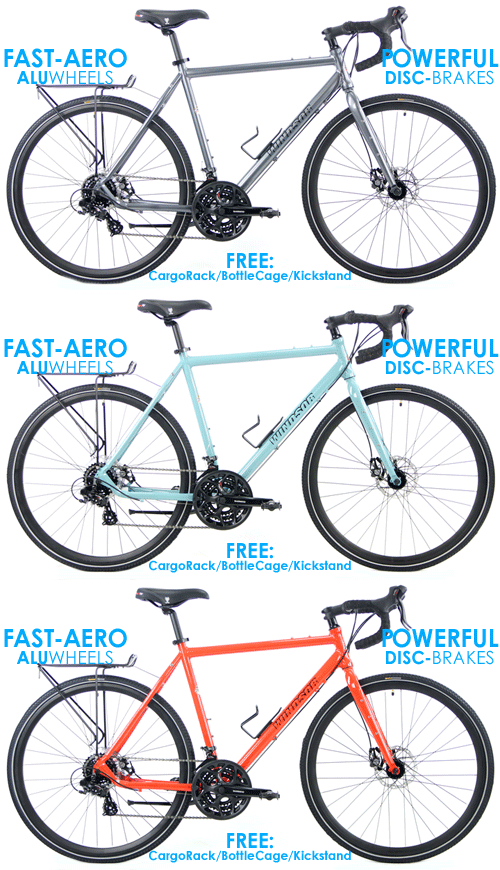
Windsor Tourist XTL commuter bike with drop bars and rear cargo rack

Maintenance Considerations

Mountain bikes generally require more maintenance due to:

  • Suspension servicing
  • Heavier drivetrain wear from dirt riding
  • More complex components

Hybrid bikes tend to be simpler and easier to maintain, especially when used primarily on pavement.

For riders who value low upkeep and straightforward ownership, this difference matters over time.

Rider Goals: Fitness

If your goal is fitness, rolling efficiency makes a difference. Hybrid bikes allow steady, comfortable miles without excessive effort from tire drag. They encourage longer rides on mixed surfaces. Mountain bikes build strength through added resistance, but many riders find themselves working harder than necessary on pavement. If your fitness plan includes paved routes and bike paths, hybrids often feel more sustainable.

The Motobecane Fantom 2.5 EAGLE shows how far modern hardtail performance has evolved. Equipped with a wide-range 1x drivetrain, it simplifies shifting while giving riders the gearing needed for steep climbs and fast descents. The 27.5-inch platform keeps handling responsive, especially on technical terrain where quick direction changes matter. For riders who regularly push into dirt, rock gardens, and elevation shifts, this kind of build demonstrates when a mountain bike becomes more than practical, it becomes necessary.

Rider Goals: Commuting

Commuters need reliability, comfort, and efficiency. Hybrids typically include mounting points for racks and fenders, making them practical daily transport.Mountain bikes can commute, but their heavier build and tire drag may feel excessive unless your route includes rough trails. For urban travel, hybrids often feel better suited.  

The WFB SuperCommute is a practical example of how a hybrid bike supports everyday riding. Its flat-bar design keeps posture upright and comfortable, while disc brakes provide reliable stopping power in varied weather. The steel frame adds durability without sacrificing ride quality, making it well suited for daily commuting, errands, or fitness miles on mixed pavement. It reflects what hybrids do best: combine efficiency with comfort in a way that encourages consistent riding.

Rider Goals: Recreation

Weekend rides with family or friends usually involve mixed surfaces and moderate speeds.

Hybrid bikes fit this category well. They’re stable, comfortable, and efficient.

Mountain bikes excel if recreation includes real trail exploration rather than paved park paths.

Rider Goals: Adventure

If adventure means exploring forest roads, rocky climbs, and uneven terrain, mountain bikes offer clear advantages. If adventure means mixing pavement with light gravel detours, hybrids often provide enough capability without sacrificing speed.

Rider Goals: Performance

For pure speed on pavement, a road bike remains unmatched. Neither hybrids nor mountain bikes are designed for competitive road performance. But between the two, hybrids generally maintain higher average speeds on smooth surfaces. Mountain bikes are performance machines in the dirt, not on the street.

A Practical Decision Framework

When deciding in the hybrid vs mountain bike debate, ask:

  1. Where will I ride 70 percent of the time?
  2. Do I want faster rolling or maximum traction?
  3. Am I maintaining suspension components?
  4. Do I plan to ride technical trails regularly?
  5. Which bike feels comfortable during a 10-mile ride?

If most of your miles are pavement, paths, and light gravel, hybrids often feel more enjoyable long term.

If technical dirt trails are a regular part of your routine, mountain bikes justify their design.

The Bike You Ride More Wins

A bike that feels easy to ride gets used more often. That consistency builds fitness, confidence, and enjoyment. Choosing based on realistic riding patterns, rather than extreme scenarios, leads to better long-term satisfaction.

Hybrid bikes simplify daily miles. Mountain bikes expand off-road capability. Neither is universally better. The right choice depends on your terrain, goals, and maintenance preferences. In the end, the better bike is the one that matches your actual roads, not the toughest route you might ride once. Explore the category that fits your real-world riding style and choose the bike that makes you want to head out again tomorrow.

Find the Bike That Matches the Miles You Actually Ride

The hybrid vs mountain bike decision becomes simple when you focus on your real routes, not extreme scenarios. Think about where your wheels spend most of their time. Smooth pavement, neighborhood streets, park paths, light gravel, or technical dirt trails. The right bike should feel natural on those surfaces and motivate you to ride consistently.

If your miles lean toward pavement, bike paths, commuting, and weekend fitness loops, explore a hybrid bike built for comfort and rolling efficiency. If your riding includes rocky terrain, root-covered trails, and steeper off-road climbs, a dedicated mountain bike delivers the traction and control those environments demand.

For riders mixing pavement with rougher backroads, a versatile gravel bike offers another practical option. If speed on smooth roads is the priority, a purpose-built road bike keeps effort low and momentum high. Planning to ride sand or snow? A wide-tire fat bike provides the flotation and grip those surfaces require. And for relaxed neighborhood cruising or boardwalk rides, a comfortable beach cruiser keeps things simple and enjoyable.

The best bike is the one that fits your terrain, your pace, and your goals. Explore the category that aligns with how you actually ride, and choose the bike that makes you want to head back out tomorrow.

Mountain Bikes Under $600: What Your Money Really Gets

Buying one of today’s entry-priced mountain bikes can feel like stepping into a maze of buzzwords: “hydroformed,” “long travel,” “trail geometry,” “hydraulic,” “1x,” “29er,” “27.5,” and a dozen more. Then you see the price tags. Under $600? For a real mountain bike?

Here’s the honest truth after two decades of building, tuning, and riding bikes: $600 is enough to get a legitimately fun, capable mountain bike—if you understand where the money goes and choose the right compromises. It’s also enough to buy the wrong bike if you expect $2,000 performance from $300 parts.

In this guide, we’ll do a practical mountain bike price comparison focused on what matters long-term: frames, forks, drivetrains, brakes, wheels, and how each choice affects durability, maintenance, and upgrade potential. We’ll use a few clear examples from our lineup at BikesDirect—then give you a framework you can apply to any bike in this price range.

Bikes we’ll reference and compare:


The $600 reality check: where your money actually goes

At this price point, you’re not paying for carbon layups, air forks, or 12-speed wide-range drivetrains. You’re paying for five core areas that define how the bike rides and how long it stays enjoyable:

  1. Frame design & durability (materials, weld quality, replaceable derailleur hanger, bottle mounts, geometry)
  2. Suspension (fork quality; and if full suspension, the rear shock + pivots)
  3. Brakes (V-brakes vs mechanical discs vs hydraulic discs)
  4. Drivetrain (how it shifts under load, gear range, replacement cost)
  5. Wheels/tires (rim strength, hub quality, tire size and traction)

Here’s the key tradeoff under $600:

  • If you spend more on suspension (especially rear suspension), you usually spend less on brakes, drivetrain, and wheels.
  • If you spend more on brakes (hydraulic discs), you often keep the drivetrain more basic (commonly 3×7/21-speed).
  • If you want the best long-term value, prioritize frame, brakes, and wheels first, then suspension.

That’s why a smart budget hardtail can outlive (and out-perform) a bargain full-suspension bike on many trails.


The three tiers of under-$600 mountain bikes (and what to expect)

Tier 1: $200–$300 — “Real bike, real trails… with realistic expectations”

This is the category where bikes stop being toy-store throwaways and start being legitimate bicycles you can tune, maintain, and ride for years. But you’re making compromises: heavier components, simpler drivetrains, and basic brakes.

A solid example is the Gravity BaseCamp V 7spd, which comes in at $229.95 and focuses on fundamentals: an aluminum frame, front suspension, Shimano 7-speed shifting, and V-brakes.

What your money really gets here:

  • A true 6061 aluminum frame (not “mystery metal”)
  • Entry-level suspension fork to take the edge off bumps
  • Simple, inexpensive-to-maintain shifting
  • Strong value if your riding is parks, dirt paths, mellow singletrack, and neighborhood adventures

What you’re not getting:

  • High-end braking power
  • Modern wide-range gearing
  • Lightweight wheels/hubs
  • Suspension that feels smooth on fast, rough trails

This tier is best when you want maximum value and minimal complexity.

Tier 2: $300–$450 — “Full suspension or better components… pick one”

Here’s the fork in the road (pun intended). Under $450, bikes typically go one of two directions:

  • Full suspension with basic parts
  • Hardtail with notably better brakes and trail readiness

Option A: Full suspension comfort on a budget

The Gravity FSX V is a classic example: a full-suspension aluminum bike priced at $299. It pairs a 6061 aluminum frame and rear coil-over shock with Shimano 21-speed and V-brakes.

If you’re newer to trails, full suspension can feel like magic—especially on roots, rocks, and choppy surfaces. But the “money math” matters: a rear shock, linkage, pivots, and extra frame structure cost real dollars, so other components tend to be more entry-level.

You get comfort and forgiveness. You give up some braking power, some precision, and typically add weight.

Option B: Hardtail performance upgrades that matter more

In this same general price zone, a hardtail with strong brakes often gives you a better mountain-bike experience—particularly if your trails are steep or your rides include long descents where heat and control matter.


Tier 3: $350–$600 — “Best long-term value lives here”

This is where bikes start to feel trail-serious for most riders because the component choices move from “works” to “works confidently.”

The standout upgrade at this level is usually hydraulic disc brakes—and that’s a big deal.

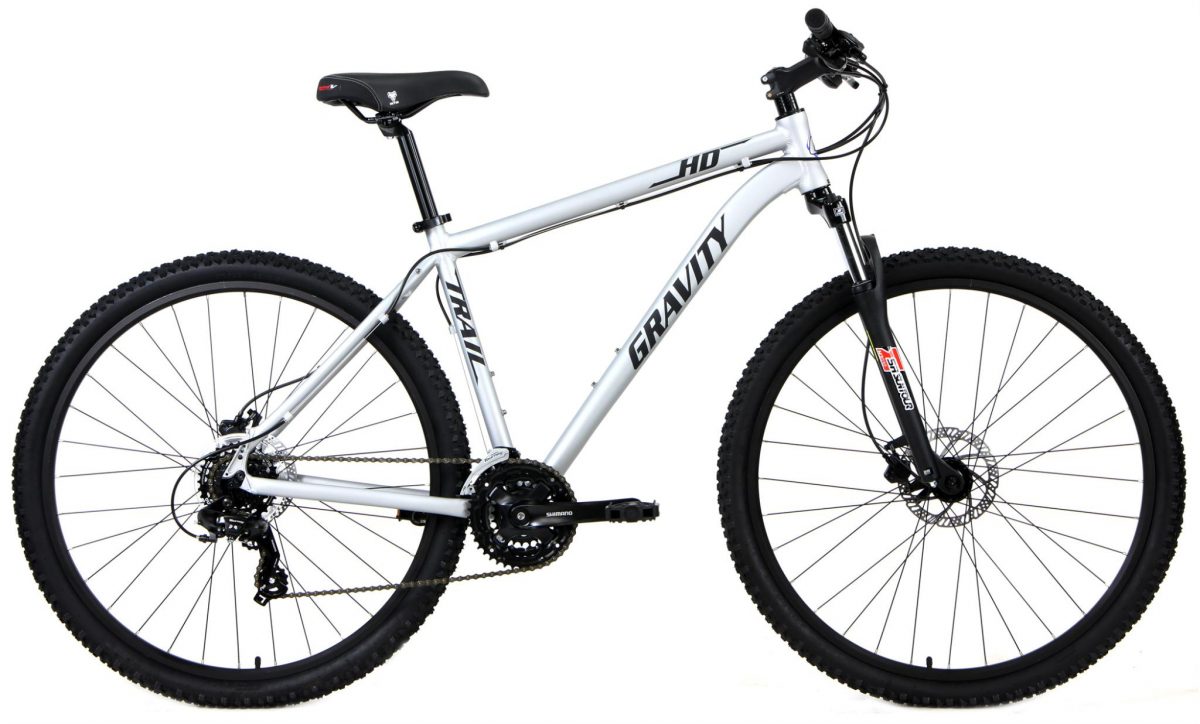
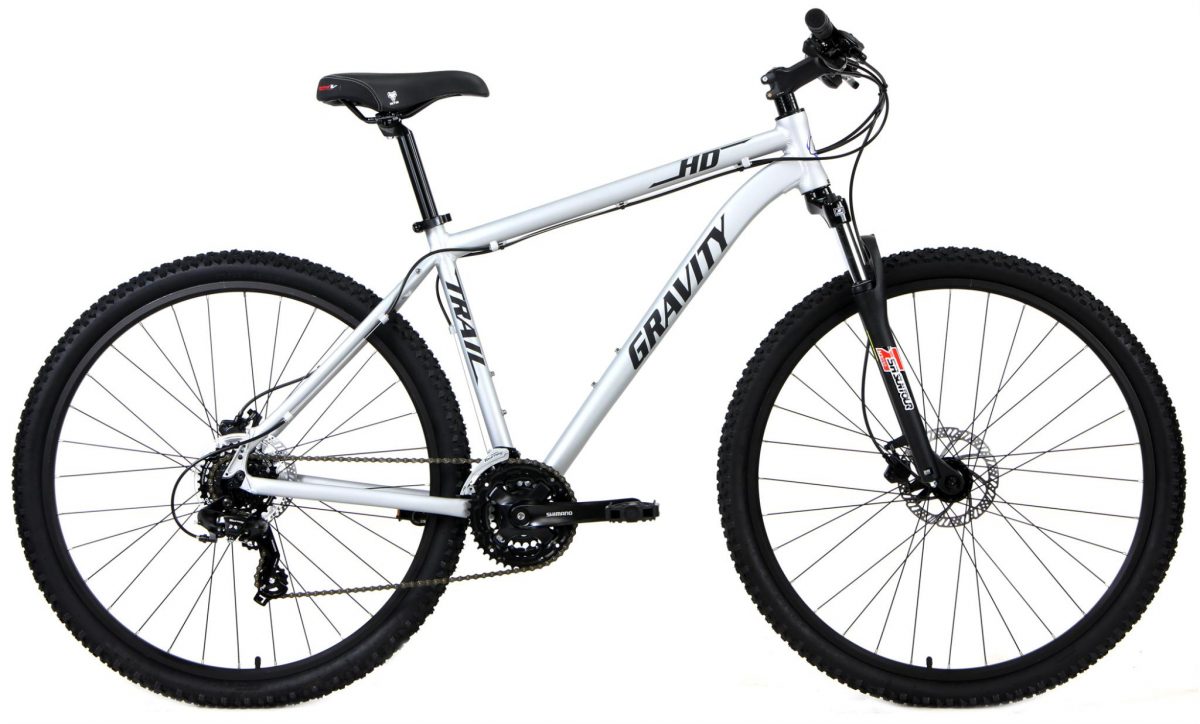
A strong example is the Gravity HD275 Trail at $359, built around an aluminum frame, a 27.5″ wheel platform, and Tektro M285 hydraulic disc brakes with 160mm rotors.

For many riders, hydraulic discs are the single biggest “this feels like a real mountain bike” jump you can make—because they improve control, reduce hand fatigue, and keep working in wet or dusty conditions.


Quick comparison: BaseCamp V vs FSX V vs HD275 Trail

Gravity FSX V full-suspension mountain bike designed for entry-level trail riding.

Here’s how these three options stack up in the ways that actually change your ride.

ModelBest forSuspensionBrakesWheels/TiresDrivetrain vibeWhy it matters
BaseCamp V 7spdSimple fun, casual trailsFront suspensionV-brakes26″ wheels, 2.1″ tiresSimple 7-speedLowest cost, lowest complexity
FSX VComfort-first trail ridingFull suspension (coil rear)V-brakes26″ wheels, 2.1″ tires21-speed (3×7)Plush ride; more maintenance points
HD275 TrailBest value trail hardtailFront suspensionHydraulic discs27.5″ wheels21-speed (3×7)Strong control + lighter feel on trail

If you forced me to summarize it in one sentence:

  • BaseCamp V: best “starter mountain bike” value
  • FSX V: best “comfort per dollar”
  • HD275 Trail: best “trail performance per dollar”

Now let’s get into the parts—because that’s what your money really buys.

Frames under $600: the quiet hero of long-term value

At BikesDirect we’re big on frames because they’re the foundation you can’t easily upgrade later.

What to look for in a budget MTB frame

  • 6061 aluminum (common, durable, and cost-effective)
  • Replaceable derailleur hanger (when—not if—you hit something)
  • Bottle mount points (small detail, huge quality-of-life improvement)
  • Reasonable geometry for stability (not twitchy, not stretched)

The BaseCamp V frame is explicitly 6061 aluminum with an integrated head tube design, and it includes a replaceable rear derailleur hanger.
The HD275 Trail frame is also 6061 aluminum and calls out a reinforced/hydroformed downtube design, plus replaceable hanger and bottle mounts.
The FSX V uses a 6061 aluminum front triangle and rear triangle, also with a replaceable hanger—important on a full suspension bike where alignment matters even more.

The truth about “full suspension frames” at entry prices

Full suspension adds:

  • Pivots/bearings (or bushings)
  • Hardware that needs torque checks
  • More places for creaks to develop if neglected

That doesn’t mean “don’t buy full suspension.” It means buy it with eyes open: you’re trading simplicity for comfort.

Suspension under $600: what “front suspension” actually means here

Coil forks: sturdy, affordable, not fancy

In this price bracket, forks are typically coil-sprung with basic adjustability. They do the job—especially for newer riders—but they’re heavier and less sensitive than an air fork.

  • BaseCamp V: listed as an MTB long travel suspension fork.
  • FSX V: 26″ suspension fork with preload adjustment.
  • HD275 Trail: 27.5″ suspension fork with preload adjustment.

Rear shocks at budget pricing: coil-over comfort with limits

On the FSX V, the rear is a coil-over shock.
Coil shocks at this level are great for smoothing chatter and increasing confidence—but you won’t get the damping control of higher-end shocks. Think: comfortable, forgiving, and fun… but not precision race equipment.

Pro tip from the workshop:
If you’re buying budget full suspension, set expectations and then protect your investment:

  • Keep pivot bolts snug (check occasionally)
  • Keep it clean
  • Listen for new noises early (small fixes stay small)

Drivetrains under $600: why “more speeds” isn’t always better

Gravity Basecamp V7 mountain bike with sturdy frame suited to casual off-road riding.

You’ll see a lot of 7-speed and 21-speed setups here, and that’s not a bad thing. They’re inexpensive to service and forgiving.

BaseCamp V: simple Shimano 7-speed

The BaseCamp V uses a Shimano 7-speed drivetrain (including Shimano rear derailleur, shifter, and 7-speed freewheel). This is a great “get on and ride” setup. Replacement parts are cheap. Adjustments are straightforward.

FSX V & HD275 Trail: 21-speed (3×7) for broader range

Both the FSX V and HD275 Trail use a 3×7/21-speed approach, giving you more climbing and cruising options.

What you gain:

  • More gear range for mixed terrain
  • Easier climbs for newer riders

What you give up:

  • More shifting complexity (front derailleur setup matters)
  • Slightly more maintenance

If you’re riding hilly areas or carrying gear, the wider range is a genuine benefit.

Brakes under $600: the most important difference you’ll feel on trail

If there’s one area where budget bikes can feel wildly different, it’s braking.

V-brakes: simple, effective, weather-dependent

Both BaseCamp V and FSX V use V-brakes.
Properly adjusted V-brakes can work well on dry trails and paths. They’re easy to maintain and cheap to replace.

But they’re more affected by:

  • Wet rims
  • Mud/grit on the braking surface
  • Rim wear over time

Hydraulic disc brakes: the “this feels legit” upgrade

The HD275 Trail’s Tektro M285 hydraulic discs are a major step up in control and consistency, and it’s one reason this bike punches way above its price.

Hydraulic discs bring:

  • Better modulation (control between “off” and “locked”)
  • Stronger stopping power
  • Less hand fatigue on long descents
  • More consistent performance in wet conditions

If your local rides include real descents, or you’re a heavier rider, or you ride in mixed weather, hydraulic discs are often the best “value per dollar” feature you can buy.

Wheels and tires: why 27.5” often feels like the sweet spot here

Wheel size affects how a bike rolls over obstacles, how it accelerates, and how it corners.

  • BaseCamp V uses 26″ rims and 26×2.1 tires.
  • FSX V runs 26×2.1 tires as well.
  • HD275 Trail runs a 27.5″ wheel platform, and lists tire clearance up to roughly 27.5×2.3.

What does that mean on real trails

  • 26″: quick acceleration, nimble handling, lots of tire availability, great for smaller riders and tighter paths
  • 27.5″: a little more rollover confidence without feeling sluggish, great all-around trail size for many riders

If you’re shopping under $600 and want a modern-feeling trail ride without needing a 29er-specific build, 27.5″ is a strong balance point.

Long-term value: what holds up, what wears out, and what’s worth upgrading

Let’s talk about the part most buyers skip: what happens after the honeymoon. Entry-priced bikes can be outstanding long-term buys—if you maintain them smartly and upgrade selectively.

What typically lasts a long time under $600

  • The frame (if it’s a solid aluminum frame with a replaceable hanger)
  • Basic cranksets and bottom brackets (especially if kept clean and properly adjusted)
  • Double-wall rims (as long as spoke tension stays healthy)

What you should expect to replace eventually

  • Brake pads (disc) or pads (V-brake)
  • Chains (and eventually freewheel/cassette)
  • Tires (sooner than you think if you ride often)
  • Cables/housing (shifting gets “mushy” over time)

The best “bang for buck” upgrades (in order)

  1. Tires
    Stock tires are often chosen to hit a price point. The right tire for your terrain can transform cornering and confidence more than almost anything else.
  2. Pedals and grips
    Better contact points make the bike feel more controlled and less fatiguing.
  3. Brake setup (pads + adjustment)
    Even without changing brake systems, proper setup matters. If you have hydraulics, keeping pads fresh and rotors clean is huge.
  4. A basic tune-up
    Cable tension, derailleur alignment, and spoke tension can make an entry bike ride like a much more expensive one.

Model-specific value notes

BaseCamp V: the “simple wins” bike

The BaseCamp V is exactly the kind of bike that stays alive for years because it’s straightforward: fewer gears, fewer complex systems, simple brakes. It’s also priced so affordably that you can put some budget toward a helmet, basic tools, and maybe better tires—stuff that improves every ride.

Best for: casual trails, family rides, beginner singletrack, neighborhood adventures
Not ideal for: long, steep descents or high-speed rocky terrain

FSX V: comfort-first, maintenance-aware

Full suspension at $299 is a ton of comfort for the money, and for many riders that’s the difference between riding often and letting the bike collect dust.
Just remember: you’re responsible for a bit more upkeep.

Best for: rough paths, roots, comfort-seeking riders, “I want it smoother” buyers
Not ideal for: riders who never want to check bolts or do basic maintenance

HD275 Trail: best “ride it hard” value

Hydraulic disc brakes plus a 27.5 platform is a recipe for confidence at a price that’s honestly difficult to beat.
For many buyers, this is the sweet spot: simple drivetrain, strong braking, modern trail feel.

Best for: real trail riding, mixed weather, hilly terrain, confidence-building control
Not ideal for: riders who specifically want rear suspension comfort

Fit and sizing: the cheapest way to get a better ride

Another view of the Gravity Basecamp V7 mountain bike showing rugged tires and frame.

I’ll say it plainly: a perfectly sized $350 bike will ride better than a poorly sized $1,500 bike.

Each of the bikes above includes sizing guidance on the product page (standover and height ranges). For example, the BaseCamp V page lists sizing ranges for men’s and women’s frames, and the FSX V provides standover figures by size.

Two practical sizing rules

  • If you’re between sizes and you value confidence on trails, size down for more standover and easier handling.
  • If you’re between sizes and you value seated pedaling efficiency, size up (but only if standover still works).

If you want a second opinion, reach out—our team is set up for exactly this: Contact BikesDirect Support.

“Should I buy a mountain bike… or would gravel bikes make more sense?”

This comes up constantly, so let’s address it directly and honestly.

If most of your riding is:

  • pavement
  • packed dirt roads
  • rail trails
  • fast mixed-surface commuting

…then gravel bikes can be a better tool. They’re generally lighter, roll faster on smooth surfaces, and feel efficient when you’re pedaling for distance.

But if you plan to ride:

  • roots, rocks, real singletrack
  • trails with sharp turns and steep descents
  • loose or chunky surfaces where traction matters

…mountain bikes are the right choice. Bigger tires, more stable handling, and (on the right model) stronger braking make trail riding safer and more fun—especially for newer riders.

A lot of riders actually end up with both eventually: gravel for miles, MTB for trails. Under $600, the key is picking the bike that matches how you’ll really ride, not the bike you imagine yourself riding twice a year.


So… what does $600 really get you?

A smart under-$600 purchase can absolutely be a long-term win. Here’s the simple breakdown:

  • Under ~$300: expect a solid frame and functional parts—great for casual trails and building skills
  • Around ~$300–$400: you can choose either full suspension comfort (with simpler parts) or hardtail performance upgrades
  • $350–$600: you start getting the features that make trail riding feel confident—especially hydraulic disc brakes

If you want to browse what’s currently available across these tiers, start here: BikesDirect Mountain Bikes.

And if you want help choosing the best match for your height, terrain, and riding goals, reach out to us here: Contact BikesDirect.
Why Mountain Bikes Aren’t Just for Trails Anymore

City riding isn’t smooth anymore. Between potholes, cracked tarmac, curb drops, wet leaves, gravel cut-throughs, and badly patched roads, a lot of everyday routes look more like a low-grade obstacle course than a clean bike lane. That’s why more riders are choosing mountain bikes for casual rides, even when they’re not planning to hit singletrack.

Modern MTB-style geometry, wider tires, and confidence-focused handling can make daily riding feel calmer and more controlled. You don’t have to tiptoe around rough surfaces, and you don’t need perfect roads to enjoy a ride. If your routes are a mix of streets, paths, parks, and shortcuts, the same features designed for trails can translate into a more comfortable, more practical bike for real-world riding.

The Urban Trail Is Real: What We Actually Ride On

A lot of riders picture city cycling as smooth roads and predictable turns. In reality, most of us deal with:

  • Uneven surfaces that rattle your hands and shoulders
  • Sudden changes in traction (painted lines, wet cobbles, leaf litter)
  • Curbs, speed bumps, and broken edges near drains
  • Shared-use paths that mix pavement, grit, and debris
  • Short unpaved stretches that connect better routes

That’s the environment where MTB traits make sense. Wider tires increase stability and reduce the harshness of rough pavement. A more upright position helps with visibility and control. And a frame built to handle impacts tends to feel less fragile when your route gets messy.

The result is simple: you spend less mental energy managing the road and more time enjoying the ride.

Geometry That Boosts Confidence, Not Just Off-Road Performance

One of the most important things MTB design does for everyday riders is make the bike feel predictable. Trail-oriented bikes are built to remain stable when the surface is imperfect and when your speed changes quickly. That can translate into real benefits on roads and paths.

More upright posture for comfort and awareness

An upright position can make commuting and casual riding feel far more natural. You’re not craning your neck to see ahead, and you can stay relaxed while still feeling in control. For many riders, that reduces fatigue and helps them ride more often.

Stable steering for real-world handling

MTB-style steering often feels less twitchy than more aggressive setups. That can be a major advantage on patchy roads or crowded paths, where sudden corrections and low-speed balance matter.

Built to tolerate bumps and impacts

Rough surfaces aren’t rare; they’re routine. A bike designed to handle repeated bumps tends to feel reassuring when your route includes curb transitions, potholes, or uneven cycle paths.

This is why a mountain bike can be a genuinely practical choice for riders who want more comfort and control on everyday terrain.

Tires: The Biggest Upgrade for Mixed-Surface Riding

If there’s one feature that changes the feel of a bike immediately, it’s tire volume. Wider tires give you:

  • Better traction when the surface is dusty, damp, or gritty
  • A smoother ride over cracks, seams, and rough pavement
  • More confidence when you’re turning on unpredictable surfaces

You also get more flexibility. You can run slightly lower pressure for comfort and grip, then adjust upward if you want a faster feel on roads. That ability to tune the ride is a big reason MTB-style bikes work well for mixed routes.

Choosing tread for streets and paths

Not every rider needs aggressive knobs. For mostly urban riding, a faster-rolling tread pattern can reduce noise and resistance while still offering the stability that comes from extra tire width. If your rides include parks, hardpack paths, or loose gravel cut-throughs, a bit more tread can help you feel planted.

Suspension: Helpful When It Matches Your Riding

Hardtail mountain bike with front suspension.

Suspension can be a game-changer for comfort, but it only helps if it fits your reality.

When front suspension makes sense

If your route includes lots of broken pavement, curb transitions, and rougher paths, a front suspension fork can reduce hand and wrist fatigue, especially on longer rides. It can also increase confidence if you’re new to riding mixed surfaces.

When you might not need it

If your riding is mostly smooth roads and paved paths, you may prefer a simpler setup. Tires do a lot of comfort work on their own, and a rigid or simpler front end can feel more direct and low-maintenance.

The best approach is choosing the bike around your actual surfaces, not the most extreme route you might do once.

How to Choose the Right MTB-Style Bike for Everyday Riding

You don’t need to overthink this. A few practical questions will narrow it down quickly.

Are you riding mostly streets, or a true mix?

If your routes are predominantly roads with occasional rough sections, you’ll likely value efficient rolling and comfort. If you’re regularly on mixed paths, you’ll benefit more from traction, stability, and a more forgiving feel.

Do you want something simple and reliable, or plush and capable?

Some riders want a straightforward bike that’s easy to live with. Others want maximum comfort and control for rougher rides. Both are valid; what matters is matching the bike to the riding you’ll do weekly.

Will you commute or carry gear?

If you’re commuting or running errands, think about practical add-ons like lights, a lock, and possibly a bag setup. A stable, confidence-inspiring bike often makes stop-start city riding feel easier.

Three Mountain Bikes We Recommend for Urban + Adventure Riding

At BikesDirect, we carry options that fit different types of riders; whether you want a capable hardtail for mixed routes or a more comfort-focused full suspension setup for rougher riding.

Gravity Basecamp V7: a confident hardtail that fits real routes

The Gravity Basecamp V7 is a solid pick for riders who want that classic point it where you want to go feeling without overcomplicating things. It’s well-suited to a mix of pavement, parks, and rougher paths where stability and tire volume matter. If you’re getting back into riding and want a bike that feels tough, predictable, and comfortable over imperfect surfaces, this style of hardtail is a practical place to start.

Motobecane 300HT: straightforward, capable, and easy to live with

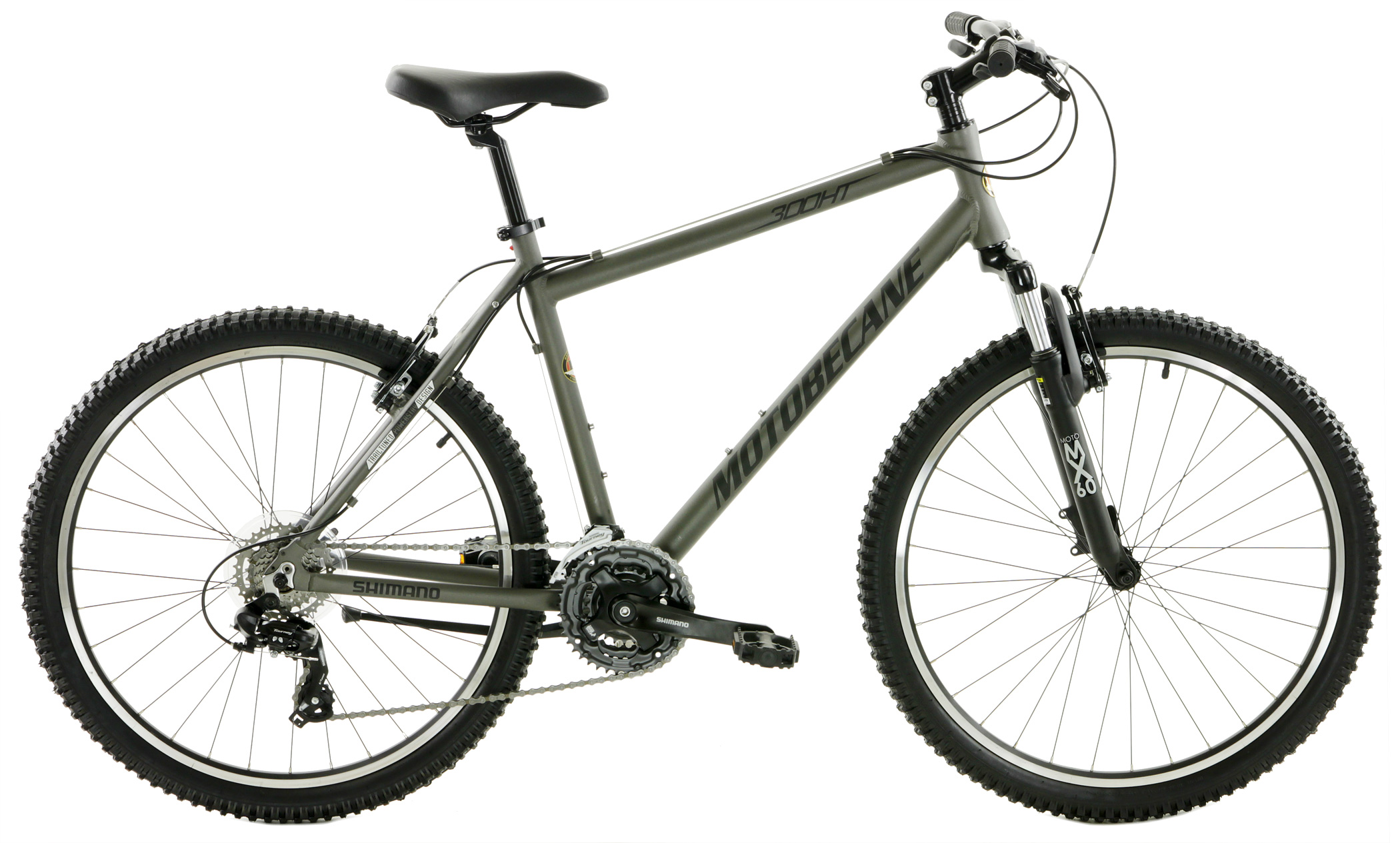
If your priority is a clean, no-fuss setup for everyday riding plus weekend exploring, the Motobecane 300HT is a strong option. It suits riders who want a dependable bike for mixed routes; something that handles cracked roads and park paths confidently, without feeling like you bought a specialized tool you’ll only use occasionally. For many riders, this is the sweet spot: simple, capable, and ready for routine miles.

Gravity FSX 2: comfort and control when the route gets rough

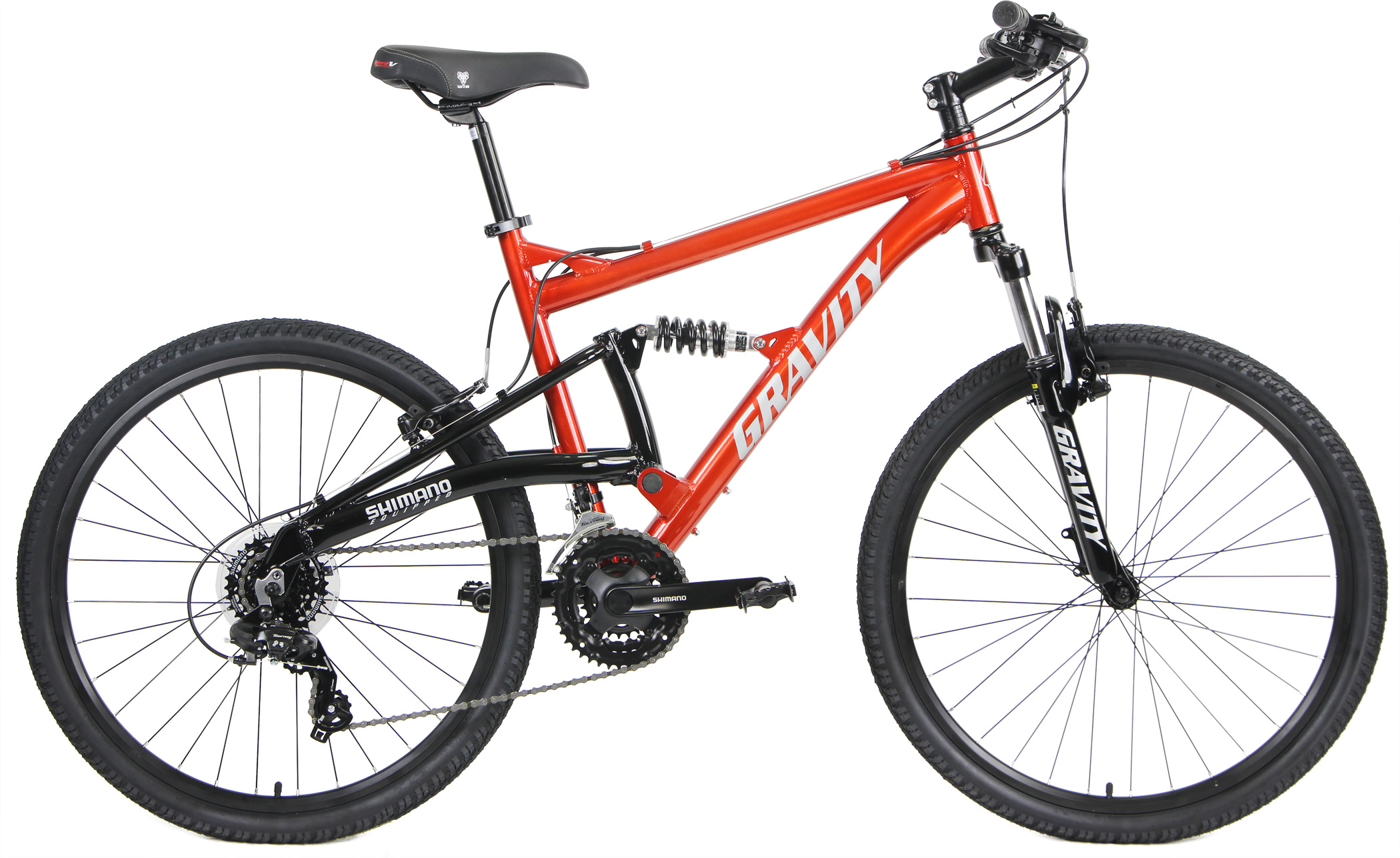
If your riding includes rougher paths, longer mixed-surface rides, or you simply want more comfort over bumpy terrain, the Gravity FSX 2 brings extra forgiveness to the ride. Full suspension can reduce fatigue, improve traction on uneven surfaces, and make rough routes feel smoother and more controlled. For riders who value comfort and stability above all, especially on unpredictable terrain, this kind of setup can make riding feel easier and more enjoyable.

The Practical Case for MTB Traits in Everyday Riding

Entry-level mountain bike with flat handlebars.

A mountain bike isn’t just for trails anymore because everyday routes have changed. When roads are rough, surfaces are inconsistent, and your rides mix streets with paths and shortcuts, MTB design can make riding feel calmer, more comfortable, and more confident.

If you want a bike that handles real-world conditions without fuss, our lineup is built around value, capability, and practical riding; not just niche use cases. The right mountain bike setup can turn I should ride into I ride all the time, because the bike feels comfortable and reliable across the routes you actually take.

If you’d like help choosing the best model and size for your riding, please contact us.

Fat Bike vs Mountain Bike: Which One Performs Better Year-Round

Two riders rolled into a frozen trailhead last January. The parking lot was quiet, snow piled high, and every usual weekend cyclist had disappeared indoors. One of the riders was on a traditional suspension mountain bike. The other had wheels almost twice as wide: a fat bike.

They dropped into the woods together. Minutes later, the mountain bike wobbled, lost traction, and slowed to a crawl. Meanwhile, the fat bike floated across the surface like a snowshoe.

When they reached the clearing, both were smiling — but one had worked much harder. The experience sparked a conversation that has been growing for years:

Which bike performs better year-round: a fat bike or a mountain bike?

This question is bigger than winter. It affects summer singletrack, beach access, gravel epics, and shoulder-season mud. To answer it clearly, we must look beyond marketing and examine how both bikes behave in real conditions—across twelve months of riding.

Black Gravity fat bike with wide tires, shown on a clean background, highlighting off-road capability.

Why This Comparison Matters in 2025

Cycling has changed. A decade ago, mountain bikes dominated trails, and fat bikes were still a niche winter tool. Today, the situation is different. Riders now want:

Comfort
Confidence
Versatility
Four-season access

People are choosing bikes not only for performance but for lifestyle. For many, the bike is a way to stay outside all year, avoid gym treadmills, and explore more terrain locally.

That is why the fat bike vs mountain bike discussion has become important. Each bike represents a philosophy.

A mountain bike says:
Ride fast, flow hard, and carve the trail.

A fat bike says:
Ride always — no seasons, no limits.

Understanding how those philosophies translate to actual riding helps cyclists choose wisely.

Defining the Bikes: What Really Makes Them Different

Before comparing performance, we must define what separates the two machines.

Fat Bike

A fat bike uses oversized tires, typically 3.8–5 inches wide. They run at very low pressure, sometimes as low as 5–8 PSI in winter. This creates:

• Massive traction
• Surface floatation
• Shock absorption from the tire volume

Fat bikes often use rigid frames or minimal suspension because the tires themselves deliver comfort.

They excel in:

• Snow
• Sand
• Mud
• Loamy trails
• Mixed terrain

This wider footprint changes everything.

Mountain Bike

A mountain bike uses narrower tires, usually 2.0–2.6 inches. They feature:

• Front suspension, sometimes full suspension
• Faster rolling speed
• Lower rotational mass
• Sharper handling

Mountain bikes excel in:

• Dry singletrack
• Technical climbs
• Fast descents
• Forest loops
• Rocks and roots

Both bikes handle rough terrain — but they do so differently.

Winter: Where the Fat Bike Becomes the King

When the first snow falls, riders split into two groups:

Group one puts their bikes away.
Group two keeps riding — and they are usually on fat bikes.

Fat bikes were originally designed for Alaskan snow races. Their width distributes weight so tires float on the surface instead of sinking. Even slush, powder, and refrozen tracks remain rideable.

Traction is almost supernatural.

Climbs that would be impossible on narrow tires become accessible. Corners that would cause sliding on a mountain bike feel controlled.

In winter:

Fat bike wins clearly.

Mountain bikes can ride with studded tires, but the narrower footprint will still sink when the snow deepens. No suspension, brake upgrade, or frame geometry can overcome physics when surface conditions are soft.

Carbon Gravity fat bike with ultra-wide wheels built for floating over loose surfaces.

Summer: Where the Mountain Bike Returns to the Throne

When snow melts and trails dry, mountain bikes reclaim dominance. Their lighter wheels and faster tire profiles are designed for momentum, acceleration, and directional precision.

On summer singletrack:

• Cornering is sharper
• Climbing efficiency is higher
• Descending feels more dynamic

A mountain bike rewards technique. Riders can carve lines, pump rollers, and launch small features. The sensation is playful and fast.

Fat bikes still work in summer, and many riders enjoy them, but they feel different. Steering is slower. Acceleration requires more effort. On long climbs, the rider feels the extra mass in the wheels.

In summer:

Mountain bike wins decisively.

Spring and Fall: Two Seasons, Shared Advantages

What surprises many riders is how well fat bikes handle spring and fall. These are messy seasons:

Wet leaves
Mud
Roots
Freeze–thaw cycles

Fat tires maintain traction when debris masks the trail or when moisture makes surfaces unpredictable. Meanwhile, mountain bikes excel when conditions dry out even briefly.

Across both seasons:

It depends on the day.

Some weekends are muddy and slick — perfect fat bike territory. Others are tacky and fast — ideal mountain bike weather.

This shared strength is why many riders eventually want both.

Climbing: Efficiency vs Grip

Climbing highlights one of the clearest differences.

A mountain bike uses:

• Light wheels
• Fast tires
• Narrow footprint

Momentum is preserved, and the bike rewards steady cadence.

Meanwhile, fat bikes climb extremely well when traction is poor. On snow or wet clay, they grip where nothing else would. But when the slope gets steep and dry, heavier wheels become noticeable.

To summarize:

Mountain bike climbs faster on dry terrain.
Fat bike climbs better on low-traction surfaces.

This is not a tie — it is specialization.

Descending: Precision or Plow?

Descending exposes another difference in riding feel.

A mountain bike descends like a scalpel:

Sharp
Reactive
Linked to rider technique

Suspension smooths rough sections while geometry keeps the wheelbase stable at speed.

A fat bike descends like a bulldozer:

Stable
Comfortable
Unbothered by roots and ruts

Large tires act as suspension, muting trail chatter. The bike feels calmer, but less precise. Cornering is slower, and riders rely on body movement instead of razor steering.

Neither is objectively better. It depends on preference.

If a rider values speed and agility, mountain wins.
If comfort and traction matter most, fat wins.

Shimano 2x10 fat bike with dropper post and aggressive tires, designed for technical trails.

Rider Comfort and Daily Enjoyment

One of the most overlooked benefits of fat bikes is comfort. The high-volume tires absorb vibration, especially on gravel paths, boardwalks, and multi-use trails.

This makes fat bikes appealing to:

New riders
Families
Riders with joint sensitivity
Beach or snow communities

Mountain bikes can be comfortable, especially with suspension, but fat bikes often feel like floating.

This explains a trend: many riders who do not race choose fat bikes simply because they enjoy riding them more.

All-Season Use: The Real Decision Point

Most riders do not buy a bike for racing or peak performance. They buy it to stay active, go outside, and integrate movement into everyday life. When viewed this way, seasonality matters.

If winter riding is part of your lifestyle, a fat bike opens months that otherwise disappear. Trails that are closed to cars or unridable by narrow tires suddenly become adventure routes.

If summers are long and dry where you live, a mountain bike keeps energy high and speed addictive.

Both bikes serve a full year — just differently.

Considering Other Categories: Hybrid, Gravel, Road, and Cruiser

Before choosing between fat and mountain, some riders benefit from understanding related categories.

A Hybrid Bike combines comfort and efficiency for commuting, paved paths, and fitness riding. It is not a replacement for a trail bike, but it complements one.

A Gravel Bike fills the gap between pavement and dirt roads. Many riders use them for exploration, bikepacking, and adventure loops that include pavement and trails.

A Road Bike offers pure speed and cardio training on asphalt.

A Beach Cruiser provides relaxed coastal riding with an upright posture.

These categories are not competing — they are tools. Many riders eventually own two or three because each delivers joy in different conditions.

Gray single-speed Gravity bike with oversized tires designed for snow, gravel, and soft terrain.

Real-World Scenarios: Which Bike Wins?

Let’s look at practical situations.

Scenario 1: Snowy Suburb With Plowed Roads

If winter is long, icy, and snowy, a fat bike is transformational. Even bike paths become rideable. Winter no longer means inactivity.

Winner: Fat bike

Scenario 2: Rocky, Rooted, Dry Forest Singletrack

Mountain bikes dominate here. Line choice, suspension, and geometry matter.

Winner: Mountain bike

Scenario 3: Beach Town or Sand Dunes

Fat tires float. Narrow tires sink.

Winner: Fat bike

Scenario 4: Summer Trail System

Speed, cornering, and agility define summer riding.

Winner: Mountain bike

Scenario 5: Year-Round Fitness Rider Who Wants Only One Bike

It depends on the climate.

If winter is intense → fat bike
If winter is mild → mountain bike

There is no universal answer — only local truth.

Full-suspension Gravity mountain bike with RockShox 140mm fork and dropper post.

Long-Term Ownership: Cost and Maintenance

A surprising detail: fat bikes often have lower mechanical wear because tires absorb impact. Components experience less shock. Maintenance tends to be:

Simple
Predictable
Affordable

Mountain bikes sometimes require more upkeep:

Suspension
Pivot bearings
Aggressive riding stress

This is not a disadvantage — it reflects their performance engineering. Riders who enjoy tuning, upgrading, and optimizing love it.

Fat bikes can be rugged, low-maintenance machines that feel reliable through the seasons.

What Experienced Riders Say

At trailheads across North America, the pattern repeats:

Many seasoned riders own both.

The mountain bike comes out when conditions are perfect. The fat bike comes out when conditions are impossible.

Ask them which bike they would give up, and many choose to keep the fat bike. Why? Because without it, winter disappears.

The Best Year-Round Strategy

If choosing only one:

• If weather is harsh → choose fat
• If trails are mostly dry → choose mountain

If choosing the best lifestyle solution:

Own both over time.

It is not extravagance. It is optimizing joy.

Why Bikesdirect Makes This Easier

At traditional retail shops, pricing often reflects overhead. Bikesdirect uses a direct-to-consumer model that removes middle layers. Riders get more bike per dollar.

Whether you want a year-round fat bike, a trail-focused mountain bike, or something in between, you can compare components, specifications, and geometry without pressure.

You will find:

• Hydraulic brakes at lower prices
• Suspension choices
• Alloy and carbon frames
• Name-brand drivetrains
• Bikes for every season

This makes the fat bike vs mountain bike question a lifestyle decision, not a financial limitation.

Conclusion: The True Winner Is the Rider Who Keeps Riding

The comparison is not about superiority. It is about access. The rider who stays outdoors more months of the year gains:

Better fitness
More sunlight
More nature
More joy

If snow, sand, and slush are part of your world, a fat bike unlocks seasons.

If speed, flow, and summer trails define your riding, a mountain bike delivers endless fun.

If you want both? The paths are waiting.

If the idea of choosing between a fat bike and a mountain bike has you rethinking the trails you could ride this year, the next step is simple: explore the options that match your terrain and your lifestyle. Bikesdirect makes it easy to compare components, pricing, and ride characteristics across both categories without retail markup.

Riders who want winter traction, summer speed, and all-season freedom will find models ready to perform year-round. Whether you ride snow, sand, singletrack, or park paths, there is a bike built to make every season rideable. Visit Bikesdirect, browse the latest fat bikes and mountain bikes, and keep riding every month of the year.

Suspension, Set Up Right: Sag, Rebound, and Trail-Side Tweaks

A great trail day starts before the first berm. When fork and shock are tuned to your body and terrain, your bike tracks straight, grips off-camber roots, and pops without bucking. The good news: you don’t need a lab. With a floor pump, a shock pump, and ten minutes of focused testing, you can nail a mountain bike suspension setup that feels planted and fast. This guide gives clear starting points for sag by rider weight, explains rebound and low-speed compression in plain language, and shows a quick parking-lot checklist that locks it in. We’ll also point to a few Bikes Direct models that make dialing suspension straightforward, whether you’re building confidence on your first trails or refining a well-ridden rig.

Sag: Your Personal Ride Height

Sag is how much your suspension settles under your normal riding weight. It puts you in the middle of usable travel so the fork and shock can absorb bumps and still extend to follow dips. Too little sag and the bike rides tall, skipping across chatter; too much and it wallows and bottoms easily.

Targets and a Fast Method

For trail riding, aim for 25–30% sag on the rear shock and 20–25% on the fork. Put on shoes, pack, and water—everything you’ll ride with. Slide the o-ring down each stanchion. Gently mount the bike, stand in a neutral attack position, and bounce lightly once or twice to overcome stiction. Settle still, then step off without compressing further and check o-ring position against total stroke.

If the fork shows 15% and you want 22%, bleed a little air. If the shock shows 35% and you want 28%, add air. Work in small increments of 5–10 PSI on air units and re-check. Coil shocks use preload collars; add or remove a single turn at a time until you hit target without crushing coil bind spacers. Don’t chase a perfect number at the expense of feel; you’re establishing a comfortable ride height, not passing an exam.

Weight-Based Starting Pressures

Every air spring is different, but you can get close by matching PSI to body weight in pounds for the shock, and using a slightly lower ratio for the fork. For many trail shocks, rider weight ≈ shock PSI is a decent first guess; forks often land around rider weight minus 10–15%. For example, at 170 lb in full kit, try ~170 PSI in the shock and ~155 PSI in the fork, then refine to your sag targets. If your frame kinematics are very progressive or very linear, you’ll fine-tune with volume spacers after the first shakedown.

Rebound: The Speed Your Suspension Returns

Rebound controls how fast a compressed spring extends. Too fast and the bike feels nervous, like it’s pogo-sticking; too slow and it packs down, riding lower with each bump and losing travel.

A Simple Baseline

Count total rebound clicks from fully closed (all the way clockwise, gently) to fully open. Start near the middle. For a fork with 14 clicks, that’s about 7 out from closed. For a shock with 12 clicks, start 6 out. Bigger riders or higher air pressures need more rebound damping (closer to closed), since the spring pushes back harder; lighter riders need less.

What to Feel For

Find a curb or parking-lot speed bump. Roll front wheel squarely into it at jogging speed, seated or standing neutrally. If the fork springs back and the front feels “pingy,” add a click or two of rebound damping. If it rebounds so slowly that it stays down over a quick second hit, open a click or two. Repeat for the rear by rolling your back wheel squarely into the bump. The right setting feels calm: one clean compression, a controlled return, and the bike resets before the next feature.

Low-Speed Compression: Poise and Pedaling Support

Gravity FSX V full suspension mountain bike designed for trail adjustments.

Low-speed compression (LSC) resists chassis motions that happen slowly—brake dive, body weight shifts, pedaling bob—not the fast spikes from square-edge hits. Think of it as posture, not protection. Adding a few clicks of LSC on the fork keeps your hands higher under braking; adding a few on the shock supports the mid-stroke when you’re climbing seated.

Good Starting Points

If your damper has an open-to-firm dial with numbered clicks, begin two to four clicks from fully open on both fork and shock for typical trail use. On frames prone to bobbing, try one more click of LSC at the shock; on steeper trails with heavy braking, try one more up front. If your bike has only a climb switch, leave it off for descending and flip it on for long pavement or smooth fire-road climbs.

Volume Spacers: Shaping the Last Third of Travel

Air springs can be tuned for “ramp-up” with small plastic tokens. If you’re hitting full travel too often even with correct sag and rebound, add a spacer to increase progression so big hits resist bottom-out. If you never reach near-full travel and the bike feels harsh late in the stroke, remove a spacer. Make one change at a time and record it. Forks are sensitive—move cautiously.

The Ten-Minute Parking-Lot Test

Before hitting dirt, validate your numbers where you can repeat inputs.

Step One: Balance Check

Stand next to a wall. Push down on the handlebar to compress the fork and let go; then do the same on the saddle to compress the shock. Both ends should return at similar speeds. If the fork “snaps” up while the rear is sluggish, add a click of rebound at the shock or open the fork a click; you want symmetry so the bike doesn’t pitch.

Step Two: Slow-Speed Compression Feel

Brake hard from a roll. If the fork dives excessively, add a click of LSC. If it stays high but feels skittery on small chatter later, remove a click. Sit and pedal across a rough patch or a painted lot line. If the shock wallows, add a click of LSC; if traction is nervous on tiny bumps, open a click.

Step Three: Two-Bump Rebound Test

Ride straight over two small bumps spaced a bike length apart. If the rear feels lower or “stuck down” at the second bump, rebound is too slow—open one click. If it bucks off the second, it’s too fast—close one click.

Lock these settings into your notes app with date, PSI, clicks, and temperature. Air pressures drift with big temperature swings, so a cold-morning ride may require a few PSI more than a hot afternoon.

On-Trail Refinement: Translate Sensations to Changes

If the front end chatters on small roots while your hands feel harsh, open the fork’s rebound one click or lower fork pressure by 2–3 PSI to increase sag slightly; if it then dives too much, add a click of LSC. If the rear kicks on square edges, close shock rebound one click; if it still bucks, consider one more volume spacer. If the bike feels vague in berms, add a click of LSC to the shock for mid-stroke hold. Make only one change at a time and give it a few minutes of riding before judging.

Example Platforms That Make Tuning Straightforward

If you’re building a first trail bike and want dependable, predictable adjustments, the Gravity BaseCamp V7 offers stable geometry with components that respond clearly to psi and click changes. For riders wanting full-suspension confidence with an approachable setup window, the long-loved Gravity FSX remains a standout value, easy to dial for local singletrack. If you prefer the agility of smaller wheels with stout control and hydraulic discs, the Gravity HD Trail 27.5 gives direct feedback to suspension adjustments so you learn quickly what each click does.

Common Pitfalls, Quick Fixes

A fork that feels harsh and sits high often has too much air and too little rebound damping; drop 3–5 PSI, then add one rebound click if it chatters back. A shock that blows through travel may be under-pressurized; add 10 PSI, re-check sag, and add a volume spacer if bottom-outs persist on single big hits. If both ends feel fine alone but the bike porpoises while pumping, slow the fork rebound one click and add a touch of LSC at the shock to stabilize the chassis.

Keep It Fresh, Keep It Safe

Gravity Basecamp V7 mountain bike with front suspension.

Suspension needs occasional service. If you’re adding air every ride, seals may be tired. If the damper loses clicks or changes feel as it heats, it’s due for a refresh. Wipe stanchions after every ride so dust doesn’t grind into seals, and keep shock mounting hardware snug and quiet. Small habits preserve performance and keep your mountain bike suspension setup consistent month to month.

Want Personal Help?

At Bikes Direct, we love turning “I think?” into “that’s it.” Tell us your weight in full kit, the trails you ride, and whether you want more pop or more calm, and we’ll suggest starting pressures, click counts, and spacer choices that match your bike. If you’re choosing your first trail machine or upgrading from a rigid or hardtail, we can also steer you toward the right platform—something like the BaseCamp V7, the proven FSX, or the agile HD Trail 27.5—and ship it ready for a quick sag set and trail shakedown. We ride and test because setup is where value turns into speed and confidence. When you’re ready, contact our team and we’ll get your suspension—and your season—dialed.

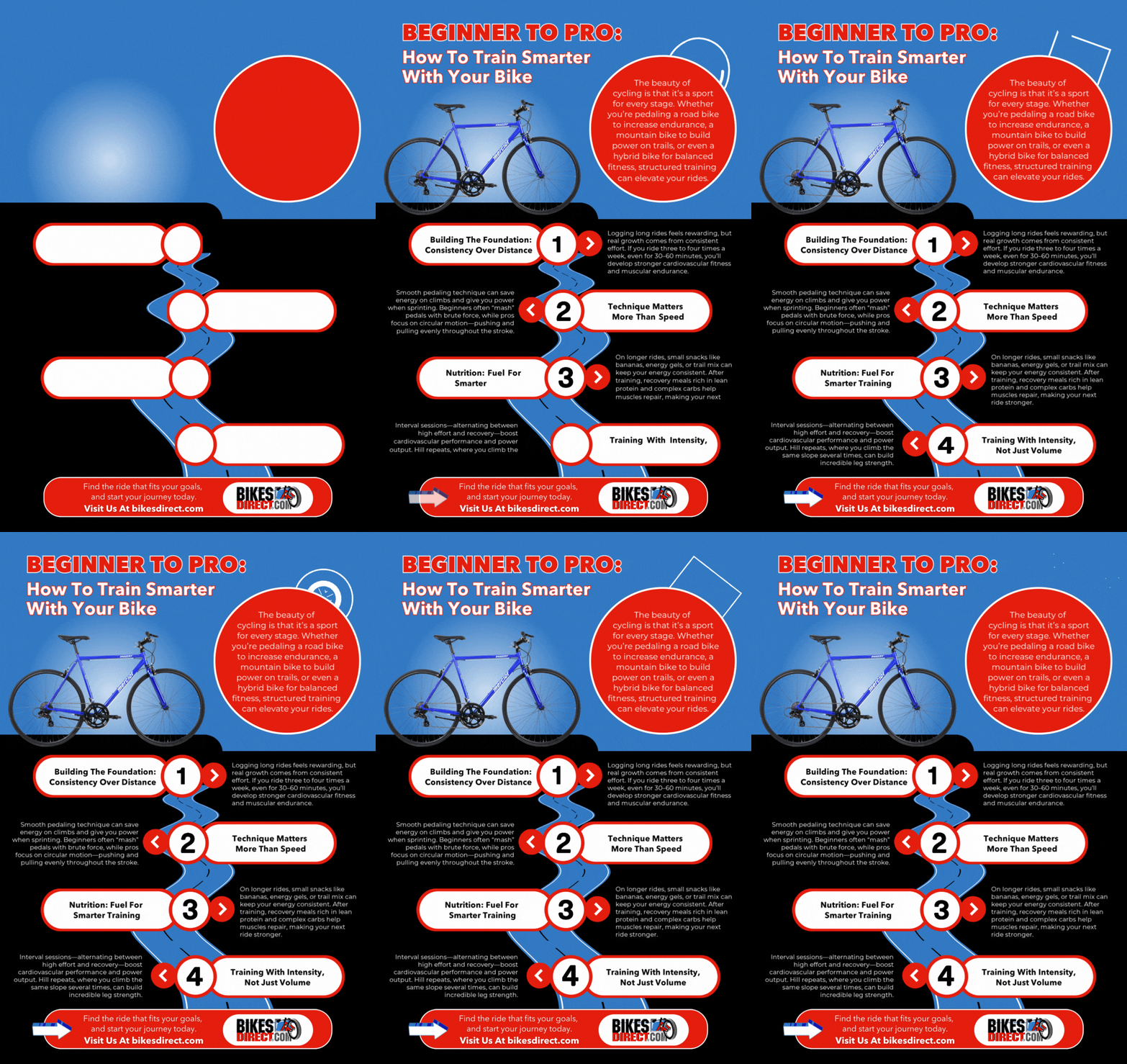
Beginner To Pro: How To Train Smarter With Your Bike

BikesDirect.com explains how to train smarter for every type of rider. Whether you’re tackling trails on a mountain bike or improving endurance on a hybrid bike, structured training, proper nutrition, and consistent effort can help boost performance, strength, and stamina for both beginners and pros.

Beginner To Pro: How To Train Smarter With Your Bike

Cycling and Mental Health: The Science Behind the Pedal Power

There’s a reason so many cyclists describe their time on two wheels as therapy. Picture this: the wind against your face, rhythmic pedal strokes, and the worries of the day fading into the background. What feels like a simple ride actually has deep roots in science. Researchers increasingly point to the strong link between cycling and mental health benefits, showing how the act of pedaling can reduce stress, elevate mood, and sharpen mental clarity. Whether you’re gliding on a beach cruiser, tackling hills on a mountain bike, or cruising the city on a hybrid bike, the mental lift is as real as the physical workout.

The Mood-Boosting Science of Cycling

One of the most studied effects of cycling is its ability to release endorphins — those “feel-good” chemicals that flood the brain during physical activity. Regular exercise, particularly aerobic exercise like cycling, stimulates serotonin and dopamine production, both of which play key roles in reducing anxiety and fighting depression. Unlike high-impact activities, cycling provides a steady, sustainable way to achieve these benefits without punishing the joints. A leisurely ride on a beach cruiser can be just as effective for mood regulation as a more intense session on a road bike.

Stress Reduction on Two Wheels

Cycling acts as a moving meditation. The repetitive, circular motion of pedaling naturally relaxes the nervous system, encouraging mindfulness and presence. Studies have shown that even 20 to 30 minutes of moderate cycling can lower cortisol levels, the hormone responsible for stress. Commuters who swap car rides for a spin on a hybrid bike often report arriving at work more refreshed and less frazzled. And unlike sitting in traffic, the ride itself becomes part of the solution to stress, not the cause of it.

A couple with two dogs in front baskets enjoying a sunny ride on their beach cruiser bikes.

Sharpening Focus and Cognitive Health

Beyond mood and stress, the cycling and mental health benefits extend into cognition. Research has linked regular cycling with improved memory, faster learning, and sharper problem-solving. Increased blood flow and oxygen supply to the brain stimulate new cell growth in the hippocampus, the area tied to memory and emotion regulation. Riders who regularly take out their gravel bike or fat bike on weekend adventures may notice improved focus not only during rides but also in their work and studies. Cycling is not just an escape — it’s mental cross-training for the brain.

Building Confidence and Resilience

Every ride is a chance to challenge yourself, whether that means pushing up a steep hill, navigating new trails, or simply sticking to a riding routine. Achieving small cycling goals can build self-confidence and resilience that extend far beyond the saddle. This applies whether you’re aiming for a century ride on a road bike, hitting tough trails with a mountain bike, or simply commuting more days a week on a hybrid bike. Each success builds a mental foundation that reinforces positivity and discipline.

Two mountain bikes parked near a quiet lake with a child sitting by the water.

Social Connection and Community

Humans are wired for connection, and cycling naturally brings people together. Joining a local cycling club, riding with friends, or even participating in casual group rides fosters belonging and social support — both crucial for mental well-being. For some, the beach town cruiser group rides bring joy and laughter; for others, gravel grinding with a weekend crew builds camaraderie through shared adventure. These experiences help combat loneliness, which is a growing contributor to poor mental health in modern society.

Nature, Freedom, and the Joy of the Ride

One often overlooked aspect of the cycling and mental health benefits is the way riding connects us to the outdoors. Modern life keeps many people tethered to screens and artificial light for most of the day, but cycling pulls you outside, where fresh air, sunshine, and open skies create a natural reset for the mind. Research has shown that exposure to nature significantly reduces symptoms of anxiety and stress, and cycling offers one of the most enjoyable ways to access that restorative environment.

The sense of freedom also plays a huge role. Unlike a treadmill or gym routine, cycling invites exploration. A casual spin through a new park on a hybrid bike or a scenic adventure on a gravel bike becomes more than exercise — it’s an experience. Riders report feeling lighter, less burdened, and more optimistic after exploring even short routes. The blend of physical activity, natural settings, and the thrill of movement creates a perfect storm of positivity.

This freedom is why so many riders describe their bikes not just as tools for fitness but as companions for wellness. Every pedal stroke is a reminder that better mental health can be just around the corner.

Making Cycling a Habit for Mental Wellness

The best part of cycling is its accessibility. Riders can tailor it to fit their lifestyle and mental health needs. For those seeking calm, a quiet spin on a beach cruiser through the neighborhood works wonders. For others craving adrenaline, technical trails on a mountain bike or endurance sessions on a road bike may deliver the mental reset they’re after. The consistency of showing up for yourself, whether through daily commutes or weekend adventures, is what transforms cycling into a reliable tool for mental wellness.

Conclusion: Ride for Your Mind

Cycling isn’t just about fitness stats or mileage logged — it’s about the way each ride makes you feel. From stress relief to sharper focus and greater resilience, the mental health benefits of cycling are available to everyone who pedals, regardless of skill level or bike type. Whether your preference is a casual beach cruiser, a versatile hybrid bike, a rugged mountain bike, or a sleek road bike, every ride becomes a step toward better mental health.

Bikesdirect.com makes finding the right bike easier than ever, with options across categories and price points so every rider can experience the joy and peace of mind that cycling brings. By choosing your perfect ride at Bikesdirect.com, you’re not just investing in a bike — you’re investing in your mental wellness and a healthier, happier lifestyle.

Mountain Bikes for Every Skill Level: How to Find Your Perfect Match

Few bikes inspire as much adventure as the mountain bike. From winding forest trails to steep, rocky descents, mountain biking offers a blend of fitness, skill, and freedom that’s unlike anything else. But with so many types of mountain bikes available, choosing the right one can feel overwhelming—especially for beginners.

The key is to match the bike to both your skill level and the terrain you plan to ride. Whether you’re just starting out, ready to explore tougher trails, or craving advanced features for technical riding, there’s a mountain bike designed for you. Let’s explore what makes these bikes special and highlight three standout models from BikesDirect that show how you can ride smarter, not just harder.

What Makes Mountain Bikes Unique?

Mountain bikes are built for versatility and toughness. Compared to road bikes or hybrids, they feature wider, knobbier tires for traction, stronger frames to handle impacts, and geometry designed for stability on rough terrain. Most also come with suspension to absorb bumps and drops, making technical riding more manageable and fun.

While road bikes are about speed and efficiency, mountain bikes are about control, confidence, and capability. They allow riders to tackle terrain that would stop any other bike in its tracks.

For Beginners: Hardtails That Build Confidence

If you’re new to mountain biking, starting with a hardtail is often the best choice. Hardtails feature suspension in the front fork but a rigid rear triangle. This design makes them lighter, simpler, and more affordable than full-suspension models.

A perfect example is the Fuji Nevada 29 1.9. This beginner-friendly bike pairs a lightweight aluminum frame with reliable components, creating a setup that’s forgiving yet capable. The wide 29-inch tires roll smoothly over roots and rocks, while the front suspension fork absorbs bumps to keep you comfortable. It’s a bike that lets you focus on building skills without being held back by your equipment.

For Intermediates: Versatile Trail Bikes

Gravity FSX V Full Suspension Mountain Bike product image

As your confidence grows, you may start seeking out tougher trails—routes with steeper climbs, trickier descents, and technical obstacles. At this point, a trail bike with more advanced features becomes the logical upgrade.

The Motobecane TAZ 29 Trail is a fantastic option. Built around modern geometry, it combines a 1×12 drivetrain with a dropper post, giving you the tools to climb efficiently and descend with confidence. The wide-range gearing handles everything from steep ascents to fast flats, while the hydraulic disc brakes provide powerful stopping power in all conditions. It’s the kind of bike that keeps up with your ambitions as you move into more demanding terrain.

For Advanced Riders: Full-Suspension Machines

When you’re ready to push limits on technical descents, rock gardens, or bike parks, a full-suspension model is the way to go. With both front and rear shocks, these bikes deliver unmatched traction and control on the most rugged trails.

The Motobecane HAL 5 Trail is a standout in this category. Its alloy frame is paired with long-travel suspension, making it perfect for aggressive downhill sections while still being climb-friendly. Add in features like a 1x drivetrain, tubeless-ready wheels, and precision disc brakes, and you get a bike that thrives in the hands of experienced riders who want to test their limits.

Matching Your Bike to Your Terrain

Your skill level is important, but so is the terrain you ride most often. Riders who live in flatter areas may prefer lighter cross-country bikes, while those in mountainous regions will appreciate the stability of trail or enduro models.

  • Cross-Country (XC): Great for distance and speed, ideal for smoother trails.
  • Trail Bikes: Versatile all-rounders, balancing climbing efficiency and descending capability.
  • Enduro/All-Mountain: Suited for steep, aggressive trails with big descents.
  • Downhill: Purpose-built for gravity riding, often used at lift-access bike parks.

Knowing your terrain ensures you choose a bike that’s not only fun but also practical for where you ride most often.

What to Look For in a Mountain Bike

Gravity FSX V Full Suspension Mountain Bike product image

Regardless of your level, there are a few universal features to consider:

  • Suspension Travel: More travel means more bump absorption, but also more weight.
  • Brakes: Hydraulic disc brakes are essential for control and safety.
  • Drivetrain: A wide range of gears helps you handle steep climbs and fast descents.
  • Dropper Posts: Allow quick saddle adjustments, improving handling on technical sections.

Entry-level riders should focus on value and durability, while advanced riders should look for geometry and suspension that match their goals.

Why These Bikes Stand Out

The Fuji Nevada 29 1.9, Motobecane TAZ 29 Trail, and Motobecane HAL 5 Trail each serve a different stage of the mountain biking journey. The Fuji Nevada gives beginners a lightweight, reliable entry point. The TAZ 29 Trail is a versatile trail bike that’s ideal for intermediates looking to expand their horizons. And the HAL 5 Trail offers advanced riders a full-suspension platform capable of handling the gnarliest terrain.

Together, they illustrate how BikesDirect makes mountain biking accessible at every level—with direct-to-consumer prices that let you save up to 60% compared to traditional bike shops.

Find Your Perfect Match

Gravity HD29 1BY Front Suspension Mountain Bike product image

Mountain biking is one of the most rewarding cycling disciplines. It challenges your body, sharpens your skills, and immerses you in nature. The right bike makes all the difference, whether you’re just starting on local trails or charging down technical descents.

At BikesDirect, we offer a wide selection of mountain bikes tailored to every rider. From the approachable Fuji Nevada 29 1.9 to the versatile Motobecane TAZ 29 Trail and the high-performance Motobecane HAL 5 Trail, there’s a perfect match for your goals, terrain, and budget.

With savings that make top-tier bikes more affordable, upgrading your ride has never been easier. Find your perfect match today and let the trails show you what’s possible.

What Your Bike Style Says About You: Hybrid, Road, Fat, or Cruiser?

Your bike style says a lot about you. Whether you’re a practical hybrid rider, a speed-driven road bike lover, an adventurous fat bike explorer, or a laid-back cruiser fan, we help you find the perfect ride that matches your personality and lifestyle.

Top 10 Mountain Biking Destinations in the U.S. and the Best Bikes to Ride Them

Gravity SuperFast BMX dirt jumper bike with rugged frame and suspension fork
The Gravity SuperFast BMX is built tough for jumps, tricks, and urban stunts

f you’re passionate about mountain biking, the United States offers some of the most breathtaking and challenging trails in the world. From rocky mountain paths to forested singletracks, these trails provide riders of all levels with unforgettable adventures. At Bikesdirect.com, we know that having the right bike is just as important as picking the perfect destination. 

That’s why we’ve put together a guide to the best mountain bike trails the USA has to offer, along with the ideal Bikesdirect.com mountain bikes to tackle each terrain with confidence. Whether you’re looking for adrenaline-pumping descents or scenic all-day rides, we’ve got you covered with expert recommendations to elevate your ride.

What Makes a Great Mountain Bike for the Best Trails in the USA?

Choosing the right bike is key to making the most of your mountain biking adventure. The best mountain bike trails in the USA vary widely in terrain and difficulty, so your bike needs to be versatile, durable, and suited to the conditions you’ll face.

Frame and Suspension

For rugged trails with rocks, roots, and drops, a full suspension mountain bike absorbs shocks and keeps you comfortable and in control. Hardtail bikes, with front suspension only, are lighter and ideal for smoother, faster trails.

Tire Size and Grip

Tire width and tread pattern impact traction and stability. Wider tires with aggressive tread are perfect for loose dirt, mud, and snow, while narrower tires roll faster on hard-packed surfaces.

Gearing and Brakes

Mountain trails often involve steep climbs and fast descents. A wide range of gears helps you power uphill and control your speed downhill. Hydraulic disc brakes provide reliable stopping power in all weather conditions.

Recommended Bikes from Bikesdirect.com

To match these needs, Bikesdirect.com offers a variety of mountain bikes tailored to different trail types and riding styles:

  • The Singlespeed Deadeye 27+ Mountain Bike combines simplicity with rugged capability.
  • For riders seeking added traction and comfort on soft or snowy terrain, our range of fat bikes is a perfect choice.
  • And for those who want nimble, fast handling, check out our selection of 29er Bikes, offering larger wheels for smooth rolling over rough ground.

With the right bike, you’ll be ready to take on any of the top mountain bike trails in the USA with confidence and ease.

Top 10 Mountain Biking Destinations in the USA and the Best Bikes to Ride Them

Gravity Deadeye 27.5+ mountain bike with fat tires and minimalist design
Take on trails with confidence—the Deadeye 27.5+ offers simplicity and control

Exploring America’s top mountain biking destinations is a dream for any rider. From technical trails in the Rockies to scenic rides along the West Coast, each spot offers unique challenges and stunning views. To help you gear up properly, we’ve matched each destination with Bikesdirect.com’s ideal bike models.

1. Moab, Utah — Slickrock Trail

Known for its iconic red sandstone and rugged terrain, Moab demands a durable bike with excellent suspension.
 Best Bike: Our full suspension mountain bikes deliver the shock absorption and control you need to tackle Moab’s challenging trails.

2. Whistler, British Columbia (just across the border but popular for US riders) — Whistler Mountain Bike Park

This world-famous park has varied terrain from beginner to expert downhill runs.
 Best Bike: Try the Gravity Dirt Jumper BMX Superfast for nimble control on jumps and technical features.

3. Sedona, Arizona — Bell Rock Loop

With stunning red rocks and smooth singletrack, Sedona is great for intermediate riders who want a mix of speed and technical features.
 Best Bike: The Singlespeed Deadeye 27+ Mountain Bike offers versatility and simplicity on these trails.

4. Crested Butte, Colorado — 401 Trail

A classic mountain bike destination with high elevation and varied terrain.
 Best Bike: A sturdy full suspension mountain bike from our lineup will keep you comfortable on climbs and descents.

5. Park City, Utah — Mid Mountain Trail

Known for long rides with breathtaking views, this trail calls for endurance and comfort.
 Best Bike: Our selection of 29er Bikes features larger wheels that roll smoothly over rough terrain.

6. Downieville, California — Downieville Downhill

Popular among adrenaline junkies for fast descents and technical drops.
 Best Bike: The aggressive geometry and suspension of our mountain bikes handle high-speed trail riding with ease.

7. Bentonville, Arkansas — Slaughter Pen Trail System

Known for flowy trails and jumps suitable for all skill levels.
 Best Bike: Check out our Dirt Jumper BMX Superfast for sharp handling and control.

8. Kingdom Trails, Vermont — Various Trail Systems

Ideal for cross-country riders who enjoy scenic, varied terrain.
 Best Bike: The versatile Singlespeed Deadeye 27+ fits perfectly for endurance rides.

9. The Adirondacks, New York — Multiple Trails

These forested trails are ideal for riders who want a bit of everything — climbs, descents, and technical sections.
 Best Bike: A 29er Mountain Bike will help you cruise comfortably over roots and rocks.

10. Marquette, Michigan — Marquette Mountain Bike Trails

Popular for beginner and intermediate riders looking for well-maintained, scenic trails.
Best Bike: Our fat bikes offer excellent traction and stability, especially on softer terrain or during snowy seasons.

Ready to Explore the Best Mountain Bike Trails in the USA? Gear Up with Bikesdirect.com

Motobecane 29er mountain bike product image
These 29er Boost mountain bikes are super versatile. 

Whether you’re chasing adrenaline on technical descents or savoring scenic cross-country rides, having the right mountain bike is key to making the most of your adventure. At Bikesdirect.com, we offer an extensive selection of mountain, fat, dirt jumper, and 29er bikes—each designed to perform on the varied terrain of America’s top riding destinations.

From the rugged slickrock trails of Moab to the smooth flow of Bentonville, our bikes provide durability, comfort, and performance without breaking the bank. Plus, with our direct-to-consumer pricing model, you get premium quality and expert support at unbeatable prices.

Start planning your next ride today! Browse our full collection of mountain bikes and find the perfect bike that suits your style, skill level, and favorite trail.

Adventure awaits—let’s hit the trail with confidence and the best bike by your side.