

Most people buying a bike for the first time focus on the brand name or the color of the frame. That is understandable, but it is also how a lot of riders end up with a bike that feels wrong six months later. A solid bicycle components guide helps you understand what you are actually paying for, what each part does, and which trade-offs matter for the kind of riding you plan to do.
Understanding your bike at a component level does not require an engineering background. It requires knowing how a handful of key systems work together and what questions to ask before you buy. Whether you are shopping for a road bike, eyeing an upgrade, or simply trying to make sense of a spec sheet for the first time, the information below gives you the foundation you need to buy with confidence.
The Frame: Where It All Begins
The frame is the one component that cannot be upgraded without effectively buying a new bike. It determines geometry, ride feel, and the character of everything attached to it. Frame material is where most beginner buyers get lost, so here is a practical breakdown of what each option actually delivers.
Aluminum is the most common material at entry and mid-range prices. It is lightweight, stiff, and resistant to corrosion. Most quality bikes under $800 use aluminum, and modern aluminum frames are far more refined than older versions that had a reputation for harshness. Steel frames are heavier but offer a noticeably smoother feel over rough roads. They are durable, repairable after crash damage, and favored by touring cyclists and commuters who value longevity over marginal weight savings.
Carbon fiber appears predominantly at premium price points. It is lightweight, excellent at absorbing road vibration, and stiff in all the right places. Titanium sits at the top of the range, combining the smoothness of steel with the light weight of aluminum, and it is virtually impervious to corrosion over decades of use. Frame geometry also differs significantly between categories. A road bike uses an aggressive, aerodynamic position that rewards output over long, flat miles, while a mountain bike uses a slacker, more upright stance optimized for reactive control on unpredictable terrain. Understanding these distinctions helps you match the frame to your actual riding style rather than your aspirational one.
The Drivetrain: Turning Effort into Motion
The drivetrain is the system that converts your pedaling into forward movement. It includes the cranks, chainrings, chain, cassette, and derailleurs. Most bikes use either a 1x (single chainring) or 2x (double chainring) setup, and the difference matters more than the gear count number alone.
A 1x drivetrain keeps things mechanically simple. There is no front derailleur to adjust, fewer cables to maintain, and the chain line stays cleaner throughout the gear range. The trade-off is a larger jump between gears, which some riders notice on long, sustained climbs or when trying to maintain a precise cadence on flat terrain. A 2x system gives a wider overall range and finer steps between ratios, which is why it remains common on road bikes and long-distance adventure setups.
Gear count, often advertised as 7-speed, 11-speed, or 12-speed, refers to the number of sprockets on the rear cassette. A higher gear count gives you more options and finer gradations between each shift. Entry-level bikes start at 7 or 8 speeds, which is entirely adequate for flat to moderate terrain. Moving to 10 or 11 speeds becomes meaningful when you are climbing regularly or covering long distances, where gear precision reduces fatigue and helps you maintain efficiency through changing grades.
Braking Systems: More Than Just Stopping
Brakes are a safety-critical component that beginners consistently undervalue when comparing bikes by spec. At entry price points, the most common choice is between rim brakes and mechanical disc brakes. At higher price points, hydraulic disc brakes become the standard, and the difference in feel and reliability is significant.
Rim brakes work by squeezing brake pads against the rim of the wheel. They are lightweight, easy to adjust, and straightforward to maintain. The limitation is that wet weather and dirty rims reduce stopping power considerably, and worn rims eventually require wheel replacement rather than just new pads. Mechanical disc brakes use a cable-actuated caliper that clamps a rotor attached to the wheel hub. They are more consistent in wet or muddy conditions and do not wear the rim surface over time, which extends wheel life noticeably.
Hydraulic disc brakes replace the cable with fluid lines, delivering an immediate, consistent, and highly modulated feel. You use significantly less hand force to achieve the same stopping power, which reduces fatigue on long descents. On technical terrain or a loaded bike, this difference is not subtle. It is a meaningful safety upgrade that improves both confidence and control, and it is a key reason why hydraulic brakes have become standard equipment on mid-range and premium builds.
Wheels, Tires, and Suspension
Wheel size affects how a bike rolls over obstacles and maintains momentum. The most common sizes are 27.5-inch, well-suited for agile trail riding, and 29-inch, which rolls over obstacles more easily and holds momentum efficiently on longer runs. Road bikes typically use 700c wheels, roughly equivalent in diameter to 29-inch mountain bike wheels but paired with much narrower tires.
Tire width and tread pattern are where a bike’s intended use becomes clearest. Narrow, smooth tires are fast and efficient on pavement. Wide, knobbly tires prioritize grip off-road but create rolling resistance on hard surfaces. The best choice depends entirely on where you ride most often, and getting this decision right improves every ride.
Suspension is primarily a mountain bike consideration. A hardtail bike has front fork suspension only, which absorbs impacts from the front wheel and works well for cross-country and moderate trail riding. Full suspension adds a rear shock, which dramatically improves comfort and control on aggressive terrain. The trade-off is added weight and maintenance complexity. For riders who spend most of their time on pavement, gravel, or smooth paths, a rigid fork is lighter, more efficient, and lower maintenance. Understanding when suspension genuinely adds value, and when it simply adds cost, is one of the most useful things any bike buyer can learn before committing to a purchase.
Components Work Together, and So Should Your Research
No single component defines a bike. A well-specced drivetrain on a poorly-designed frame still produces a frustrating ride, and a beautiful frame paired with marginal brakes becomes a safety concern over time. Using this bicycle components guide as a framework means evaluating the whole system, not just the headline specs.
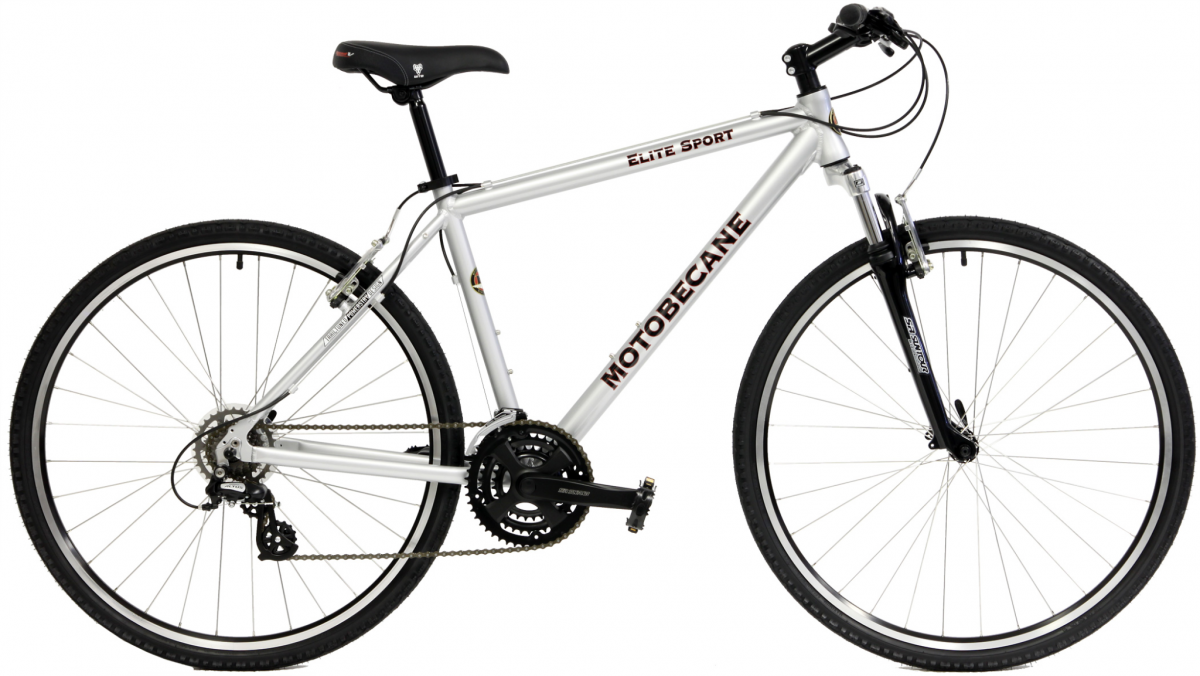
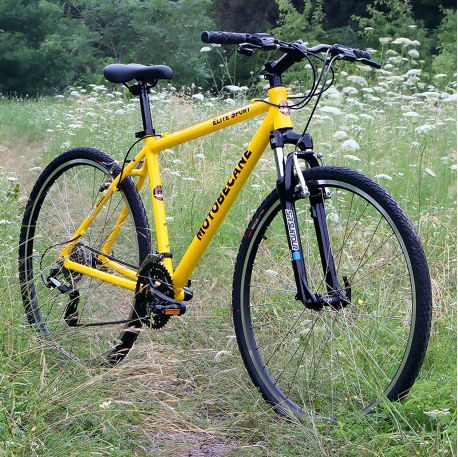
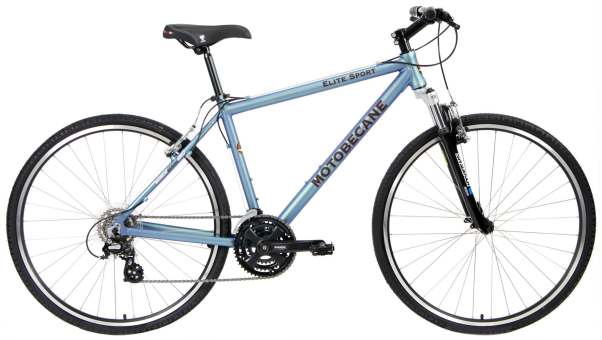
We take component specifications seriously at BikesDirect. Our range spans road bikes built for pavement performance, mountain bikes equipped for real trails, gravel bikes designed for mixed-surface adventures, hybrid bikes optimized for everyday practicality, beach cruisers focused on comfort and simplicity, and fat bikes engineered for all-terrain traction. For a strong introduction to the hybrid category with thoughtful componentry at a direct-to-consumer price, take a look at the Motobecane Elite Sport.
Ready to talk through specs and find the right build for your riding goals? Contact the BikesDirect team today, and we will help you sort through the options.