

The right first kids bike choice begins with the child standing over the bicycle, not with an age printed on a box. Children of the same age can have very different inseams, strength, coordination, and confidence. The best first bike is light enough to control, small enough to stop safely, and simple enough that the child can focus on balance and steering.
A miniature mountain bike may look exciting, but suspension and extra gears can add weight without helping a new rider. Features should solve a real problem. Immediate fit and accessible brakes matter more than a long specification list.
Fit the Child for the Present Season
The child should be able to stand over the frame without painful contact and place the feet down with confidence. Saddle height depends on skill. A true beginner may need more foot contact, while an experienced rider can use a higher position for better pedaling.
The REI kids-bike guide recommends using height and inseam rather than age alone. It also warns against buying a bicycle that a child must grow into because an oversized frame makes starting, stopping, and steering harder.
Leave adjustment room, but do not turn future growth into current instability. A bike that fits now can build the skills that make the next size easier.
Wheel Size Is a Starting Point, Not a Guarantee
Wheel sizes such as 16, 20, and 24 inches provide a useful category, but frame shape and saddle range differ between models. Two 20-inch bicycles may fit differently because of standover height, crank length, handlebar position, and tire width.
Measure the child in normal riding shoes and compare the number with the product size chart. Check that knees do not strike the handlebar and that the child can turn without the bar feeling too far away.
A 24-inch model can suit a taller child who has outgrown a 20-inch bike, but moving up early can make the bicycle feel heavy and slow to correct. Control should improve after sizing up, not disappear.
Weight Affects Every Learning Skill
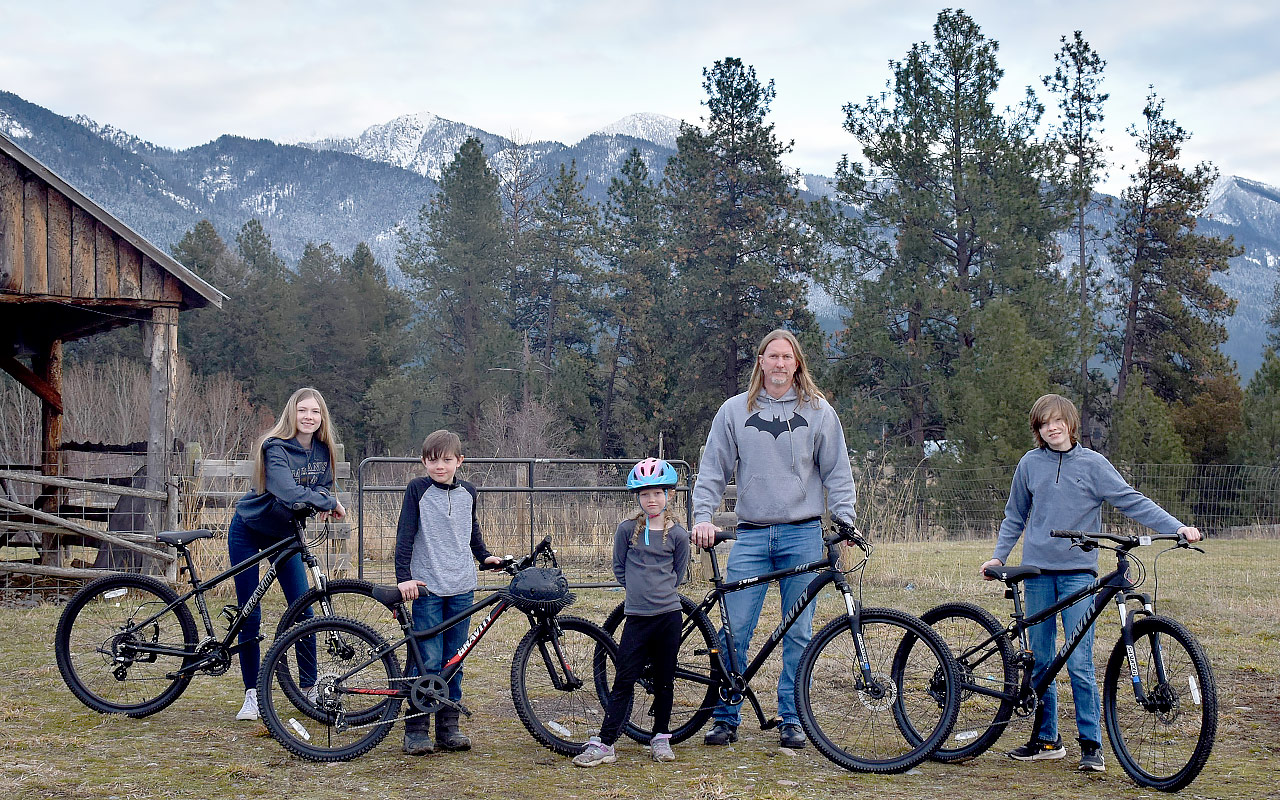
Children have less body mass and strength available to correct a leaning bicycle. A heavy bike is harder to start, lift, steer at low speed, and push up a hill. The child may blame personal ability when the equipment is creating the problem.
Compare the bicycle’s complete weight, and not just the frame material. Suspension forks, wide tires, steel parts, and decorative accessories can make an aluminum bike heavy. Remove unnecessary baskets or training hardware once it is no longer needed.
Weight is not the only priority. A slightly heavier bike with better fit and effective brakes may be safer than a lighter model with an awkward cockpit. The goal is a balanced package the child can manage independently.
Check Brakes, Gearing, and Crank Length
The child should be able to reach and pull the brake levers without rotating the hands off the grips. Lever-reach adjustment can help, but it cannot fix controls designed for adult hands. Test both brakes and explain how to apply them progressively.
A single rear shifter is easier than front and rear shifting. Flat routes may need only one gear, while hills justify a small gear range. Complicated controls can distract a beginner who is still learning to look ahead.
Cranks that are too long force the knees through an exaggerated range and can cause toe overlap. Child-sized components matter because an adult layout on a small frame is still an adult layout.
Four Models for Different Young Riders
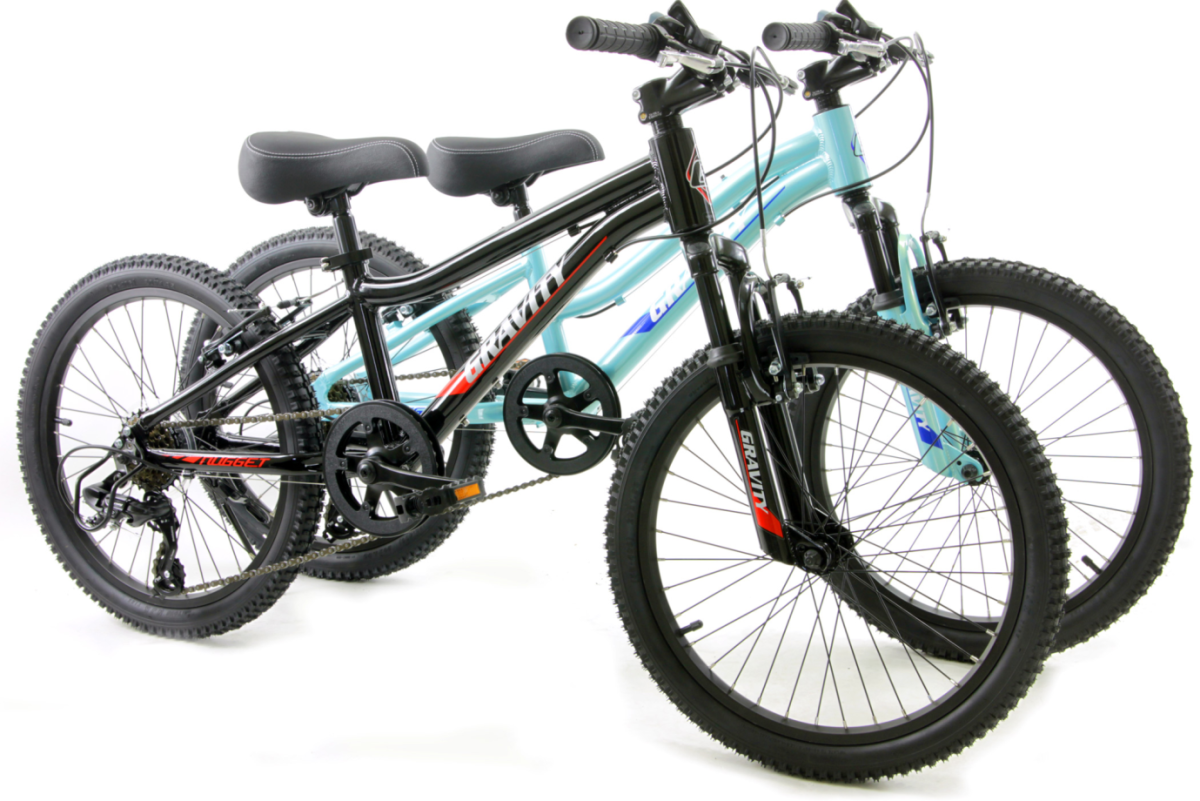
The Gravity Nugget Kids MTB is a child-sized aluminum mountain-style bike with simple rear gearing and V-brakes. It suits neighborhood riding and mild dirt paths when its size range matches the child.
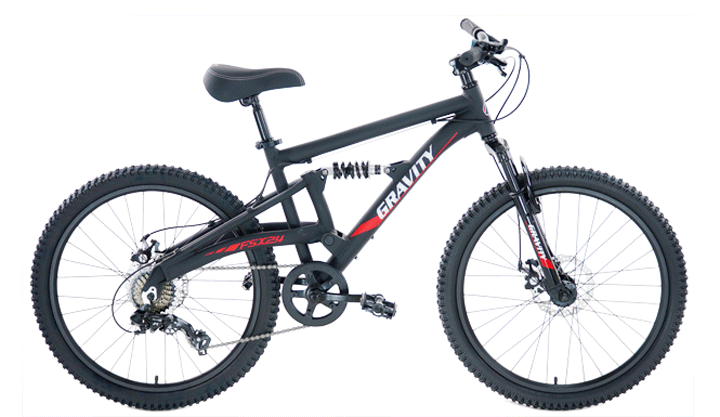
The Gravity FSX 24 adds full suspension, disc brakes, and a 24-inch wheel format. That equipment can appeal to a taller, more experienced child riding rougher ground, but parents should weigh the comfort benefit against additional mass and maintenance.
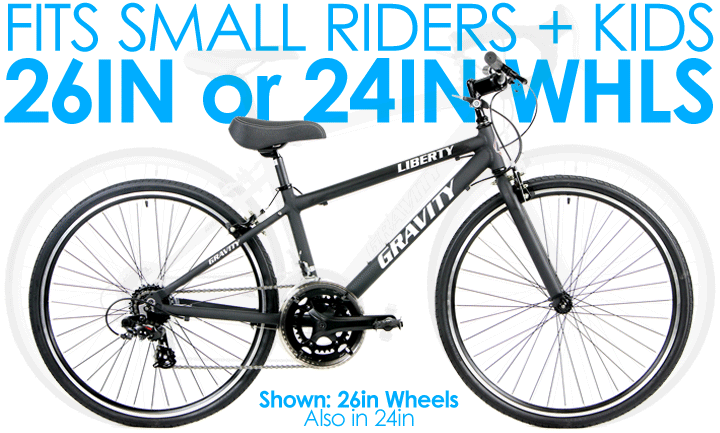
The Gravity Liberty Express Kids uses flat bars and a road-oriented platform for pavement, paths, and smaller riders who want efficient tires without a mountain-bike stance. The Gravity Liberty Express 26 extends the idea to taller children and small riders.
A child-sized fat bike can be fun on sand or snow, but broad tires and heavy wheels are unnecessary for normal sidewalks and parks. Choose special-purpose equipment only when the family will use it.
Red Flags at Any Retailer
Avoid a frame the child cannot stand over, brake levers that cannot be reached, loose bearings, sharp cable ends, and wheels that wobble. Check that the fork faces forward, pedals are installed on the correct sides, and every fastener is secure.
Do not assume a new bicycle is ready because it came from a box or showroom floor. Final assembly and a safety inspection are essential. The NHTSA bicycle safety page also emphasizes helmet use, visibility, and age-appropriate riding rules.
Training wheels should not hide a fit problem. Balance-bike practice or a temporarily lowered saddle can teach independent balance more directly for many children. The USA Cycling balance-bike guide provides additional ideas for building skills through short, positive sessions.
The Right Size Creates Better First Rides
A relaxed beach cruiser may inspire the family riding style, while a child still needs a model sized to individual reach and inseam. Adult category names should not dictate the child’s equipment.
BikesDirect offers kids’ mountain and road options with size guidance and product specifications for comparing wheel size, frame material, brakes, and gearing. Parents can use those details to avoid buying solely by age or appearance.
A hybrid bike may become the next step for a taller teenager, but the first purchase should prioritize today’s control.