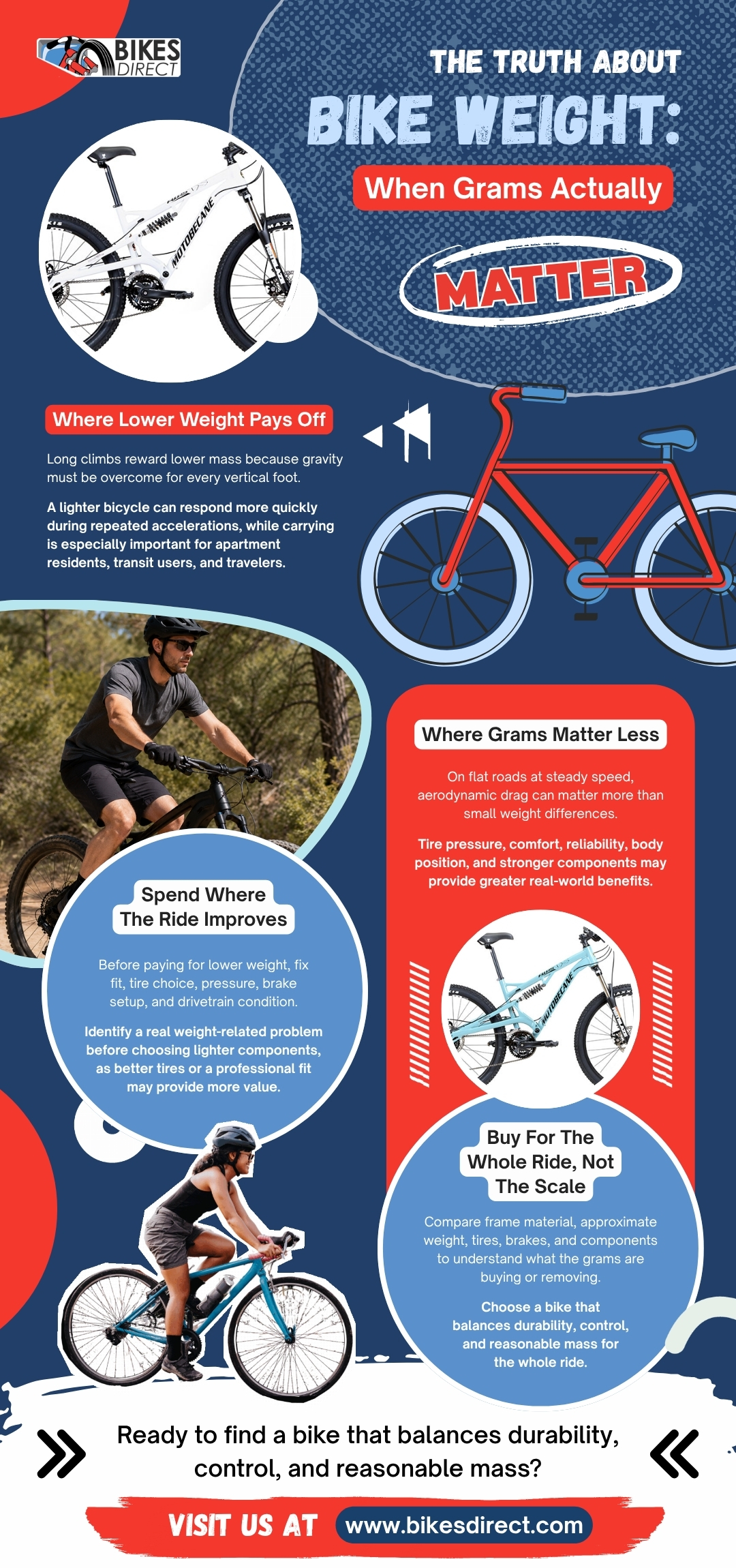
Learn more: https://www.bikesdirect.com/blog/bike-comparison/the-truth-about-bike-weight-when-grams-actually-matter/

Bikesdirect Official Blog and Bicycle Industry Insider News
Get Official Bikesdirect and Bicycle Industry Insider News

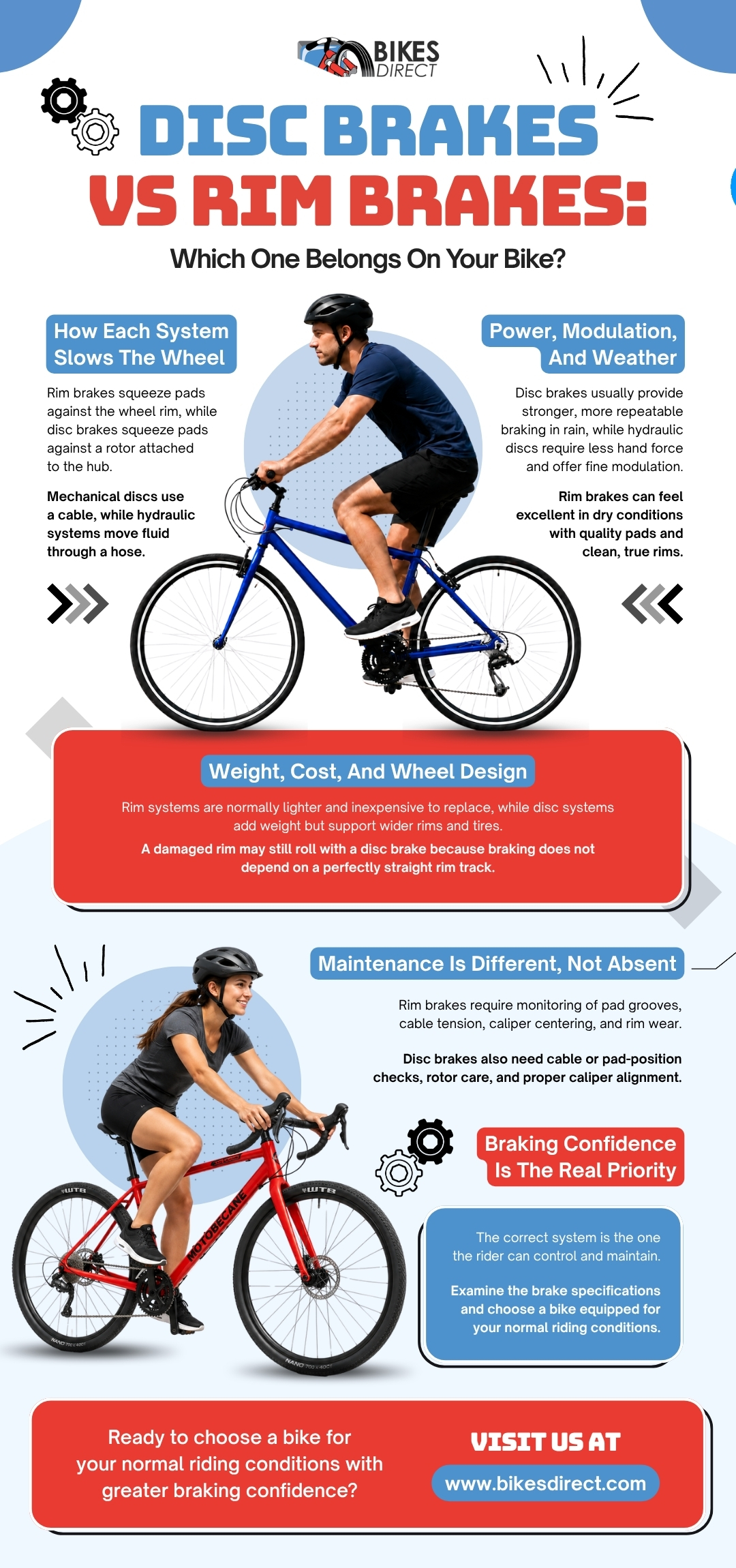
A size label gives us a starting point, not a finished riding position. Two people of the same height can need different frames or cockpit settings because their inseams, torsos, arms, mobility, and riding goals differ. This complete bike fit guide builds the position from the frame outward so each adjustment has a clear purpose.
The ideal posture also changes with the bicycle. A mountain bike must leave room for movement and control on uneven ground, while a road setup may place the hands lower for speed. Comfort does not mean forcing every bicycle into the same upright shape.
We will begin with measurements and frame geometry, then set saddle height, reach, handlebar position, controls, and cleats. We will also separate basic DIY work from situations that justify a virtual fit, professional fitting session, or medical assessment.
The frame establishes fixed relationships that stems, spacers, and seatposts can adjust only within a sensible range. A shorter stem can reduce reach, but an extremely short replacement may change steering feel. A tall stack of spacers can raise the bars, but it cannot turn a low racing frame into a purpose-built upright bicycle.
We therefore want a frame that already places the rider close to the intended posture. Final fitting then refines the contact points rather than correcting a basic mismatch. This approach also protects future options because the owner can make small changes without reaching the limits of a seatpost, steerer, or saddle rail.
Continue reading “The Complete Bike Fit Guide: Sizing, Geometry, and Comfort”