

The argument over hardtail vs full suspension often produces an answer before the rider has described a single trail. That is backwards. A smooth cross-country loop, a root-filled forest descent, and a gravel access road place different demands on a bicycle. The better platform is the one that supports the terrain, budget, maintenance habits, and skills of the person riding it.
A wide-tire fat bike can add flotation and grip on snow, sand, or very loose ground, but tire volume is not the same as suspension travel. Hardtails and full-suspension bikes manage impacts differently, and understanding that mechanical difference makes the rest of the comparison much clearer.
We will compare purchase value, weight, pedaling, climbing traction, descending control, comfort, durability, service needs, and rider development. We will also use four current BikesDirect examples to show why a low-cost full-suspension bicycle and a higher-spec hardtail may target very different buyers.
Two Frames With Different Jobs
The REI mountain-bike buying guide defines a hardtail as a mountain bike with front suspension and a rigid rear triangle. A full-suspension bike adds a rear shock and moving linkage between the front and rear portions of the frame. That extra movement changes traction, comfort, maintenance, and price.
What the Rigid Rear Triangle Provides
A hardtail sends pedaling force through a rear triangle with no pivots or shock. On smooth ground, that direct connection can feel lively and efficient. There are fewer moving parts to inspect, fewer bearings exposed to mud, and no rear shock requiring pressure checks or periodic service.
The rigid rear end also makes trail feedback more obvious. Riders learn to unweight the saddle, choose smoother lines, and use their legs as suspension. That can build useful technique, but it can also create fatigue on long sections of repeated rocks and roots.
What Rear Suspension Changes
A full-suspension frame allows the rear wheel to move upward when it hits an obstacle. The shock controls that movement and returns the wheel toward the ground. The result can be more traction, less impact at the saddle and feet, and greater control when braking or cornering over rough terrain.
Rear suspension does not erase poor line choice. Setup matters, including sag, rebound, air pressure or spring rate, and tire pressure. A poorly adjusted full-suspension bike can wallow, bounce, or use travel too quickly. A well-adjusted system can help a rider maintain speed and composure where a hardtail demands more body movement.
Price and Component Quality
At the same retail price, a hardtail usually has more budget available for the fork, brakes, drivetrain, wheels, and tires because the frame does not require a rear shock and linkage. That makes hardtails strong value for beginners who want reliable hydraulic brakes or a better fork without spending heavily.
A low-cost full-suspension bicycle must divide the budget across more parts. It may use a basic coil shock, simpler pivots, heavier wheels, or lower-tier brakes. That does not make it useless. It means the buyer should judge the complete package and intended trail difficulty rather than assume two suspension units always beat one.
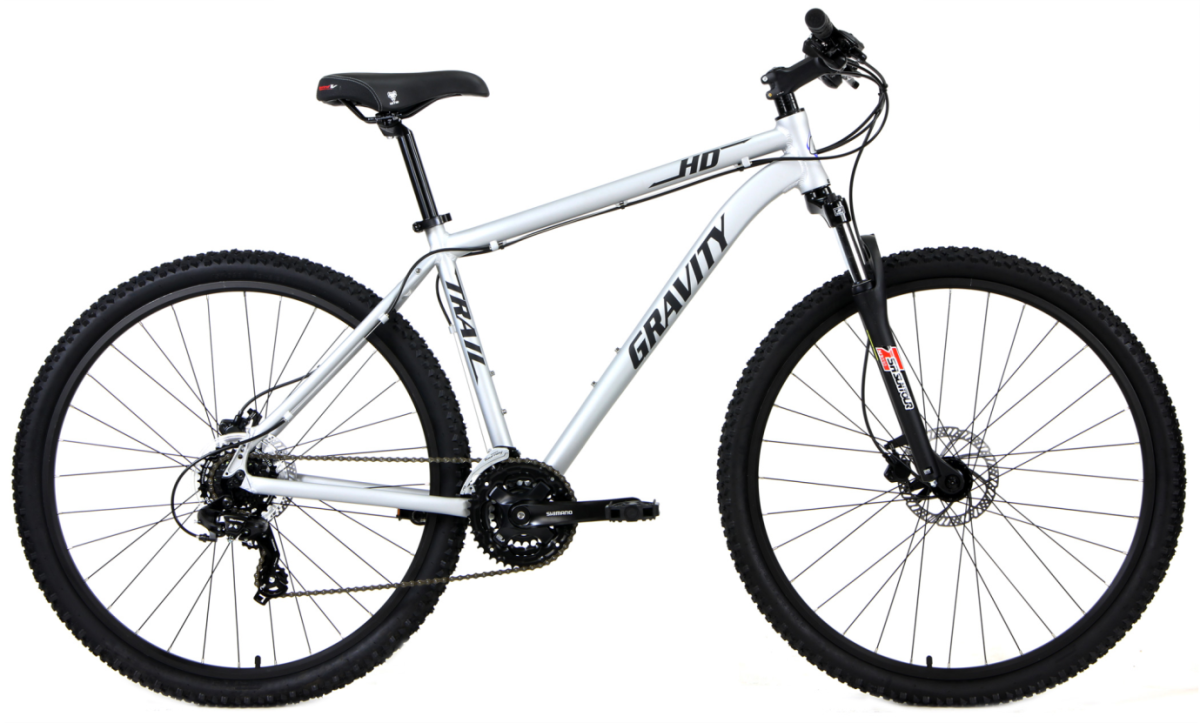
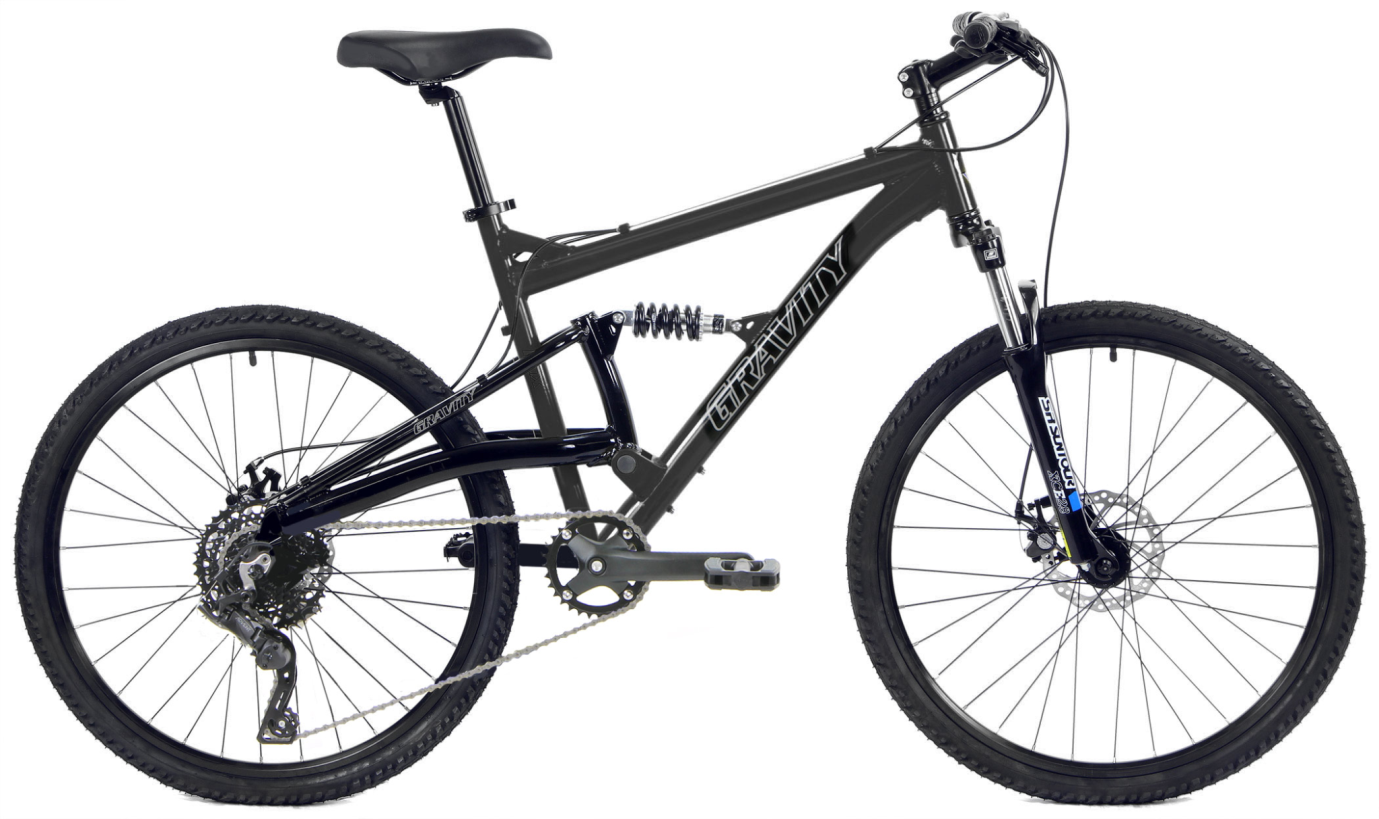
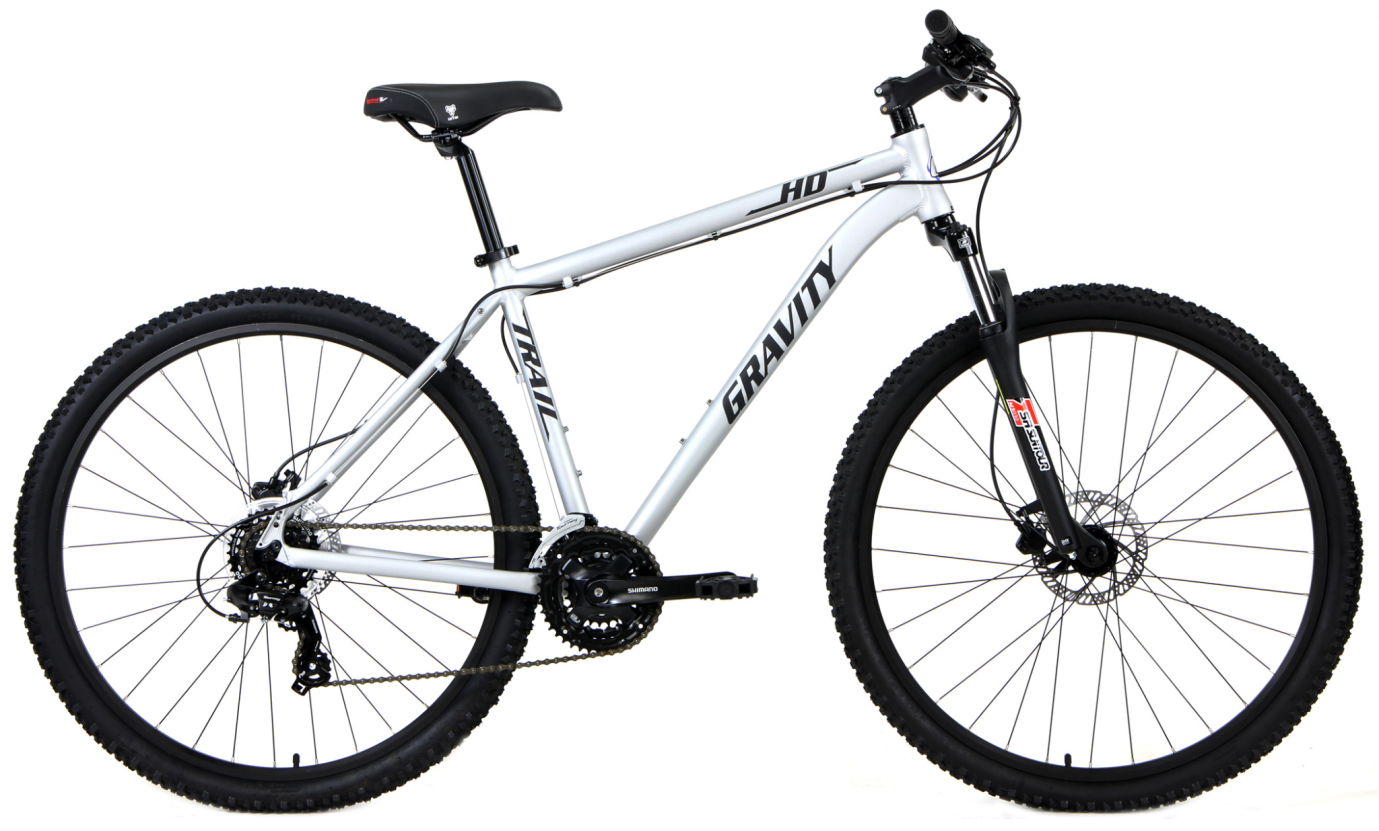
The Gravity HD275 Trail illustrates hardtail value with an aluminum frame, 27.5-inch wheels, a suspension fork, Shimano 21-speed gearing, and hydraulic disc brakes. The Gravity FSX 1.0 Advent26 1BY reaches full suspension at a low price by using a basic rear shock, 26-inch wheels, mechanical disc brakes, and a 1×9 drivetrain.
Neither specification sheet settles the argument. The HD275 may offer stronger braking and lower service complexity. The FSX may provide more comfort on small impacts and let a new rider experience rear suspension. The better value depends on whether the local trails reward the added movement enough to justify its weight and upkeep.
Product Link: Gravity FSX 1.0 Advent26 1BY
Weight and Pedaling Response
Hardtails are generally lighter because they omit the rear shock, linkage, pivots, and reinforced frame areas required to manage suspension loads. Less mass can help during repeated accelerations, hike-a-bike sections, roof-rack loading, and long climbs. More important, the rigid rear end can feel immediate when the rider stands and pedals.
Full-suspension bikes may move slightly under pedaling, especially when the rider uses a low cadence or an active body motion. Modern designs and shock damping reduce this effect, and many shocks include firm settings for smoother climbs. The penalty is most noticeable on pavement and smooth fire roads, where rear travel adds little benefit.
Rough climbs complicate the simple efficiency story. A hardtail rear wheel can skip over loose rocks when the rider remains seated, forcing a loss of traction or a change of line. Rear suspension can help the tire follow the ground, allowing the rider to keep pedaling through broken surfaces. In that setting, mechanical movement can produce practical forward efficiency even if the bicycle is heavier.
Wheel Size Changes the Feeling
A 27.5-inch hardtail can feel quick to turn and easy to move underneath the rider. A 29-inch hardtail rolls over edges more smoothly and maintains speed well. A 26-inch full-suspension bike can feel compact and playful, although replacement tire and wheel choices may differ from current 27.5-inch and 29-inch standards.
The REI wheel-size guide notes the broad trade-off between maneuverability and rollover ability. Wheel size should therefore be considered alongside suspension, not after it. A 29er hardtail may feel calmer over trail chatter than a smaller-wheeled hardtail, while a well-designed 27.5-inch full-suspension bike can prioritize quick direction changes.
Product Link: Gravity HD 1BY11
Climbing on Smooth and Rough Terrain
On a steady dirt road climb, the hardtail often feels sharper. The rider can lock or firm the fork, settle into a rhythm, and direct energy through a rigid rear structure. Lower weight also matters when elevation gain is long enough for small differences to accumulate.
On a technical climb, rear suspension may improve contact over roots and ledges. The rider can remain seated longer, which keeps weight on the rear tire, while the wheel moves around obstacles. This advantage depends on suspension setup and climbing technique. Too little shock pressure can create excessive sag, while overly slow rebound can prevent the shock from recovering between impacts.
A rider who mostly climbs smooth roads to reach mild singletrack may prefer the hardtail’s response. A rider whose climbs are as rough as the descents may gain more from rear-wheel tracking. This is why a terrain description is more useful than a generic claim that one platform climbs better.
Descending Control and Rider Fatigue
Full suspension earns its clearest advantage on repeated rough impacts. The rear wheel can move through rocks, roots, braking bumps, and small drops while the rider maintains a more stable position. That can improve braking consistency, cornering grip, and confidence at speed.
A hardtail can descend the same trail in skilled hands, but the rider must absorb more movement with ankles, knees, hips, and elbows. The rear tire may rebound from square edges, and the saddle can transmit impacts when the rider is seated. Over a long day, this physical workload can reduce precision even if individual obstacles remain manageable.
Comfort is not merely softness. A calmer chassis can help a rider see farther down the trail and make better decisions. The risk is that rear suspension encourages speed before braking and cornering skills are ready. New riders still need to learn neutral position, controlled braking, vision, and line selection.
The REI suspension guide explains the basic setup concepts of travel, sag, and adjustment. Riders considering a full-suspension purchase should be willing to learn these settings rather than treating the shock as a sealed comfort device.
Product Link: Motobecane HAL Boost Expert
Maintenance and Ownership Effort
A hardtail asks for normal drivetrain, brake, wheel, tire, and fork care. The rigid rear triangle has no suspension pivots to loosen or bearings to wear. Cleaning is easier because there are fewer crevices around a linkage, and diagnosis is simpler when a creak develops.
A full-suspension bike adds rear-shock service intervals, pivot hardware, bearings or bushings, and linkage inspection. Mud and pressure washing can push contamination toward sensitive areas. Owners should check for lateral play, loose bolts, damaged seals, and unusual noises. Shock service may require specialist tools or a qualified shop.
This does not mean full suspension is fragile. A quality system maintained on schedule can handle demanding use for years. It does mean ownership cost should include service, not only purchase price. Riders who dislike maintenance or lack a nearby suspension technician may be happier with a well-equipped hardtail.
Four Bikes That Show the Trade-Offs
Gravity HD275 Trail: Accessible Hardtail Control
The Gravity HD275 Trail is suited to new riders on smoother singletrack, park paths, and moderate dirt routes. Its hydraulic disc brakes are a meaningful advantage for control, while the triple drivetrain provides a wide range. The 27.5-inch wheels favor maneuverability and smaller riders compared with a long 29er.
Its limits appear when impacts become repeated and fast. The front fork can absorb the leading wheel hit, but the rear wheel remains rigidly connected to the frame. Riders should stand through rough sections and use tire pressure that balances grip with rim protection.
Gravity HD 1BY11: A More Modern Hardtail
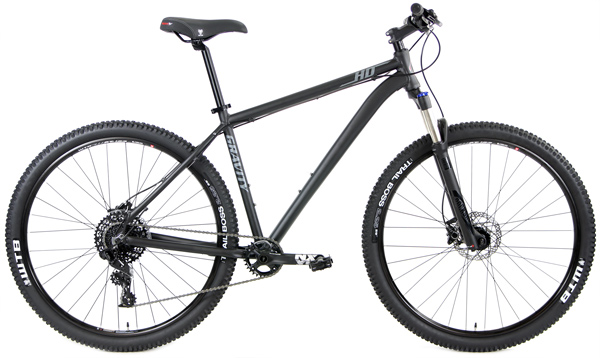
The Gravity HD 1BY11 represents a modernized hardtail direction with a single-chainring drivetrain and trail-focused equipment. Removing the front derailleur simplifies controls and can improve chain retention. It suits riders who want cross-country efficiency with simple drivetrain controls.
A higher-spec hardtail can be a smarter purchase than an equally priced entry full-suspension bike. The buyer receives the benefits of a simpler frame while directing more of the budget toward components that affect every ride.
Gravity FSX 1.0 Advent26 1BY: Low-Cost Rear Suspension
The Gravity FSX 1.0 gives recreational riders an inexpensive entry into full suspension. Its 1×9 controls are easy to understand, and the rear shock can soften trail chatter and small impacts. The compact wheel size may also suit shorter riders or those who prefer quick handling.
The buyer should keep expectations realistic. This is not a high-speed enduro platform, and the basic suspension components require careful setup and inspection. It makes sense for light trail use and comfort-oriented recreation, not repeated large jumps or severe terrain.
Motobecane HAL Boost Expert: Capability for Harder Trails
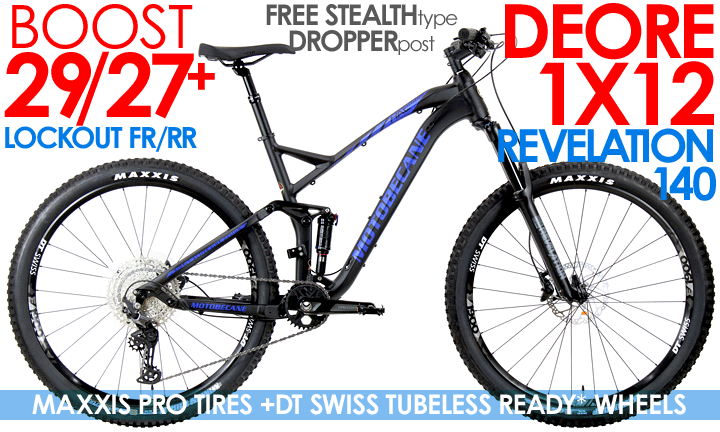
The Motobecane HAL Boost Expert represents the reason experienced riders accept added cost and complexity. Its longer travel, boost-width chassis, modern 1x drivetrain, hydraulic brakes, and full-suspension layout target rougher descending and greater speed.
The added capability is wasted on flat paths, but it becomes valuable on steeper trails with repeated rocks, roots, and drops. Riders should also consider whether their local trails, transportation setup, and service budget support a bike of this type.
Terrain Should Make the Decision
Choose a hardtail for smooth singletrack, cross-country loops, gravel roads, skill development, lower weight, and a limited maintenance budget. It is also a strong second bike for winter mud because cleaning and bearing care are simpler.
Choose full suspension for rocky trail systems, root networks, fast descents, drops, and long rides where repeated impacts create fatigue. It can also support riders who need more comfort, provided a clinician has not advised against the activity and the bike is fitted correctly.
A rider whose mileage is mostly pavement and compacted paths may not need either platform. A gravel bike can cover mild dirt efficiently, while a hybrid may provide an upright utility position without suspension weight. Buying more travel than the terrain requires often creates slower everyday rides and more service work.
Skill Level Changes the Answer
Beginners benefit from the platform that supports controlled local practice. A hardtail rewards movement, while full suspension may help a rider remain relaxed on rough trails. Riders can use the REI beginner mountain-biking guide to review braking, body position, and trail habits before deciding whether equipment or technique is the limitation.
Questions to Settle Before Buying
List the three trails you ride most, the steepest descent, the roughest climb, and the number of annual service visits you can support. Then set a budget that includes pedals, protection, tools, and professional setup. Compare complete weights, brake type, wheel size, fork and shock service requirements, drivetrain range, and replacement-part availability.
A test ride is valuable, but geometry charts still matter. Confirm standover clearance, reach, seat-tube length, and handlebar position. A suspension design cannot compensate for a frame that is fundamentally too long or too tall.
Product Link: Gravity HD275 Trail
There Is No Universal Winner
A hybrid bike remains the sensible choice for riders whose routes are mainly streets, greenways, and smooth park trails. Suspension should solve a real terrain problem rather than serve as a visual signal of capability.
BikesDirect offers hardtail and full-suspension models across wheel sizes, travel levels, brake systems, and drivetrain tiers. Its product pages provide sizing ranges and specifications that allow riders to compare the complete bicycle instead of judging suspension alone.
Match the platform to your local trails and discover a mountain bike built for your priorities at BikesDirect.