

Gravel bikes now cover an unusually broad range of riding. Some feel quick and familiar on pavement, while others are built around large tires, low gearing, and mounts for long trips. In this complete gravel bike buying guide, we will sort those differences by the riding experience they create, not by isolated specifications.
A rider coming from a road bike may want speed with extra confidence on broken pavement. Another buyer may expect loose climbs, forest roads, or loaded weekends. Both can shop in the same category, but they should not choose the same setup.
Our best starting point is simple: picture the routes that will fill most of the bike’s miles. Once the intended surface, pace, distance, and cargo are clear, geometry, tires, gearing, frame material, brakes, and mounting points become much easier to judge.
Start With the Routes You Actually Plan to Ride
Mostly Pavement With Occasional Dirt
For riders who spend most of their time on asphalt, a fast all-road setup usually makes sense. Moderately wide tires, a close-ratio drivetrain, and a position that still feels efficient in a headwind can preserve much of the road-bike experience. The extra tire volume adds comfort on patched streets and confidence when a paved route turns into firm dirt.
We would avoid buying the widest and most heavily equipped option simply because it looks adventurous. Extra tire weight, very low gearing, and a tall front end can feel unnecessary if the bike rarely leaves smooth roads. A lighter, pavement-oriented gravel setup can still accept a second wheelset or wider tires later.
Regular Gravel Roads and Rail Trails
A rider who regularly uses crushed-limestone paths, maintained gravel roads, and mixed-surface loops benefits from balanced equipment. Tires around the middle of the gravel range, stable steering, and climbing gears that remain useful after several hours are more valuable than race-focused weight savings. This is the core use case for many buyers.
The route may be technically easy, but repeated vibration adds up. We would prioritize a frame size that permits a relaxed elbow bend, enough tire clearance for changing conditions, and contact points that remain comfortable when the ride extends beyond the original plan.
Rough Tracks, Loose Climbs, and Light Singletrack
Rougher terrain shifts the priorities toward traction and control. Wider tires, a lower climbing gear, strong brakes, and a longer wheelbase can reduce the effort required to hold a line through loose corners. The bike does not need to imitate a trail bike, but it should give the rider room to move and recover from small mistakes.
A machine intended for firm towpaths should not automatically be treated as the best choice for rocky descents or deep sand.
Commuting, Touring, and Bikepacking
Daily transport and loaded travel add requirements that a short recreational ride may never reveal. Rack mounts, fender eyelets, bottle bosses, and fork mounts can turn a basic bicycle into a useful year-round tool. The frame also needs enough space around the tires for mudguards or debris, not only for the tire’s stated width.
We would check the full product specification rather than relying on a photograph. A top-tube mount may support a small bag, while fork bosses can carry extra water or light cargo. Rear-rack compatibility matters for panniers, but the total load should still remain within the limits set by the bicycle and component makers.
Geometry Determines How the Bike Feels
Reach and Effective Top Tube
Reach describes the horizontal distance built into the frame, while effective top tube offers another useful way to compare seated room. Neither number works alone because stem length, handlebar reach, saddle position, and rider proportions all change the final posture. Still, these measurements help explain why two frames with the same nominal size can feel very different.
A longer cockpit can improve stability and create room for an athletic position, but too much length often leads to locked elbows, shoulder tension, and excessive hand pressure. A shorter frame can feel easier at low speed, yet it may crowd the knees or make the steering feel nervous if the rest of the geometry is also compact.
Stack and Head Tube Length
Stack indicates how high the front of the frame sits relative to the bottom bracket. More stack usually makes it easier to place the handlebars higher without an extreme stem angle or a tall tower of spacers. Less stack suits riders who genuinely want a lower, more aerodynamic position and have the mobility to maintain it.
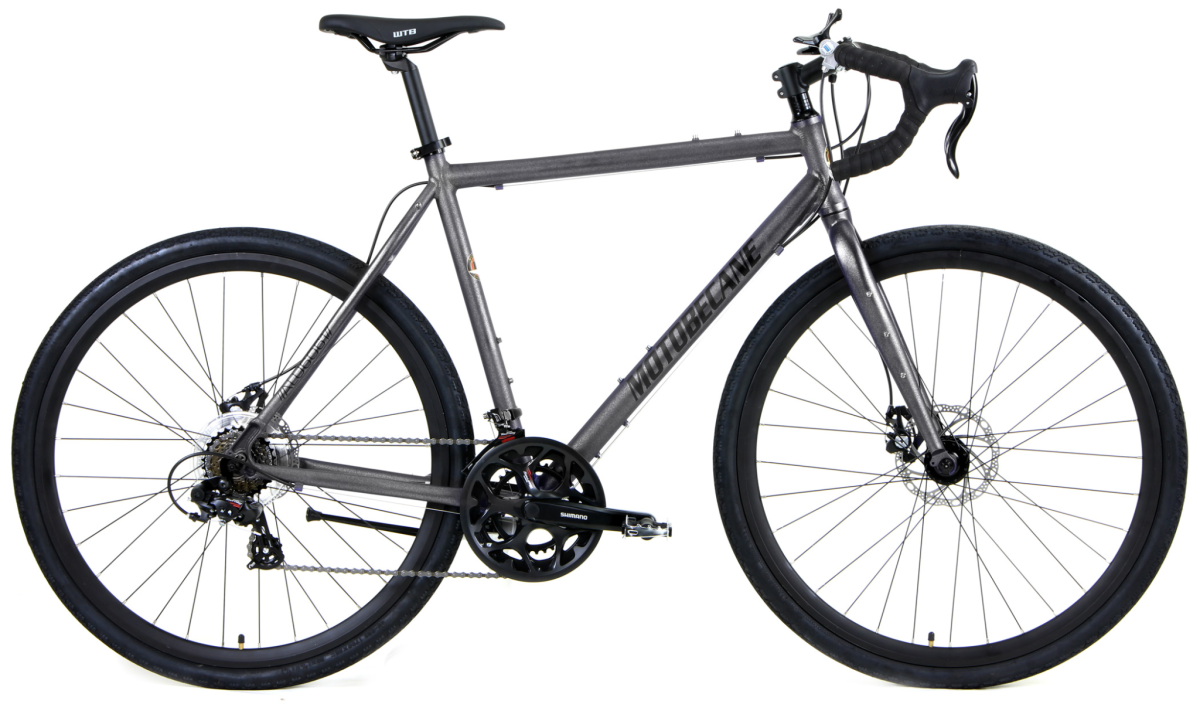
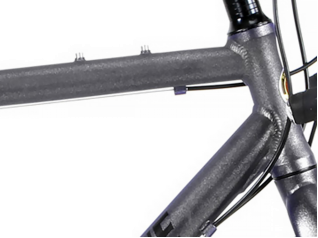
The Motobecane Gravel X1 XTL provides six sizes with changing effective top-tube and head-tube dimensions. That range shows why height charts should be treated as a starting point. A rider with a shorter torso may prefer the smaller option, while a rider with long arms may value the extra room of the next size.
Head Angle, Wheelbase, and Stability
Steering feel comes from several measurements working together. A slightly slacker front end and longer wheelbase generally produce calmer handling on loose surfaces, while a shorter and steeper design can react more quickly on pavement. Tire size and handlebar width also affect the result, so a geometry chart should be read as a system.
We would favor predictable handling for new gravel riders and anyone planning long, unfamiliar routes. Fast steering can feel lively during a short test, but calm tracking often becomes more valuable as fatigue increases or the surface becomes less consistent.
Standover Clearance and Frame Size
Standover clearance matters when the rider stops, dismounts, or places a foot on uneven ground. It does not determine the seated pedaling position, but inadequate clearance can make a bike awkward to manage. Buyers between sizes should compare standover with effective top tube, stack, and the adjustments available at the stem and saddle.
Product Link: Motobecane Gravel X1 XTL
Tire Clearance Changes What the Bike Can Handle
Narrower Tires for Faster Mixed-Road Riding
A narrower gravel tire can feel quick on pavement and still provide more cushioning than a traditional road tire. For riders on firm dirt, fine gravel, and urban streets, the lower rotating weight and smaller tread can make acceleration feel easier. The trade-off is reduced flotation and a smaller margin for lowering pressure on rough ground.
Wider Tires for Loose and Uneven Surfaces
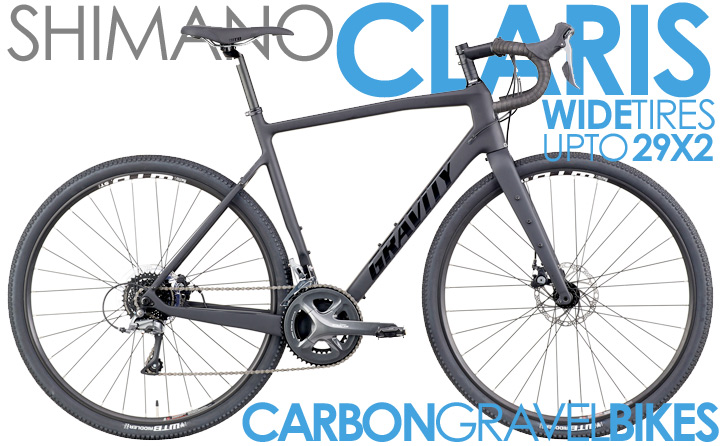
More tire volume can increase grip, reduce vibration, and help the wheel roll over stones or ruts. The Gravity Gravel CF Comp arrives with 45c tires and states clearance approaching 50c, which places it toward the wider end of the category. That capacity suits riders who expect rougher gravel and value comfort over a narrowly road-focused feel.
A gravel setup with large tires still differs from a Fat Bike. True fat-tire bicycles use much wider rims and tires for snow, sand, and very soft ground. A wide gravel tire is better viewed as a way to extend mixed-surface capability without giving up the efficiency and hand positions of a drop-bar bicycle.
Rim Width and Tire Compatibility
The printed tire size does not tell the entire story. A tire can measure wider or narrower depending on the rim’s internal width, casing design, and production variation. The WTB tire and rim fit chart gives a useful compatibility range, but riders should also confirm frame, fork, brake, and mud clearance after installation.
We would leave a visible safety margin around both tires. A combination that barely clears in a clean workshop may rub when the wheel flexes, mud collects, or a small stone follows the tread. Product pages often state that non-stock tire fit cannot be guaranteed, which is a sensible warning rather than a minor footnote.
Tire Pressure Is Part of the Setup
The best tire can still feel harsh or unstable at the wrong pressure. Rider weight, bicycle weight, cargo, tire size, rim width, casing, and surface all matter. The SRAM tire pressure guide can provide a starting estimate, after which small field adjustments help match local conditions.
We would change pressure in small steps and record what worked. Too much pressure can reduce grip and increase bouncing, while too little may cause rim strikes, tire squirm, or burping in a tubeless system. Front pressure is often lower because the front wheel carries less total load.
Product Link: Gravity Gravel CF Comp
Choose a Drivetrain for Your Terrain
Why Riders Choose a 1x Drivetrain
A single front chainring removes the front derailleur and simplifies shifting decisions. The rider moves through one sequence of gears, which can be helpful on rough ground where attention belongs on the route. A clutch-equipped rear derailleur may also improve chain control, although the exact feature depends on the component group.
The usual compromise is larger jumps between some gears or less range at one end of the cassette. Riders who care about holding a precise cadence on fast pavement may notice those steps more than riders who spend most of the day changing speed on dirt.
Why Riders Choose a 2x Drivetrain
Two front chainrings can combine a low climbing gear with useful high gears and smaller steps through the middle of the range. This suits mixed rides that include long paved approaches, steady group sections, and sustained climbs. The rider must manage front shifts, but modern gravel groups make that task familiar and predictable.
The Shimano guide to 1x and 2x gravel gearing explains the main trade-offs in gear range and spacing. We would compare the actual chainring and cassette sizes rather than assuming that more listed speeds always produce an easier climbing gear.
Look Beyond the Number of Gears
A 12-speed drivetrain is not automatically better for every buyer than an 8-speed system. The useful questions are how low the easiest gear is, how high the fastest gear is, how large the jumps feel, and how expensive replacement parts will be. Availability of chains, cassettes, brake pads, and compatible wheels may matter more during long-term ownership.
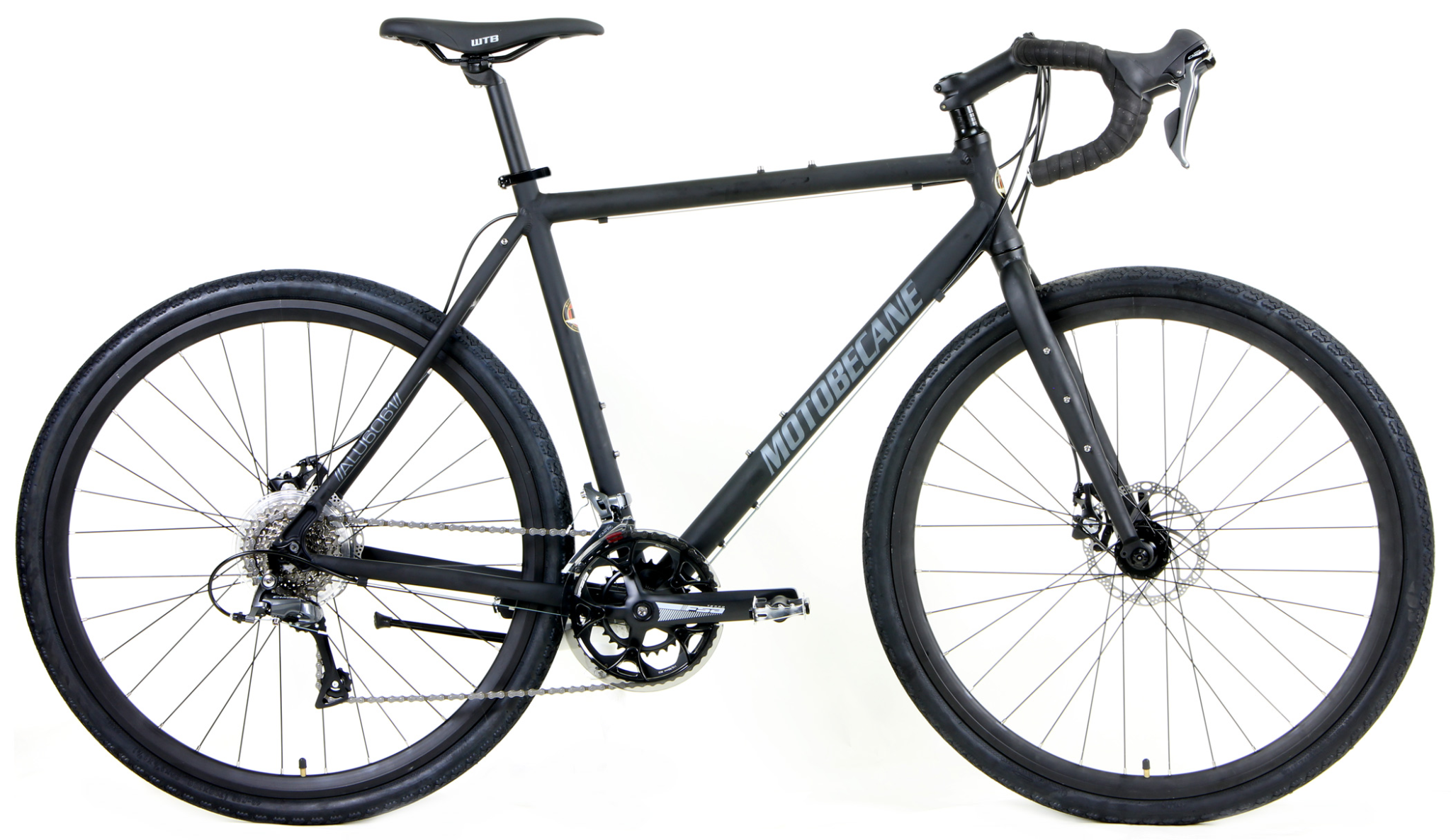
The Motobecane Gravel X3 XTL uses a Shimano Claris 2×8 drivetrain with compact chainrings. It provides a practical example of familiar integrated shifting without requiring premium components. Its extra cross-top brake levers also give riders another braking position near the stem, which may be useful in traffic or on relaxed sections.
Mechanical and Electronic Shifting
Mechanical shifting remains affordable, serviceable, and easy to understand. Electronic systems can deliver light lever action and programmable controls, but they add batteries, charging, and higher replacement costs. We see electronic shifting as a preference for riders who value its feel, not as a requirement for a capable gravel bicycle.
Product Link: Motobecane Gravel X3 XTL
Frame Material Affects Weight, Feel, and Price
Aluminum for Accessible Performance
Aluminum frames are common because they can be light, strong, and reasonably priced. Tube shape, wall thickness, weld quality, fork material, tires, and seatpost design influence comfort, so the material label alone cannot predict ride quality. The Gravel X1 XTL and Gravel X3 XTL pair aluminum frames with different forks and equipment packages.
Carbon for Lower Weight and Tuned Shapes
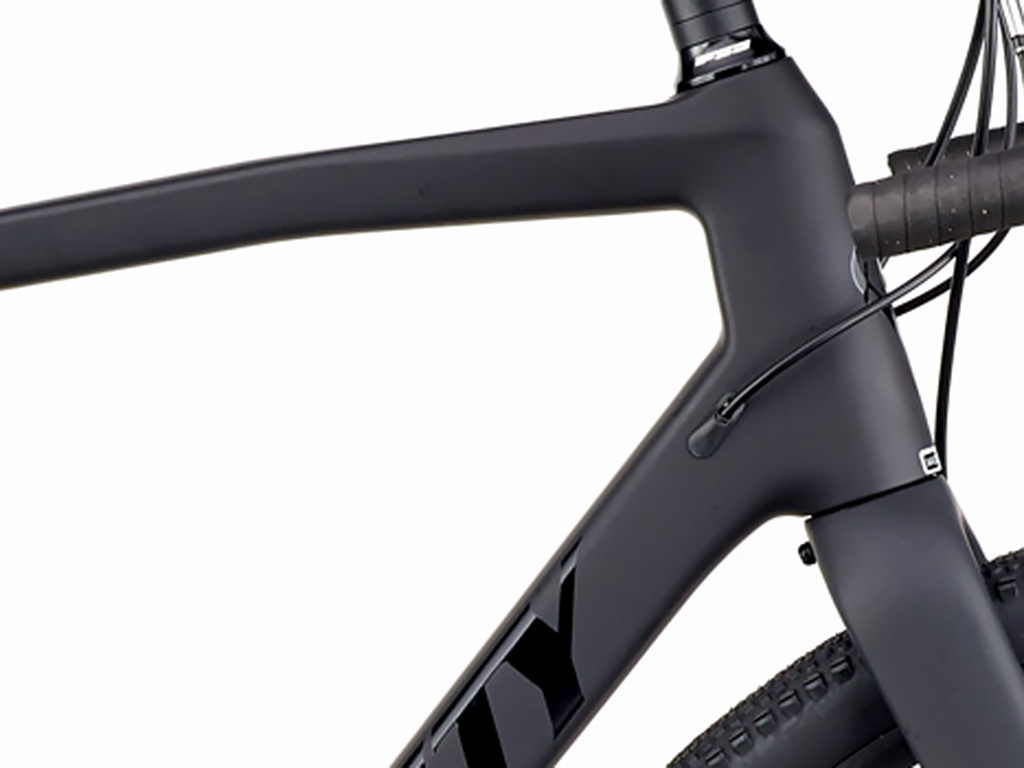
Carbon allows designers to vary tube shapes and fiber orientation through the frame. It can reduce weight and tune stiffness, but the complete build still determines how the bicycle performs. The Gravity Gravel CF Comp combines a carbon frame and fork with thru-axles, wide tires, and rack mounts, making its utility as relevant as the frame material.
We would inspect a carbon frame carefully after a crash and follow the maker’s torque instructions for clamped parts. Carbon is not automatically fragile, but damage may be less obvious than a large dent in metal. A torque wrench is a sensible ownership tool for stems, seatposts, and other critical fasteners.
Steel for Durability and a Traditional Ride
Steel remains attractive for riders who value durability, straightforward construction, and the possibility of repair by a qualified specialist. It can produce a comfortable bicycle, but tubing selection and design matter more than broad claims about softness. Steel frames may also require attention to paint damage and internal corrosion protection.
Titanium for Long-Term Ownership
Titanium resists corrosion and can provide a durable premium frame, although it raises the purchase price. It makes the most sense for a rider who already understands preferred geometry and plans to keep the bicycle for many years. Spending the same amount on fit, wheels, tires, and contact points may benefit a newer rider more.
Product Link: Gravity Gravel CF Comp
Brakes, Wheels, and Mounts Complete the Package
Mechanical and Hydraulic Disc Brakes
Mechanical disc brakes use a cable to move the caliper. They are familiar to many home mechanics and can be easier to service with basic tools, though performance depends heavily on setup and cable condition. Hydraulic brakes usually provide lighter lever action, strong modulation, and automatic pad compensation, but bleeding requires the correct fluid and procedure.
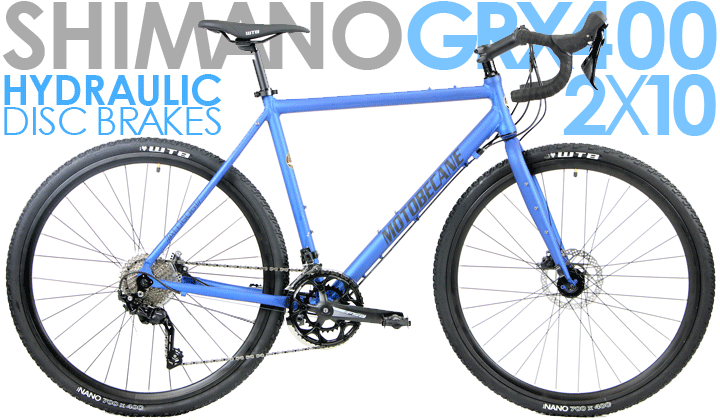
The Motobecane Gravel X Pro uses Shimano GRX400 hydraulic controls and calipers with a 2×10 drivetrain. That combination suits riders who expect frequent descents, wet conditions, or long days where consistent lever feel matters. It also illustrates why component level should be matched to use rather than chosen only for status.
Quick Release and Thru-Axle Wheels
Thru-axles can improve repeatable wheel alignment and create a secure interface for disc-brake wheels. Quick releases remain functional and widely used, but the rider must install them correctly and verify that the wheel is seated. A buyer planning future wheel upgrades should confirm axle standards, freehub type, brake-rotor interface, and rim dimensions.
Tubeless-Compatible Equipment
Tubeless-compatible rims and tires can reduce pinch-flat risk and allow lower pressure, but the label does not mean the bicycle arrives fully converted. Rim tape, valves, sealant, compatible parts, and correct seating are still required. Sealant also dries over time, so tubeless use adds maintenance rather than eliminating it.
Mounting Points for Practical Use
Bottle bosses, top-tube mounts, rear-rack fittings, fender eyelets, and fork mounts should be checked against the equipment the rider intends to carry. A mount’s presence does not guarantee unlimited load. We would follow the frame, fork, rack, and bag makers’ limits, then test the loaded bicycle before a long trip.
Product Link: Motobecane Gravel X Pro
Four Bikes for Four Different Gravel Buyers
Motobecane Gravel X1 XTL for a Straightforward First Setup
The Gravel X1 XTL suits a buyer who wants an aluminum frame, drop bars, disc brakes, and practical mounts without paying for a top-level group. Its endurance-oriented proportions and six-size range make it a useful starting point for commuting, rail trails, and moderate gravel. The buyer should still compare geometry and confirm that the stock gearing fits local hills.
Motobecane Gravel X3 XTL for Integrated Controls and Extra Brake Access
The Gravel X3 XTL adds Shimano Claris integrated controls and cross-top brake levers. That layout may appeal to riders who frequently alternate between the hoods, drops, and bar tops. Its compact double drivetrain supports mixed riding, while stated tire clearance around 42c leaves room to tune the bicycle toward pavement or gravel.
Gravity Gravel CF Comp for Wide Tires and Carbon Construction
The Gravel CF Comp fits the rider who values a carbon frame, thru-axles, rack mounts, tubeless-compatible rims, and generous tire capacity. Its 45c stock tires favor grip and comfort on rougher surfaces. A buyer focused mainly on fast pavement may prefer a lighter-tread tire even if the frame can accept much more width.
Motobecane Gravel X Pro for Hydraulic Braking and GRX Components
The Gravel X Pro steps up to Shimano GRX400 hydraulic brakes and a 2×10 gravel drivetrain. It is the strongest match among these examples for riders who expect regular gravel use, changing weather, longer descents, and sustained climbing. Its 40c tires remain versatile enough for commuting and mixed-road training.
These examples are not a ranking. They show how budget, terrain, component preferences, and future plans can point toward different bicycles. Availability and specifications can change, so we would review the live product page before ordering and save a copy of the selected model’s details for later reference.
A Final Pre-Purchase Check
Before ordering, we would confirm the most common riding surface, the lowest useful climbing gear, preferred posture, minimum tire clearance, required mounting points, and the correct frame measurements. We would also decide who will complete the assembly and safety inspection. That final check prevents attractive features from distracting us from the bike’s everyday job.
Product Link: Motobecane Gravel X Pro
Choose the Bike That Matches Your Roads
The right choice begins with honest expectations. A rider who values an upright position and spends nearly every mile on pavement may be happier with a hybrid bike. A rider who seeks loose roads and long mixed-surface loops should put more weight on tire room, low gearing, stable geometry, and cargo options.
BikesDirect offers road, gravel, mountain, hybrid, cruiser, fat-tire, and electric models through its factory-direct online store. Its product pages provide specifications, size guidance, geometry details, and assembly information so shoppers can compare complete bicycles rather than relying only on a category label.
Compare the available models and choose your next gravel bike from BikesDirect.