

Buying a first road bike should feel exciting, not like an exam in component codes. In this guide to the best road bikes under $1500, we focus on the details a new cyclist can actually feel: a manageable riding position, useful climbing gears, dependable braking, sensible tires, and a frame size that supports confidence from the first ride.
Some riders discover that an upright hybrid bike better suits short errands and casual paths. Riders who want longer paved rides, faster group outings, or structured fitness usually benefit from drop handlebars and the more efficient body position of a road bike. The right choice is the one that fits the intended use rather than the category with the most impressive advertising.
Prices and availability change, so the figures discussed here should be treated as a snapshot rather than a permanent promise. We compare four current BikesDirect models by their underlying design and equipment, which remain the more useful buying signals.
What Real Value Looks Like Below $1500
A good entry-level road bike does not need racing credentials. It needs a sound frame, predictable steering, enough range for local hills, and parts that a bicycle shop can adjust or replace without a scavenger hunt. The REI road-bike buying guide similarly recommends starting with intended riding, frame material, geometry, and components instead of judging a bike by price alone.
Frame and Fork Quality
Aluminum remains a practical frame material at this price because it keeps cost controlled while delivering responsive power transfer. A carbon fork can reduce some road vibration and save weight, but a well-shaped steel or chromoly fork can also provide durable, accurate steering. Full carbon becomes possible near the top of the budget, although a carbon frame is not automatically a better first purchase if the fit or gearing is wrong.
Brakes and Drivetrain
Rim brakes are light, simple, and inexpensive to service. Mechanical disc brakes add consistent braking surfaces away from the rim and can be reassuring on wet commutes or rough pavement. Shimano Claris integrated controls place shifting and braking at the same levers, while a triple crankset offers very low climbing ratios that many beginners appreciate. The Shimano road maintenance checklist shows why brakes, drivetrain parts, tires, and fasteners should be evaluated together.
Fit and Tire Capacity
A new cyclist should not stretch toward the bars or struggle to stand over the frame. A broad size range and a clear geometry chart are more valuable than a fashionable paint scheme. Wider tires can also improve comfort and confidence on cracked pavement, provided the frame and fork have enough clearance. The REI bicycle fit guide offers useful starting checks for saddle height, reach, and riding position.
Product Link: Motobecane Mirage SLX-XTL
Four Road Bikes Worth Comparing
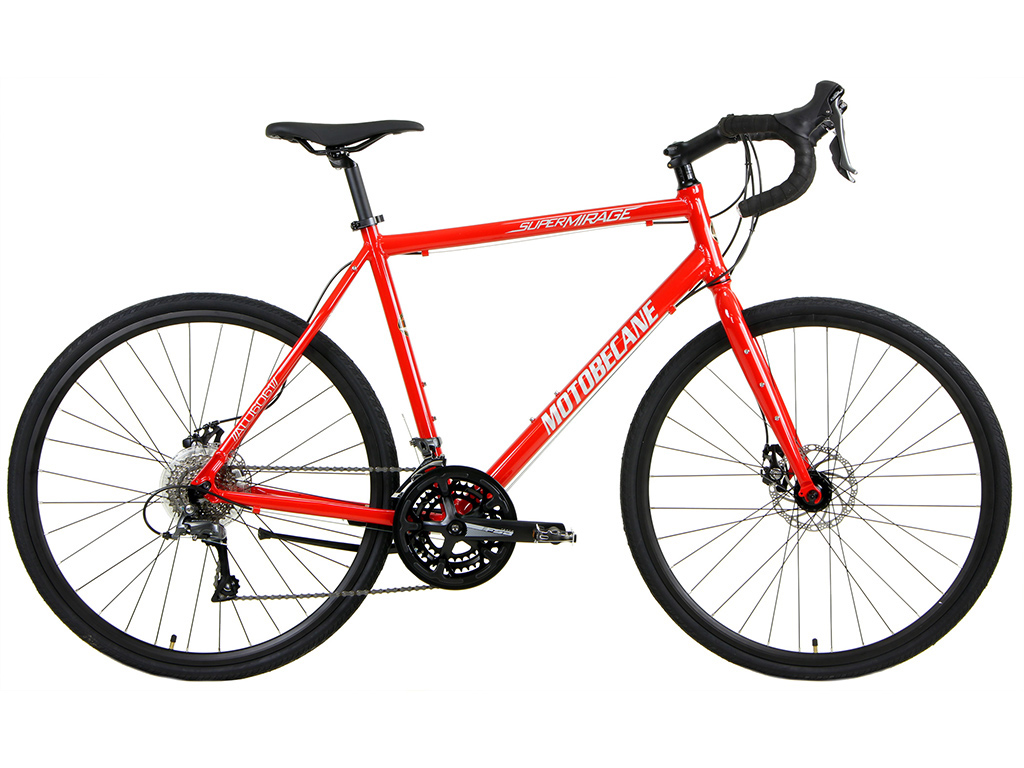
Motobecane Super Mirage SLX XTL
The Motobecane Super Mirage SLX XTL is the most versatile option in this group. Its aluminum endurance frame, mechanical disc brakes, 3×8 Shimano Claris drivetrain, and 32c stock tires support commuting, fitness rides, and imperfect roads. BikesDirect states clearance for many tires up to roughly 40c, although actual fit depends on the tire and rim combination.
The extra brake levers near the handlebar tops can make braking easier for a rider who is not yet comfortable staying on the hoods or drops. The trade-off is additional weight compared with a simpler rim-brake bike. We would choose it for a new cyclist who values braking access, wide gearing, and rough-road flexibility more than the lowest possible number on a scale.
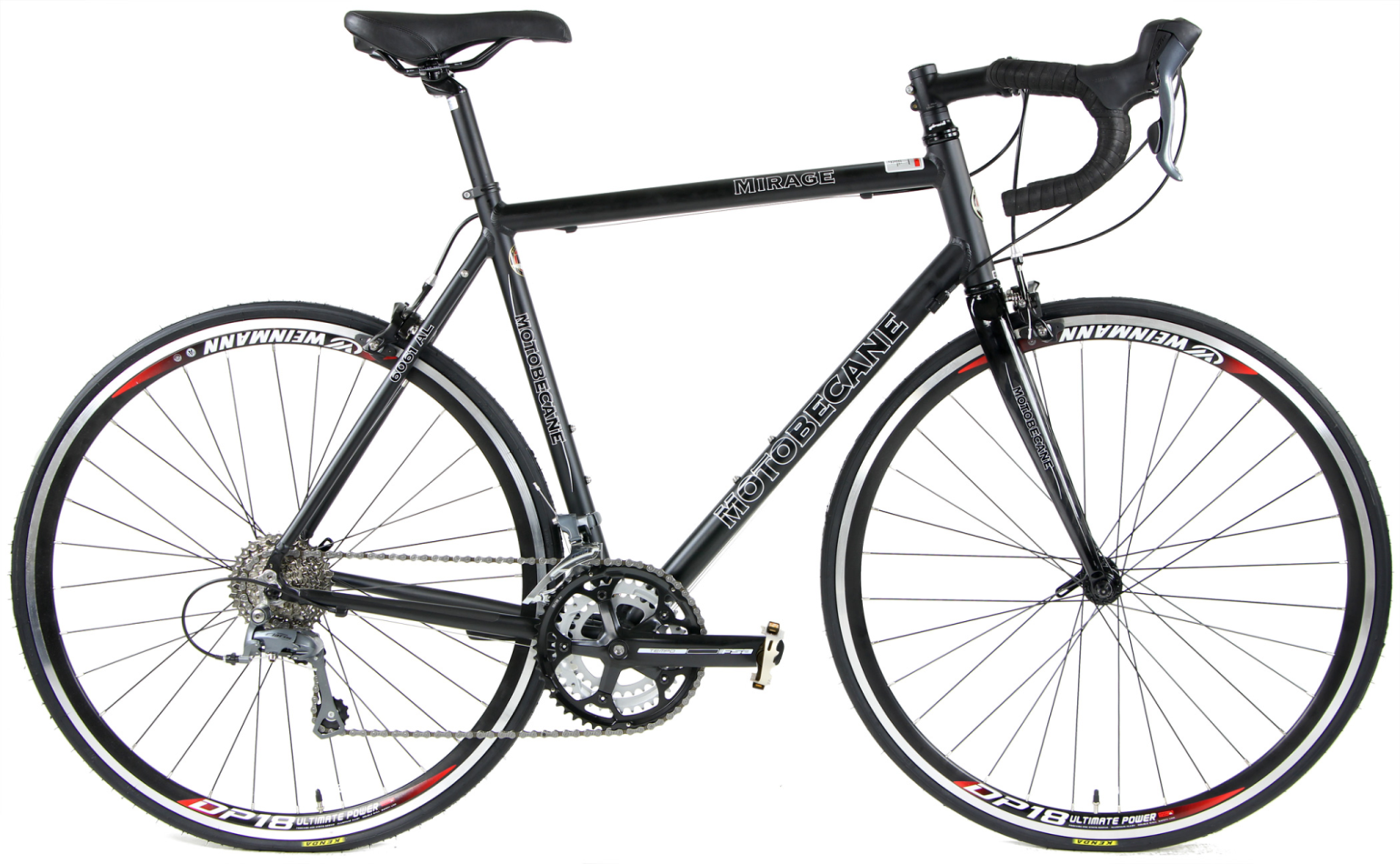
Motobecane Mirage SLX-XTL
The Motobecane Mirage SLX-XTL pairs an aluminum frame with a straight-blade carbon fork, Shimano Claris 3×8 shifting, and dual-pivot rim brakes. It is a cleaner pavement-focused package than the Super Mirage, with narrower stock tires and less emphasis on mixed surfaces.
This model makes sense for riders whose routes are mostly dry, paved, and reasonably smooth. The carbon fork is a meaningful specification, but fit remains the deciding factor. Its unusually broad frame-size range gives buyers more opportunities to select suitable standover height and effective top-tube length rather than settling for a generic small, medium, or large label.
Product Link: Motobecane Gigi Sport XTL
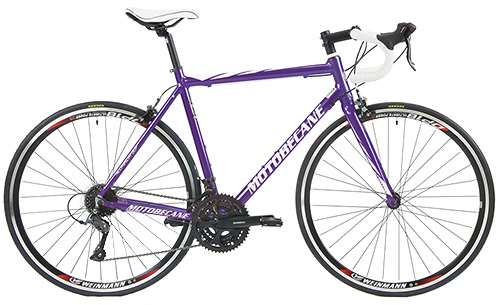
Motobecane Gigi Sport XTL
The Motobecane Gigi Sport XTL deserves consideration from any rider whose proportions align with its sizing and contact-point choices. A women-oriented label should never replace measurements, but a different size run, saddle, and cockpit setup can make the correct fit easier to achieve for some cyclists.
We would compare its geometry directly with the rider’s inseam, torso length, and preferred posture. The useful lesson is broader than gender: a first bike should meet the rider where they are. A slightly heavier bicycle that fits properly will normally deliver more comfortable miles than a lighter model that creates hand, neck, or knee discomfort.
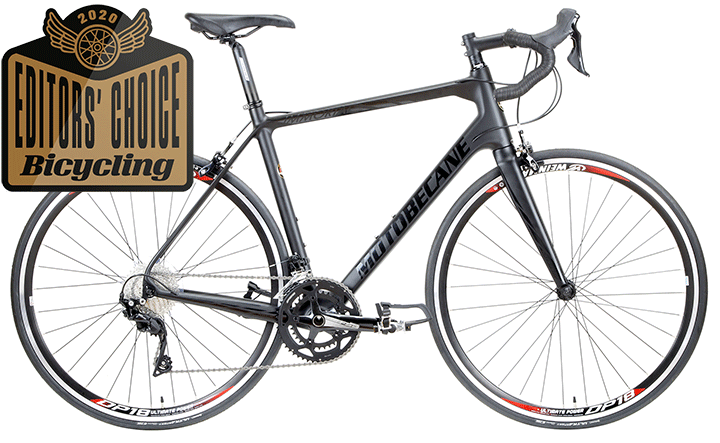
Motobecane Immortal Spirit XTL
The Motobecane Immortal Spirit XTL represents the performance end of this budget. Its carbon frame can reduce weight and create a more refined platform for a rider who expects to progress into faster group rides or longer events.
Carbon is not a shortcut to confidence. A beginner still needs manageable gearing, suitable tire pressure, correct saddle height, and steady handling habits. We would spend near the ceiling only after confirming size and riding goals. Riders who expect substantial unpaved mileage should compare a dedicated gravel bike rather than assuming any road frame can accept the desired tire width.
Which Model Fits Which New Rider
The Super Mirage is the strongest all-rounder for rough pavement, variable weather, and riders who like braking from the bar tops. The Mirage suits a pavement-first cyclist who values a carbon fork, a broad size range, and straightforward rim-brake service. The Gigi Sport is worth measuring carefully for riders who need its specific geometry and contact points. The Immortal Spirit is the aspirational option for someone already committed to road riding and willing to pay more for a carbon chassis.
None of these choices removes the need for final assembly and safety checks. A new bicycle should have its brakes centered, shifting indexed, fasteners torqued, tires inflated correctly, and saddle position adjusted before the first serious ride. A local shop is a sensible resource for buyers who are not comfortable completing those checks.
Product Link: Motobecane Immortal Spirit XTL
Start With the Bike You Will Actually Ride
A relaxed beach cruiser may be the honest answer for short waterfront trips, while a drop-bar bike rewards riders who want efficient paved mileage. The purchase should reflect the weekly ride, not an imagined race calendar.
BikesDirect offers road models across aluminum and carbon frame tiers, with product-level specifications, size charts, and direct comparisons that help buyers narrow the field. Its factory-direct range also gives new cyclists several brake, fork, drivetrain, and geometry combinations to assess before ordering.
Explore the available specifications and select a road bike that gives you room to grow with BikesDirect.