

The debate over disc brakes vs rim brakes is often reduced to a claim that one system is modern and the other is outdated. That misses the real buying question. Brakes should match the rider’s weather, terrain, tire needs, maintenance comfort, and budget. A simple system that is adjusted correctly can be safer and more satisfying than a more powerful system that is neglected.
A performance road bike can work well with either format. Rim brakes remain light and easy to inspect, while discs move the braking surface away from road spray and allow designers more freedom around tire width. We compare the systems by how they behave, not by which one wins a popularity contest.
How Each System Slows the Wheel
Rim brakes squeeze pads against the wheel rim. The rim acts as both a structural wheel component and the braking surface. Caliper road brakes are compact and light, and a rider can see pad alignment without removing the wheel.
Disc brakes squeeze pads against a rotor attached to the hub. Mechanical versions pull a cable, while hydraulic systems move fluid through a hose. Because the rotor is smaller than the rim, the caliper must create greater force, but the system also keeps braking heat and wear away from the rim wall.
The Shimano brake maintenance guide recommends regular pad inspection for both systems and careful rotor cleaning for discs. No brake remains dependable without routine checks.
Power, Modulation, and Weather
Disc brakes usually provide stronger, more repeatable braking in rain because the rotor sheds water faster than a rim. Hydraulic discs also require less hand force and offer fine modulation, which helps riders control traction on steep or loose descents.
Rim brakes can feel excellent in dry conditions with quality pads and clean, true rims. Their performance drops when the braking track is wet, dirty, or damaged. Carbon rims can require specific pads and more careful heat management than aluminum braking surfaces.
Tires ultimately determine how much braking force reaches the ground. A disc system can lock a narrow tire easily, but locking is not the goal. The best brake lets the rider approach the tire’s grip limit with control.
Weight, Cost, and Wheel Design
Rim systems are normally lighter because they avoid rotors, calipers, reinforced hubs, and hydraulic fluid. They are also inexpensive to replace. A set of pads and a cable can restore performance without specialty bleeding tools.
Disc systems add weight but support wider rims and tires without requiring a caliper to reach around them. A damaged rim may still roll with a disc brake because braking does not depend on a perfectly straight rim track. That can be valuable on gravel and trail rides.
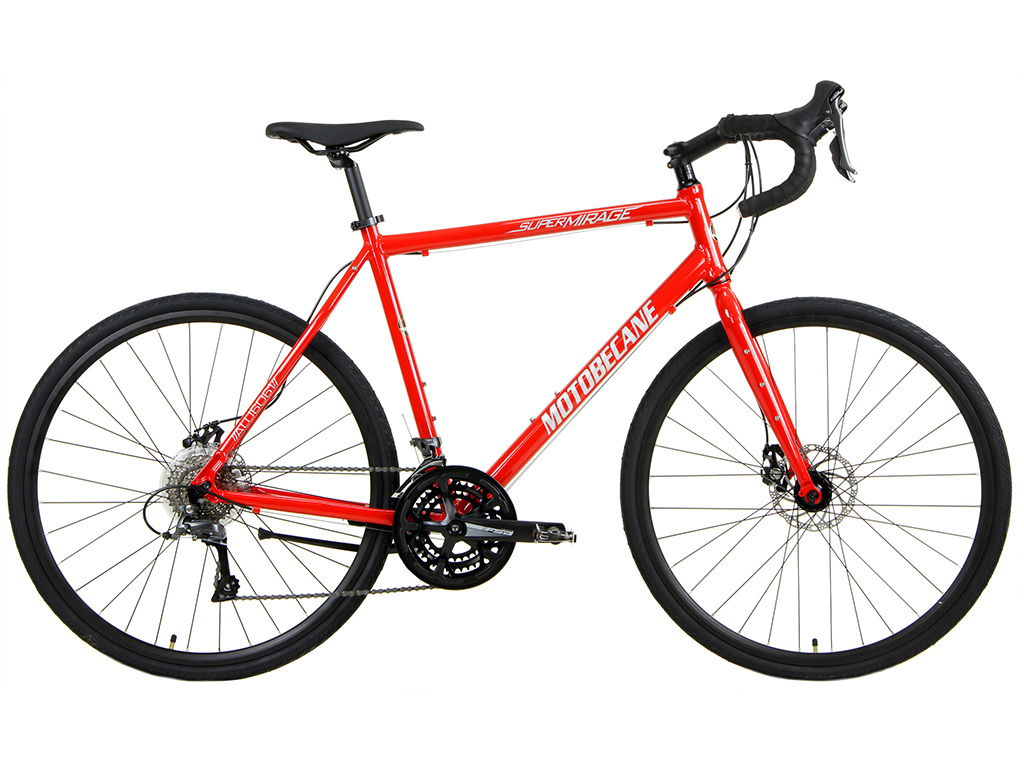
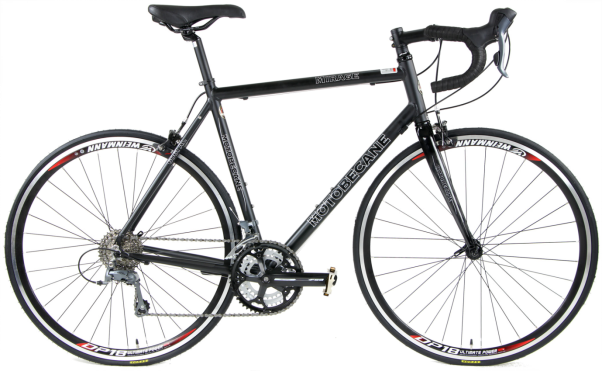
The Motobecane Mirage SLX-XTL shows the rim-brake approach with an aluminum frame, carbon fork, and Shimano Claris controls. The Motobecane Super Mirage SLX XTL adds mechanical discs and room for wider tires, creating a more weather-tolerant package at the cost of additional mass.
Maintenance Is Different, Not Absent
Rim brakes ask the owner to monitor pad grooves, cable tension, caliper centering, and rim wear. A wheel that goes out of true can rub the pads. Road grit can become embedded in the pads and grind the rim, so cleaning matters during wet seasons.
Mechanical disc brakes need cable adjustment and pad-position checks. Hydraulic brakes remove cable friction but require occasional bleeding and careful handling around fluid. Rotors can bend, pads can become contaminated, and calipers must be aligned to prevent rubbing.
The Park Tool brake repair library provides step-by-step service guidance for both formats. Riders who prefer home maintenance may find rim or mechanical disc systems easier, while riders who value low lever effort may accept professional hydraulic service.
Four Bikes That Clarify the Choice
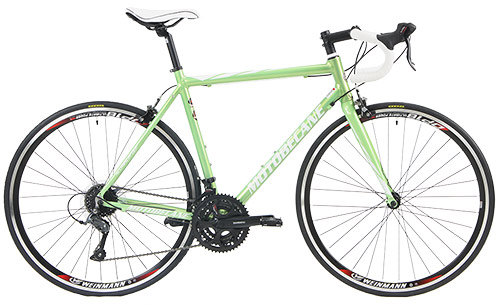
The Mirage SLX-XTL makes sense for dry pavement, simple service, and riders who value lower weight. The Motobecane Gigi Sport XTL offers another rim-brake road option where fit and size range should lead the decision.
The Super Mirage SLX XTL is better suited to commuters, rough roads, and riders who want braking from the rotor rather than the rim. Its mechanical system remains cable-operated, so owners can adjust it without hydraulic bleeding.
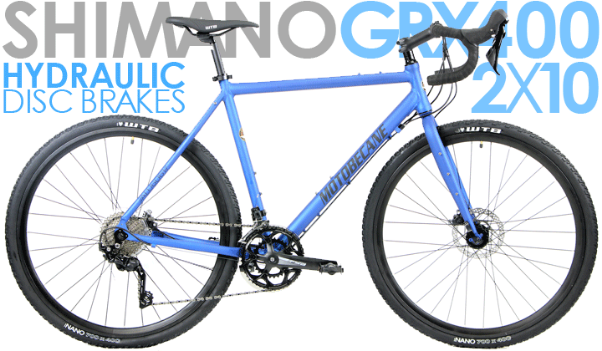
The Motobecane Gravel X Pro shows where hydraulic discs earn their place. Gravel descents, wet routes, wider tires, and long braking sections reward modulation and lower hand effort. A mountain bike faces the same demands at greater intensity, which is why discs dominate modern trail equipment.
Match the Brake to the Normal Ride
Choose rim brakes for dry road use, low weight, affordable service, and riders who inspect equipment regularly. Choose mechanical discs for mixed weather, wider tires, simple cable service, and moderate budgets. Choose hydraulic discs for steep terrain, frequent rain, heavy loads, or riders who want maximum modulation with less lever force.
The NHTSA bicycle safety guide also reminds riders that predictable behavior and equipment checks matter alongside brake choice. Brake type should not override fit or complete-bike quality. A poorly sized disc-brake bicycle is still the wrong purchase, and worn hydraulic pads are not safer than fresh rim pads. Inspect the full specification, including tires, wheels, gearing, and frame purpose.
Braking Confidence Is the Real Priority
A hybrid bike used on flat, dry paths may not need hydraulic power, while a loaded commuter may appreciate it every rainy week. The correct system is the one the rider can control and maintain.
BikesDirect offers rim, mechanical disc, and hydraulic disc models across road, gravel, hybrid, and mountain categories. Its product pages list brake type alongside tire capacity, geometry, and drivetrain details so buyers can judge the complete package.
Examine the brake specifications and choose a gravel bike equipped for your normal riding conditions at BikesDirect.